World Cup fever has yet to hit, despite the tournament’s imminent start across North America. The expanded 48-team edition, co-hosted by the United States, Canada and Mexico, kicks off on June 11 and runs until July 19, yet the collective anticipation that usually accompanies football’s showpiece event remains curiously muted. The domestic club season only concluded a few days ago, and the lingering pain of Prague – a reference to Ireland’s failure to qualify – still stings. Then there is the unescapable political backdrop: Donald Trump front and centre of the tournament, FIFA president Gianni Infantino continuing to debase himself at the knee of the American President, and the war between the US, Israel and Iran casting a shadow over the participation of one team. Iran, whose group matches are all in the United States, has been forced to relocate its training base from Tucson, Arizona, to Tijuana, Mexico, after security concerns and visa complications. The players have worn “#168” pins as a tribute to victims of a missile strike in Minab. It is a lot to process before a ball is even kicked.
A muted build-up
Perhaps that explains the low-key launch of RTE’s coverage, which has drawn less attention than might be expected for a World Cup that will involve 104 matches – up from 64 in Qatar 2022. The Irish broadcaster is screening every single game across its television, radio and digital platforms, but the promotional fanfare has been conspicuously restrained. Even the absence of a certain cult pundit has gone largely unremarked. Joey N’Do, the former Shelbourne player who became a surprise breakout star during the 2022 tournament with his exuberant commentary – including a dance to celebrate one of Cameroon’s goals in their dramatic 3-3 draw with Serbia – will not appear after Cameroon’s shock elimination in qualifying paved the way for Roberto Lopes and Cape Verde to make their debut at the finals. Instead, it is James McClean who represents RTE’s big punditry catch this time, despite lingering incredulity that the Derry City midfielder has been drafted in when the League of Ireland is only taking a two-week hiatus. McClean, whose unfiltered thoughts first made headlines during Euro 2024, joins a sizeable RTE panel that includes Dietmar Hamann, Kenny Cunningham, Niamh Fahey, Shay Given, Keith Treacy, Richie Sadlier, Ronnie Whelan, Ray Houghton, Aine O’Gorman, Stephen Kelly, Alan Cawley and Kevin Doyle. Sadlier, whose clear-minded dissection of why Ireland’s home fixture against Israel on October 4 could not go ahead, has seen his punditry stock rise in recent days.
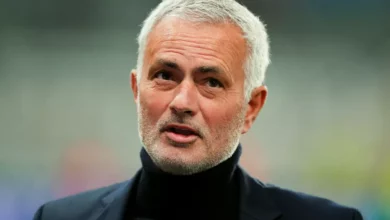
Across the water, both the BBC and ITV have assembled their own formidable line-ups. The BBC’s presenting team of Kelly Cates, Mark Chapman, Gabby Logan and Alex Scott will host a panel that includes Alan Shearer, Wayne Rooney, Micah Richards, Joe Hart, Paul Robinson, Steph Houghton, Ellen White, Danny Murphy, Scott Brown, Rachel Corsie, James McFadden, Olivier Giroud, Gael Clichy, Cesar Azpilicueta, Benni McCarthy, Ashley Williams and, intriguingly, Brentford manager Thomas Frank. ITV’s coverage, fronted by Mark Pougatch, Laura Woods and Semra Hunter, features Roy Keane, Ian Wright, Gary Neville, Patrick Vieira, Karen Carney and Tottenham boss Ange Postecoglou. RTE’s own commentators include Des Curran, Darragh Maloney, Adrian Eames, John Kenny and Cathal Mullaney.

The podcast war
But punditry is no longer confined to the traditional broadcast screen. This World Cup, the first to be fought as much on digital platforms as on television, is witnessing an unprecedented shift in how fans consume the tournament. The way we take in football has changed markedly even since Qatar 2022. Once, the highlights of a Premier League weekend came from Match of the Day and whatever live game was on Super Sunday. Now, the tsunami of podcasts that land by Monday afternoon shapes the conversation, and broadcasting companies have latched onto that trend.
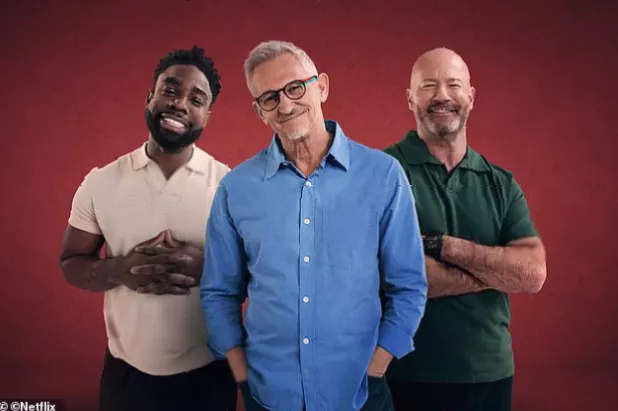
Netflix will not be showing any live games, but the streaming giant has brought Gary Lineker, Alan Shearer and Micah Richards together in a Times Square studio for a daily edition of their The Rest is Football chat show, which will air from 6am BST each morning starting June 11. There is every chance the programme draws more viewers than some of the actual matches. Meanwhile, the Stick to Football podcast, fronted by Roy Keane, Gary Neville and Ian Wright, will record 12 World Cup specials. The battles between rival television channels for attention during a World Cup have given way to a podcast war, and the personalities involved – Keane in particular – are considered box-office draws that can generate as much impact online as on the box.
The on-demand reality of modern viewing means no one need stay awake for the awkward kick-off times caused by a tournament spanning four North American time zones. A match such as Fabio Cannavaro’s Uzbekistan against Colombia, which kicks off in the early hours of Thursday week, can be streamed the next morning; highlights are available by a simple scroll on a phone. The BBC and ITV will broadcast live, with matches starting as early as midnight BST for West Coast venues and as late as 5am for some group-stage games, though the semi-finals and final have been scheduled for the more viewer-friendly time of 8pm BST. RTE has already confirmed it will cover all 104 games, but one wonders who – aside from insomniacs or those who have had a late Monday night – will sit up for Jordan versus Algeria live at 4am on Tuesday June 23 from the home of the San Francisco 49ers.
France, despite the hangover from a defeat to Ivory Coast last Thursday that suggested Didier Deschamps is still struggling to get the best out of the most talented squad in the tournament, will offer wall-to-wall coverage through beIN, which is launching a dedicated 24-hour World Cup channel. Television companies are scrambling to remain relevant for the ultimate live event, but live sport remains one of the few mass shared experiences left. In a world where any significant moment is clipped and shared on social media within seconds, the question is how much we still share it together.
Memories of Mexico and a sticker album
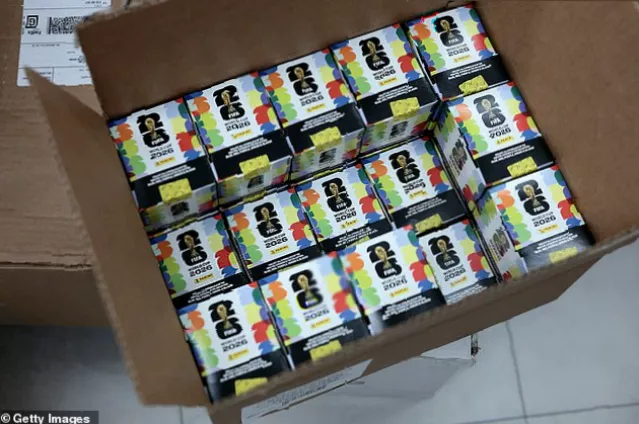
Maybe the fever will arrive when the football itself takes over. Watching my ten-year-old son start collecting Panini stickers last week brought me back to a more innocent time. The first sticker he tore open from the first packet was Pico Lopes – Cape Verde’s Roberto Lopes – which gave both father and son a thrill. I was a couple of years younger when I got my first Panini album. Mexico 86, the first World Cup you remember, is always the best. I stayed up late for Denmark’s last-16 clash with Spain, confident that Jesper Olsen and Michael Laudrup would sail past them, only to be told the next morning that Emilio Butragueno had somehow scored four goals against them. I had to wait for the BBC highlights show that night to see what had happened. Growing up on the border, I had six channels instead of two. Now there is none of that waiting. Yet the nostalgia remains potent: the memory of Gary Lineker celebrating with his arm in a cast, Josimar’s wondergoal against Northern Ireland on Pat Jennings’s 41st birthday, France against Brazil, and Maradona, of course.
Perhaps the tournament will finally grip us when Czechia take the field against South Korea in the early hours of next Friday, though that will feel more like “it should have been us”. The Scots, ending a 28-year absence from the World Cup, will play their first game in the early hours of next Sunday morning in Foxborough against Haiti, hoping to reach the knockout stage for the first time with Andy Robertson, Scott McTominay and John McGinn leading the charge. The second Saturday of the tournament, June 20, feels like the first proper World Cup day, with Netherlands against Sweden followed by Germany against Ivory Coast. We may have to wait that long for the fever to hit. In the meantime, I hope my son fills that sticker album – and that he gets the same lasting memories I still hold after 40 years.