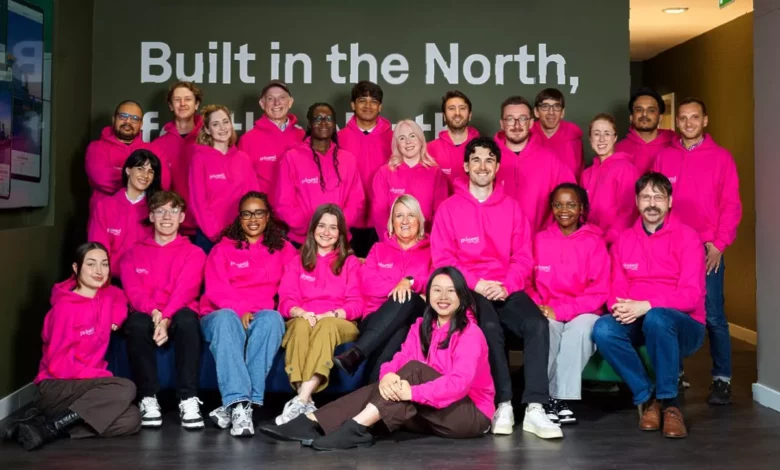
An investor readiness programme backed by the Northern Powerhouse Investment Fund II (NPIF II) has unveiled its most diverse cohort to date, supporting 13 tech and life sciences firms across the North of England.
PXN Ventures’ PraeSeed programme, now in its third year, is designed to bridge the funding gap for early-stage founders who often struggle to secure their first investment. According to PXN, three-quarters of this year’s cohort are led by founders from diverse backgrounds, and more than half have at least one female founder. The programme specifically targets deep tech and life sciences companies – sectors that PXN says are “commonly affected by a lack of patient capital, particularly in the North of England.”
That shortage of long-term, risk-tolerant funding has long hindered northern startups working on complex scientific and engineering problems, where development cycles are longer and returns take years to materialise. PraeSeed aims to tackle this by offering a structured six-week course of workshops, one-to-one mentoring from PXN’s investment team, and specialist finance sessions. Participants also receive pitching support before an investor showcase in September, where they will present to angel investors and venture capital firms.
Dr Elizabeth Young, PraeSeed lead and investment manager at PXN, said: “The North of England is teeming with exceptional founders creating solutions to global problems. They’ve established businesses that leverage their specialist skill and knowledge, but a lack of ‘first-cheque’ capital can stop them from realising their full potential and attracting more significant investment for scale. PraeSeed fills this gap, preparing founders to work with investors and tap into the deep pool of capital in the North and beyond. None of this would be possible without the support of the British Business Bank.”
That emphasis on widening access to finance aligns directly with the British Business Bank’s objectives. Sue Barnard, senior investment manager at the Bank, said: “PraeSeed continues to play a vital role in strengthening the early-stage investment pipeline across the North of England. This year’s cohort reflects the growing diversity and depth of talent in the region, and the importance of ensuring that access to finance is open to founders from all backgrounds. It’s great to see so many businesses that align with the UK’s Modern Industrial Strategy priorities, and we look forward to see how they unlock future growth and continue to drive regional economic impact.”
The cohort
The 13 companies span life sciences, deep tech, sustainability and consumer goods, with most based in Manchester, Newcastle, York, Lancaster, Durham, Bradford and Cheshire.
In life sciences, York-based Antigonie Biosciences is developing next-generation RNA therapeutics for blood cancers, using its Asteria platform to deliver treatment directly to malignant hematopoietic stem and progenitor cells. Lancaster’s Chronotaxia is building a wearable device to help GPs analyse potential skin cancers. Newcastle’s Sheba has created a metabolic health platform that optimises GLP-1 treatments for female hormonal cycles, while Manchester’s Lutèo Medical is working on gut microbiome therapies for skin conditions such as eczema and psoriasis.
Deep tech and industrial innovation are represented by several firms. Ardhann, based in Manchester, has developed graphene-based sensors that detect corrosion in pipelines and industrial infrastructure in real time. Also from Manchester, CASA Space Tech – a University of Manchester spinout – has created a coating that the company says reduces atmospheric drag on satellites by up to 30%. The coating resists atomic oxygen erosion, extending satellite lifespans and making Very Low Earth Orbit operations commercially viable for Earth observation, communications and defence. In Durham, Convergent Labs has developed a manufacturing process for a critical semiconductor material used in next-generation medical scanners; its related entity Convergent Engineering has a history of producing FDA-cleared medical devices.
Four companies focus on sustainability and the green economy. Newcastle’s RecoVolt, a PhD spinout, makes automated equipment to safely discharge used lithium-ion batteries – including those from electric vehicles – before recycling. TeraSort, in Manchester, uses AI-powered robotics to sort dry mixed recycling at waste sites, replacing manual picking. Also in Manchester, PalmPro Enzymes is engineering enzymes to increase the amount of oil extracted from vegetable crops. In Cheshire, Agreka Build turns surplus wheat straw into WHEATEX™, described as the world’s first circular, bio-based insulation board. The product is carbon-negative, fire and mould resistant, and has received a Future 50 Award and the Big Innovation Pitch Award.
Other companies in the cohort include Manchester-based Good Bubble, a sustainable children’s toiletries brand founded by Amy Wordsworth, who secured investment from Deborah Meaden on Dragons’ Den. Its products are made in the UK, use at least 98% naturally derived ingredients, and are registered with the Vegan Society. Bradford’s NexCAD has launched an AI-powered tool called AI Checker that automates the review of engineering drawings, flagging missing dimensions, tolerance inconsistencies and standards violations in Autodesk Inventor and Solidworks.
Funding and programme details
Up to eight of the 13 companies will each receive a £200,000 equity investment from NPIF II – PXN Equity Finance, managed by PXN Ventures as part of the Northern Powerhouse Investment Fund II. The fund covers the entire North of England and provides loans from £25,000 to £2 million and equity investments of up to £5 million. Since its launch, NPIF II has invested £50 million into businesses across the North.
PraeSeed has invested £3 million into more than 15 northern businesses to date. PXN Ventures itself was formed in November 2025 following the merger of Praetura Ventures and Par Equity, creating an entity with approximately £670 million in assets under management and a portfolio of over 115 companies. It invests from pre-seed to Series B+ stages, with tickets ranging from £200,000 to £8 million across deep tech, life sciences, software, healthtech, AI, gaming and climate tech.
The programme kicked off this week and will conclude with the investor showcase in September, where cohort members will pitch to angel investors and venture capital firms – an event that in previous years has drawn more than 100 guests from organisations including NatWest, Innovate UK and Manchester Angels.