A new investigational drug has doubled survival time for patients with one of the most lethal forms of cancer, offering what researchers describe as a long-awaited breakthrough in a disease that has defeated generations of scientists. Daraxonrasib, an oral medication that targets a family of proteins long considered “undruggable,” nearly doubled both overall and progression-free survival in patients with previously treated metastatic pancreatic cancer, according to results from the Phase 3 RASolute 302 trial presented at the American Society of Clinical Oncology (ASCO) 2026 Annual Meeting in Chicago.
Pancreatic cancer carries a particularly grim prognosis in the UK. Only about one in 20 patients are still alive five years after diagnosis, and around four in five are diagnosed at a stage so advanced that surgery is no longer possible. In the trial, patients receiving daraxonrasib lived for a median of 13.2 months, compared with 6.7 months for those given standard chemotherapy. Progression-free survival — the time before the disease worsens — also more than doubled, from 3.6 months to 7.2 months. The results were simultaneously published in the New England Journal of Medicine, and the US Food and Drug Administration has already granted permission for an expanded access programme for the drug.
Targeting the ‘Undruggable’
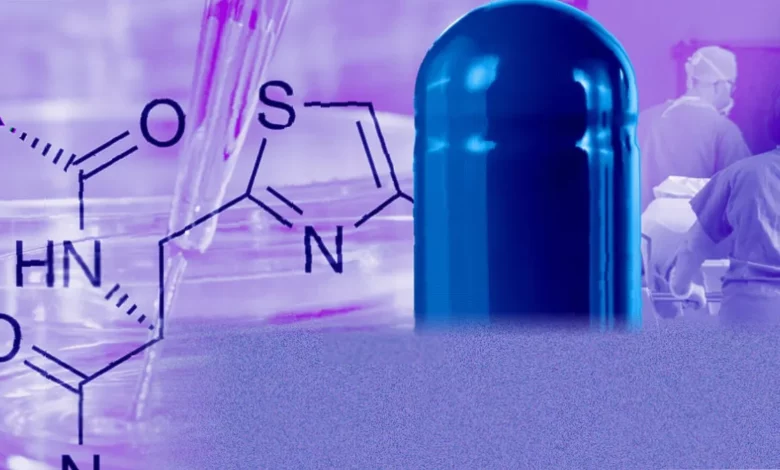
The significance of daraxonrasib extends far beyond this single trial. The drug is an oral RAS(ON) multi-selective inhibitor that works by acting as a molecular glue, blocking the signalling of RAS proteins. Since the 1980s, these molecules — which are often misregulated or mutated in cancer cells — were deemed “undruggable” because of their complex, smooth structure, which made it nearly impossible for conventional drugs to latch on. Through what scientists describe as impressive medicinal chemistry, that barrier has now been broken.
While daraxonrasib showed particular efficacy in patients with KRAS G12 mutations, it also proved beneficial regardless of RAS mutation status. This matters because RAS-driven cancers are not limited to the pancreas. Trials are already under way to test the drug in other malignancies where Ras plays a central role, including approximately 40% of colorectal cancers and 30% of small-cell lung cancers. The ability to target a common molecular driver across tumour types, combined with the growing routine use of genetic screening to identify which patients will benefit, could transform treatment for thousands of patients in the coming decade.
Other Breakthroughs at ASCO
Daraxonrasib was not the only promising development to emerge from the Chicago meeting. A new subcutaneous jab, amivantamab, developed by Johnson & Johnson, demonstrated dramatic results in patients with recurrent or metastatic head and neck cancer who had stopped responding to standard treatments. In a trial of 102 patients, 43 experienced tumour shrinkage and in 15 cases the tumours disappeared entirely. Patients treated with the jab lived for a median of one year after starting treatment. Amivantamab, which is already approved for certain types of lung cancer and is being evaluated in about 60 clinical trials, blocks crucial signals that cancer cells need to grow and spread. Its administration as a quick injection rather than a lengthy intravenous drip marks a practical improvement for patients.
In bladder cancer, a trial showed that adding the immunotherapy drug durvalumab to chemotherapy and radiotherapy reduced the risk of the disease returning and, crucially, eliminated the need for surgery. Advanced bladder cancer often requires the removal of the entire bladder — a life-altering procedure. The combination therapy represents a shift towards less invasive, more effective systemic treatments. Immunotherapy has become a cornerstone of bladder cancer care, with a range of approved PD-1/PD-L1 inhibitors, and combinations such as enfortumab vedotin with pembrolizumab have doubled overall survival for advanced patients.
A Golden Age for Cancer Research?
Michelle Mitchell, chief executive of Cancer Research UK, has described the current period as a “golden age for cancer research,” pointing to rapid advances in diagnostics, treatments and the integration of technologies such as artificial intelligence and genomics. Survival rates in the UK have doubled since the 1970s, and the trajectory is upward. Yet cancer remains the country’s biggest killer, and significant challenges persist, including long waiting times for diagnosis and treatment within the NHS and persistent inequalities in survival rates across different cancer types and demographic groups.
Political leaders have long promised a decisive victory over cancer — from Richard Nixon’s 1971 “war on cancer” to the Obama‑Biden Cancer Moonshot and Sajid Javid’s 2022 “war on cancer” initiative in the UK. Such framing can obscure the nature of real progress, which rarely arrives as a single rout. Instead, it comes as a series of modest, incremental advances: drugs that buy months of precious time, treatments that spare patients from drastic surgery, and a growing ability to match the right therapy to the right patient. The FDA has already granted an expanded access programme for daraxonrasib, meaning that some patients may benefit before full regulatory approval is secured.