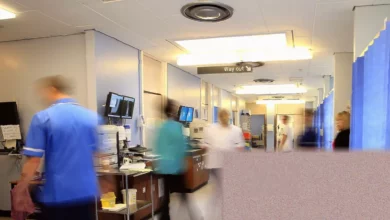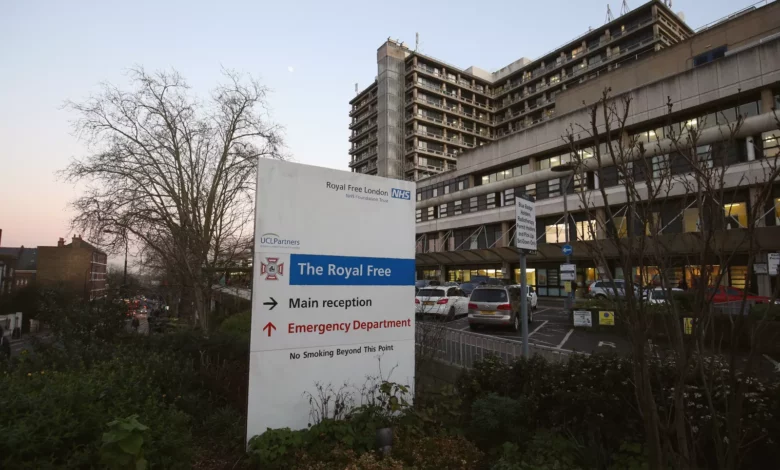
Three “never events” — including a patient receiving a wrong injection and a line being mistakenly placed into an artery during a resuscitation — have been recorded by a North London NHS trust in the space of two months.
The incidents occurred in April and May at the Royal Free London NHS Foundation Trust, which runs Barnet Hospital, Chase Farm Hospital, North Middlesex University Hospital and the Royal Free Hospital. Julie Hamilton, the trust’s board trustee and group chief nurse, disclosed the details during a board meeting last Wednesday.
One of the three events involved a patient being given a “wrong injection during a procedure”. The other two were classified as “wrong site” incidents, meaning a line was inserted into the incorrect part of a patient’s body. The most serious of these saw a line placed into the artery of an “acutely unwell” patient who was in a “resuscitation situation”, when it should have gone into a vein. Hamilton did not disclose at which hospital the errors took place.
Under NHS guidelines, never events are defined as “serious incidents that are wholly preventable” because national guidance and safety recommendations providing “strong systemic protective barriers” exist and “should have been implemented by all healthcare providers”. The framework is designed not to assign blame but to understand why safety barriers failed and to strengthen processes.
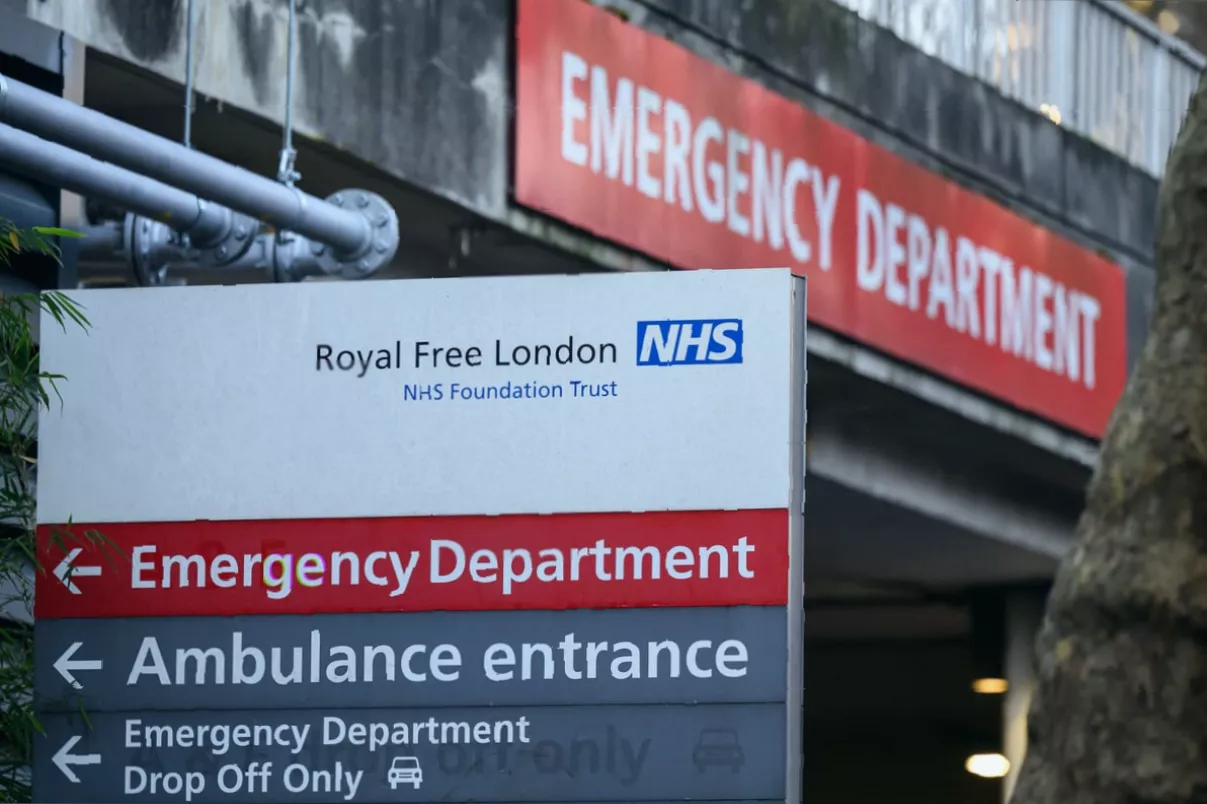
Hamilton described the cluster as “disappointing”, adding: “They’re called never events because they should never happen.” She said such incidents ought to be preventable “with the right systems in place”. She noted that the trust normally has a “low threshold” for reporting serious mistakes and stressed that two of the three events “had no harm”. Nevertheless, she said the trust was “taking the opportunity to do a bit of a relook” at actions taken following a “previous little spell of never events” in prior years.
The current spate marks a sharp upturn. No never events were reported by the trust during the entirety of the previous twelve-month period. However, between 1st April 2022 and 31st March 2023, Royal Free London recorded eight such incidents, while the former trust that ran North Middlesex University Hospital recorded four. In the 2023/24 financial year — the last complete period before the merger — Royal Free London recorded two and North Middlesex recorded none.
A trust under scrutiny
North Middlesex University Hospital NHS Trust was merged into Royal Free London on 1st January 2025, creating one of the largest NHS organisations in the country, operating four major hospitals and three accident and emergency departments across the North London boroughs of Enfield, Barnet, Camden and parts of Haringey. The merger was intended to improve services, offer “better joined-up community services”, cut waiting times and bring specialist care closer to home.
Both trusts had been facing ongoing difficulties prior to the merger. The Care Quality Commission (CQC) rated the Royal Free London NHS Foundation Trust as “Requires improvement” overall as of May 2019, with safety marked as “Requires improvement”. A CQC inspection prompted by a previous high number of never events found that surgical services needed to go further in embedding changes, although safety had improved due to action plans. North Middlesex University Hospital NHS Trust was also rated “Requires improvement” overall as of March 2024, with safety, effectiveness, responsiveness and leadership all rated as “Requires improvement”. Its accident and emergency department was rated “inadequate” in July 2016 due to insufficient doctors and excessive delays, and maternity services were rated “inadequate” in December 2023. Following the merger, the North Middlesex site’s overall rating remained “requires improvement” as of January 2025.
Human factors and culture: the path to prevention
In discussing how to prevent future never events, trust leaders placed significant emphasis on what Hamilton described as “human factor elements”. She said these are “usually at play” during such incidents, including the specific details of how staff work together and the “culture in those situations”.
While the trust’s audits on checklists designed to prevent never events usually show “pretty good” compliance, Hamilton admitted that addressing the “wider dynamic” in the locations where mistakes happen was key. She said the trust will be making sure “there’s a real clear dynamic” between specific teams, adding that focusing on improving this is what the board “hope will make the difference”.

Dr Gillian Smith, chief medical officer of the trust, agreed that “human factors training is really important”. She added: “It’s how we maintain that because we know that however often you remind people about checklists and do this work, it’s that constant training and iteration as teams that we need to maintain, and I guess that’s the culture shift we need. It’s not just a one-off training intervention, it’s something we need to shift ourselves towards and do it on a continuous basis.”
Mark Lam, chair of the trust, said never events required “continued monitoring” to ensure a pattern of mistakes does not start to develop. NHS England is also consulting on the effectiveness of the current never events framework, with a view to possible revisions — a recognition that the problem extends beyond a single trust. Nationally, 370 never events were reported across 136 trusts in the 2023/24 financial year, and between April 2024 and January 2025, 334 were recorded, with wrong-site surgery remaining the most common category.
Dr Smith’s call for a “culture shift” — moving away from one-off training and towards continuous, team-based learning — underscores the challenge facing the Royal Free London as it seeks to ensure that events defined as “never” do not become a recurring pattern.