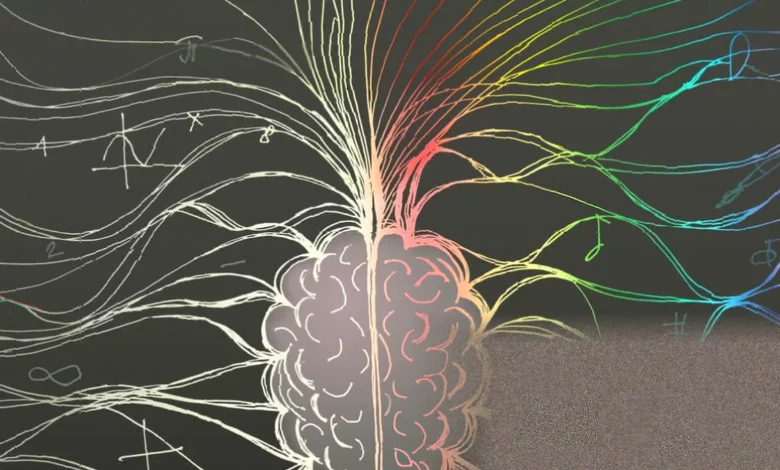
A patient who could only communicate by blinking one eyelid after a brainstem stroke went on to dictate full sentences, access specialist neurorehabilitation and eventually return to work. The case, described by speech and language therapist John Swan of Cheltenham, illustrates the enduring capacity of the brain to rewire itself – a phenomenon known as neuroplasticity – and the stark difference that timely, expert therapy can make. The man had locked-in syndrome, a condition famously depicted in Jean-Dominique Bauby’s memoir The Diving-Bell and the Butterfly, and had been written off by consultants and his own family before a nurse and Mr Swan recognised the intentional nature of his blinking. He remained a wheelchair user but regained his ability to communicate and resumed employment.
Other survivors tell similar stories of remarkable recovery, though they also highlight the unpredictable nature of brain injury. Marcie Shaoul of London suffered a prefrontal lobe injury seven years ago after a horse-riding accident. She now runs two businesses and published a book last year, despite episodes in which she stormed out of a family gathering, turned up at a friend’s house 200 miles away on the wrong weekend, and booked an Airbnb in Budapest for the wrong month. “The brain can heal to an extent,” she said. “When I look back at how unable I was to do anything seven years ago, and where I am today, I can clearly see that the brain is incredibly remarkable.”
Linda Leroy, an artist in London, had a stroke in 2024 and received no aftercare beyond scans and medication after two days without medical attention in a remote part of the Western Isles. Unable to recognise her own hand’s output at first, she began drawing intricate root systems – a practice she kept up for 21 months. The drawings evolved into something she could not have produced before her stroke, and she believes the work helped repair neural pathways. “I feel a real connection between roots and my neural pathways,” she said. “I am lucky to have the artistic background to create an interesting body of work, which I am planning to share with others who might be inspired to try this amateur brain training.”
But recovery is far from guaranteed. Anna Bauer Ross of Toronto, who had a major stroke 18 years ago at age 36 and relearned to walk, write and speak through extensive therapy, said she is constantly frustrated by lay misconceptions about neuroplasticity. “People think it’s this magical growth, like the tail of a gecko that’s fallen off in a fight,” she said. “Neuroplasticity does not mean your brain repairs everything.” Brain rewiring requires sustained, specific and emotionally engaging practice – not just positive thinking – and it can also reinforce harmful patterns such as anxiety or addiction if not guided properly.
The postcode lottery in neurorehabilitation
While some patients achieve substantial gains, the availability of the therapy that makes such gains possible depends heavily on where they live. Dr Jill Fenton and Nick Fenton of Hastings described the case of their daughter, who underwent 11 hours of neurosurgery to remove a brain tumour in January 2025 at a London teaching hospital. A team of therapists recommended that she be repatriated to a neurorehabilitation centre, but she was rejected by the nearest centre simply because of her postcode. Instead, she was sent to an acute medical ward at a local hospital and then discharged to the residential care home where she had lived before surgery – a facility not equipped to address her rehabilitation needs. NHS community therapy eventually amounted to just six physiotherapy sessions. The family is now privately funding additional physiotherapy, a neuro-occupational therapist, hydrotherapy, and music and art therapy. More than a year after surgery, an NHS speech and language therapist has provided guidance on eating with a fork, and a community learning disability specialist is due to see her. An assessment by a neuropsychologist remains outstanding. “We are in our 70s and most of our time is taken up with transporting our daughter to therapies,” the couple said. “Sadly, we feel NHS managers gave up far too early and have largely left us picking up the pieces.”
Norm Mohamid of Toronto, a former government policy writer for people with disabilities who had a stroke 13 years ago at age 65, said he believed he received more help because he was seen as a better investment of health resources. “If one was not considered an employed or employable member of society, you were less likely to get the attention you needed to return as an active member of society,” he said. His first goal after the stroke was bending over to tie his shoelaces.
Staff shortages and inadequate therapy hours
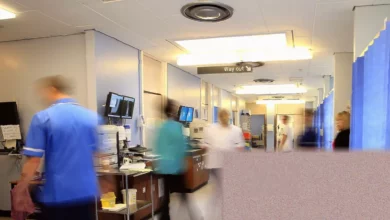
The gaps in care are not isolated cases. Health leaders and professional bodies, including the Chartered Society of Physiotherapy and the Association of Chartered Physiotherapists in Neurology, report that stroke patients are being “failed every day” due to critical staff shortages in rehabilitation services. National guidelines recommend three hours of therapy-based rehabilitation per day, five days a week, yet data suggest patients typically receive only three to four days of therapy a week in hospital and just one to two days a week after discharge. A national survey of stroke physiotherapists found that community stroke services are 26% below recommended physiotherapist levels, acute stroke teams are 15% below, and community rehabilitation support workers are 36% below guidance levels. High workloads and unfilled positions contribute to burnout and retention problems among neurorehabilitation professionals.
Jonathon O’Brien, of the Department of Occupational Therapy at the University of Liverpool, said one way forward is enhancing the training given to staff. “Some need greater understanding of neurophysiology, neuropsychology, musculoskeletal anatomy and human movement,” he wrote. “Particularly important is training to set improved person-centred goals, smarter treatment skills and consistent use of outcome measures.” He also called for a 24/7 approach, so that therapists’ recommendations are implemented by nursing and support staff outside dedicated therapy time.
Understanding neuroplasticity: hope and limitations
Neuroplasticity is the brain’s ability to reorganise itself by forming new neural connections throughout life, not just in childhood. This capacity continues across the lifespan, meaning adults can also rewire their brains with sufficient repetition and practice. However, as Anna Bauer Ross’s experience makes clear, it is not a magic repair mechanism. Meaningful rewiring requires sustained, specific and emotionally engaging practice; the brain strengthens whatever patterns are repeated, whether helpful or harmful. Individual differences in neuroarchitecture also shape outcomes, supporting a spectrum view of cognition and debunking the idea that people with brain injuries are simply “broken”.
UK institutions are actively researching these processes. The Plasticity Lab at the University of Cambridge studies how brain areas supporting perception and action are shaped by experience, focusing on hand representation and adaptation after injury. The Nuffield Department of Clinical Neurosciences at the University of Oxford investigates how the brain changes during learning, ageing and recovery from damage such as stroke, using brain imaging to monitor changes. The University of Birmingham is exploring structural plasticity, degeneration, regeneration and repair in the central nervous system using fruit-fly models to understand fundamental principles relevant to human brain health.
Dr Orlando Swayne, a consultant neurologist with a specialist interest in neurorehabilitation who has conducted PhD research on brain plasticity during stroke recovery, is a strong advocate for evidence-based neurorehabilitation. His upcoming book, How to Use a Fork – Stories of Mending the Broken Brain, is due in June 2026. The letters that prompted this coverage were written in response to an article by Ian Sample, the Guardian’s science editor, on Dr Swayne’s work.
Economic case for early intervention
John Swan, the speech and language therapist, noted that expert neurorehabilitation can save money. “The more independent a patient can become, the less reliant they are on nursing or social care, and the more likely they are to return to paid employment,” he said. “The NHS is struggling for resources as never before. I know trusts that are making staff redundant to avoid bankruptcy. The tragedy is that often a little extra spent now can save a greater sum in the future, but many trusts feel they cannot commit to even a small amount of extra spending.”
For Dr Jill Fenton and her husband, the reality of that tragedy is lived daily. Their daughter is slowly making progress, and they say reading Dr Swayne’s interview made them realise they should not give up. But the burden of navigating a fragmented system, funding therapies themselves and waiting for assessments that may never come has fallen almost entirely on their shoulders.
Linda Leroy, meanwhile, continues to draw. Twenty-one months after her stroke, she is producing work she could not have done before. “There were many days when I felt like giving up,” she said. “I am lucky to have the artistic background to create an interesting body of work, which I am planning to share with others who might be inspired to try this amateur brain training.”