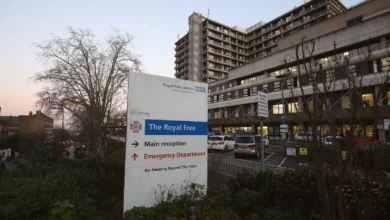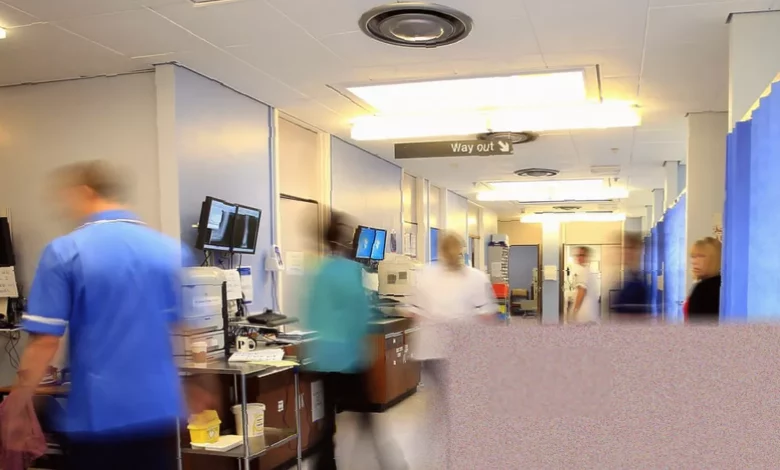
More than 1,300 patients a month in England are dying needlessly as a direct consequence of long waits in Accident & Emergency departments, according to new analysis that reveals a tenfold increase in a decade. The Royal College of Emergency Medicine estimates that around 300 deaths linked to prolonged A&E waits occurred every week in 2025, compared with just 30 a week in 2015.
The RCEM’s president, Dr Ian Higginson, said he was left wondering how many more deaths it would take before a meaningful plan emerged to tackle the crisis. “We have to ask why this awful problem isn’t the subject of relentless focus and political conversation,” he said. “The number of deaths linked to long stays in our emergency departments explicitly show the system is failing the patients it is meant to be caring for.”
The Human Toll
Using its methodology, the RCEM calculated that there were 15,860 excess deaths in 2025 related to long stays in A&E. That figure was slightly lower than the 16,644 recorded in 2024, but nearly ten times the 1,657 deaths estimated for 2015. Dr Higginson, an emergency doctor himself, described the situation as heartbreaking: “Patients arrive to our emergency departments in their time of need, and we can’t do our jobs properly because we are full. To make things worse we are being asked to focus on the least sick patients to try and marginally improve headline statistics, rather than on those who need our services the most.”
Professor Nicola Ranger, general secretary and chief executive of the Royal College of Nursing, called the death toll a catastrophe that had gone unchecked in hospitals for far too long. “To bring this to an end, we need system-wide, long-term, sustainable solutions,” she said, adding that every day without action was a failure with “devastating consequences” for patients. Dr Vicky Price, president of the Society for Acute Medicine, labelled the deaths a “national shame” and warned that A&E overcrowding was getting worse. She also criticised the government’s focus on “unnecessary” A&E attendances as a “smokescreen” for genuine pressures on capacity, patient flow, workforce shortages, delayed discharges and the volume of mental health patients presenting at emergency departments.
How the Estimates Were Calculated
The RCEM’s excess death estimates are based on a study published in the Emergency Medicine Journal in 2021, which analysed more than five million NHS patients. That research established a clear link between extended A&E waiting times and increased mortality. It found that for every 72 patients who spent between eight and 12 hours in A&E before being admitted to a bed, there was one excess death. Crucially, the risk of death began to rise after just five hours of waiting and grew steadily worse the longer patients remained in the emergency department. Using this correlation, the RCEM applied the 2019 patient data on long waits to each subsequent year to produce its annual excess death figures. The college notes that the underlying study’s findings have not been challenged and remain a robust basis for monitoring the impact of crowding.
Systemic Pressures Exposed
The wider picture painted by the data reveals a system under extreme strain. In 2024, more than 1.7 million patients experienced waits of 12 hours or more in emergency departments before being admitted, discharged or transferred. Nearly half a million people – 489,138 – waited 24 hours or longer in A&E across England in the year to June 2026, an increase of 150,000 in three years. Some patients have reported waiting up to 30 hours for treatment. The practice of “corridor care” – where patients are treated in corridors, waiting rooms or even store cupboards – has become a stark indicator of the pressure.
One of the principal drivers of hospital bed shortages is delayed discharge. In February 2024, between 13,200 and 14,200 patients remained in hospital daily despite being medically fit to leave, occupying more than one in eight general and acute beds. This is due to a lack of available social care packages, home-care support or community beds. Workforce shortages also bite: as of November 2025, there were 367,300 full-time equivalent nurses in England’s hospitals and community health services, with persistent vacancy rates. The Royal College of Nursing has highlighted a “catastrophic system-wide failure” in mental health services, with Freedom of Information requests showing that the number of under-18s waiting at least 12 hours for admission to a mental health unit more than trebled – from 237 in 2019 to 802 in 2025. Analysis also indicates that the risk of post-discharge death after a long A&E stay is greater for younger patients, those in London, and people who are not subsequently admitted to hospital.
The four-hour A&E waiting time target has been missed every month nationally since July 2015. In March 2026, 36.2% of patients waited more than four hours. The Urgent and Emergency Care Plan for 2025/26 introduced an interim minimum standard of 78% of patients seen within four hours by March 2026; the actual figure for that month was 77.1%, the best performance since July 2021. Yet the number of patients waiting more than 12 hours from the decision to admit to actual admission has risen sharply: in January 2026, 71,517 patients experienced such waits, representing 13% of all emergency admissions.
Government Response
The Department of Health and Social Care said it was unacceptable for patients to face long waits for emergency care and expressed sympathy for families who had lost loved ones. A spokesperson noted that A&E waiting times were at their lowest level in half a decade, but acknowledged more needed to be done. The government is investing more than £215m in 40 new and expanded same-day emergency care and urgent treatment centres across England to reduce pressure on A&E. It has also announced a £450m investment package for urgent and emergency care, including plans for up to 15 mental health crisis assessment centres and the rollout of nearly 500 new ambulances by March 2026.
In addition, specialist teams are being deployed to NHS trusts with the worst levels of corridor care in an effort to eradicate it. The government has also committed to digitising the health service, including a single patient record system intended to improve data sharing and potentially reduce A&E attendances. Dr Higginson welcomed the stated commitment to eliminate corridor care but warned: “Until we prioritise patients who experience long waits for admission, we will not get to the bottom of the whole issue.” He added that without a shift in focus, A&Es in England will “remain in constant distress and patients will continue to die unnecessarily.”