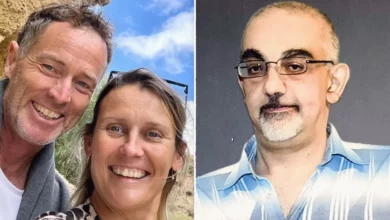
Paralympic athlete Hannah Babalola was forced to choose between enduring discomfort or leaving a KLM flight after cabin crew refused to provide an onboard wheelchair, leaving her unable to access the toilet during an almost 11-hour journey.
Babalola, a 37-year-old Nigerian Paralympian and wheelchair racer who lives in Chicago, was returning home from a wheelchair-racing event in South Africa on 26 May. She had booked the return leg from Cape Town to Chicago via Amsterdam as a wheelchair-using passenger and had experienced no issues on the outbound flight. But when she boarded the Cape Town–Amsterdam leg and confirmed to crew that she would need an aisle chair – a narrow wheelchair designed for use inside an aircraft – the problems began.
The Paralympian, who competed in the T54 100m and 800m at the 2016 Rio Games and the 100m and 400m at the 2024 Paris Games, and holds multiple African track records, was told by cabin crew that the aisle chair could not be used during the flight because turbulence would make it too dangerous. Her options, a crew member explained in a conversation Babalola recorded with permission, were to use the toilet without the wheelchair or to “offload” from the plane. She was then handed a written notice headed “Unacceptable conduct and final warning on behalf of the captain of this plane.”
“I needed to get home to Chicago to my family and to get to work and I couldn’t ‘offload’ from the flight,” Babalola said. She described feeling compelled to avoid eating or drinking for the duration because she feared needing to use the restroom and being unable to access it. “I spent much of the flight trying to control my emotions and I found myself crying because of the way I had been treated,” she said. “This experience was humiliating, distressing, and degrading. The situation caused me significant physical discomfort and emotional distress. I believe that the manner in which I was treated raises serious concerns regarding discrimination and equal treatment.”
The cabin crew called police, who declined to take any action. When the flight landed in Amsterdam, KLM requested that airport police be on standby, but they also declined to intervene. Babalola transferred to a different connecting flight to complete her journey to Chicago.
Babalola filed a formal complaint with KLM. In a reply, a member of KLM’s customer service team said: “It is very concerning to read about this experience, particularly the distress caused during boarding and throughout the flight. Your account describes a situation that must have felt deeply upsetting and unsettling, especially when travelling with an accessibility need and simply expecting appropriate assistance and respectful treatment.” The response added that a full review would be carried out by the appropriate teams, examining crew reports and other relevant information. “My sincere apologies are extended for the distress and upset this experience has caused,” the staff member wrote.
A KLM spokesperson told the Guardian: “We regret that an incident occurred involving one of our passengers on the flight from Cape Town to Amsterdam on 26 May. Out of respect for the privacy of both the passenger and our crew, we find it inappropriate to discuss the details of the situation.”
KLM’s published policies state that foldable wheelchairs designed to fit aircraft aisles are available on board all KLM and KLM Cityhopper aircraft. The airline requires requests for assistance to be made at least 48 hours in advance, though it says it will make a reasonable effort to accommodate late requests. However, flight attendants are not permitted to lift or carry passengers, assist within the toilet area, or provide medical help – meaning passengers who cannot use an aisle chair independently may need to travel with a companion. Under EU Regulation 1107/2006, airport management companies are primarily responsible for providing free assistance to passengers with reduced mobility, though airlines must facilitate requests. Passengers are entitled to such assistance without needing to provide medical evidence and airlines must carry mobility equipment free of charge.
A Pattern of Failures
Babalola’s experience echoes that of British Paralympian Anne Wafula Strike, who made national headlines in 2017 after she was forced to wet herself on a CrossCountry train because the accessible toilet was out of order. The incident sparked a national debate on equal access to transport for disabled people. Commenting on Babalola’s case, Wafula Strike said: “Nine years ago I was forced to wet myself on a train because there was no functioning accessible toilet. Almost a decade later, the experience of Hannah Babalola shows we still have a long way to go. It is upsetting that disabled people are having to fight the same battles over and over again just to access the rights that able-bodied passengers have.”
More recently, Baroness Tanni Grey-Thompson, a 16-time Paralympic medallist, disclosed that her wheelchair was lost on a flight from Geneva to Birmingham and later returned to her “sawn in half.” She was asked by airline staff if she had “tried walking.” Her case was raised in the House of Lords during discussions on a new aviation bill that could fine airlines for failing to assist disabled passengers. In 2019, Paralympic basketball bronze medallist Matt Byrne was refused boarding on a Ryanair flight from Dublin to Birmingham after the pilot declined to carry him because of a slight delay. And in 2010, a wheelchair athlete named Powell was banned from an Eastern Airways flight after a booking error suggested he could climb steps unaided.