Nearly three hundred portraits of Marilyn Monroe fill the National Portrait Gallery in London this summer, a centenary exhibition that traces the woman behind the myth from a studio contact sheet to a Warhol silkscreen. The show, Marilyn Monroe: A Portrait, runs from June 4 until September 6, 2026, and the gallery warns that tickets are selling out fast, with standard entry at £27 and concessions at £24.30.
It opens with a deliberate contrast: one wall carries an instantly familiar Andy Warhol print, all flat colour and celebrity repetition; opposite it hangs a small, easy-to-miss photograph of a young woman in modest clothes, untouched by retouching. That woman is Norma Jeane Mortenson, born on June 1, 1926, who spent much of her early childhood in foster homes and an orphanage before a wartime factory job led her into modelling. The exhibition refuses to let visitors forget that Marilyn Monroe was made, not born — and that the making began with a child who had no reason to expect the flashbulbs.
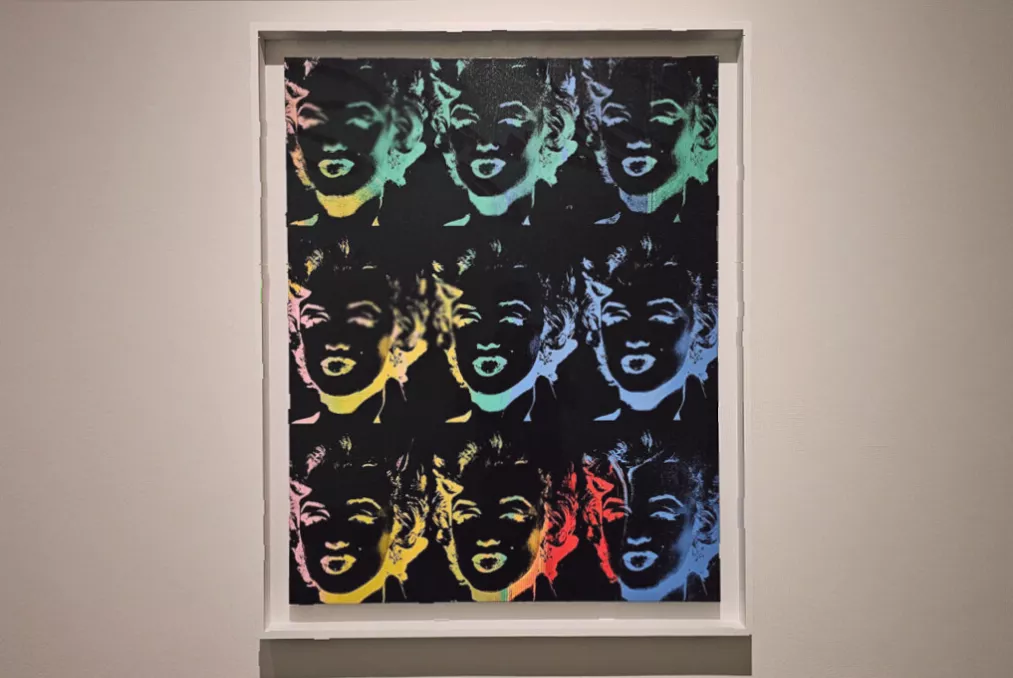
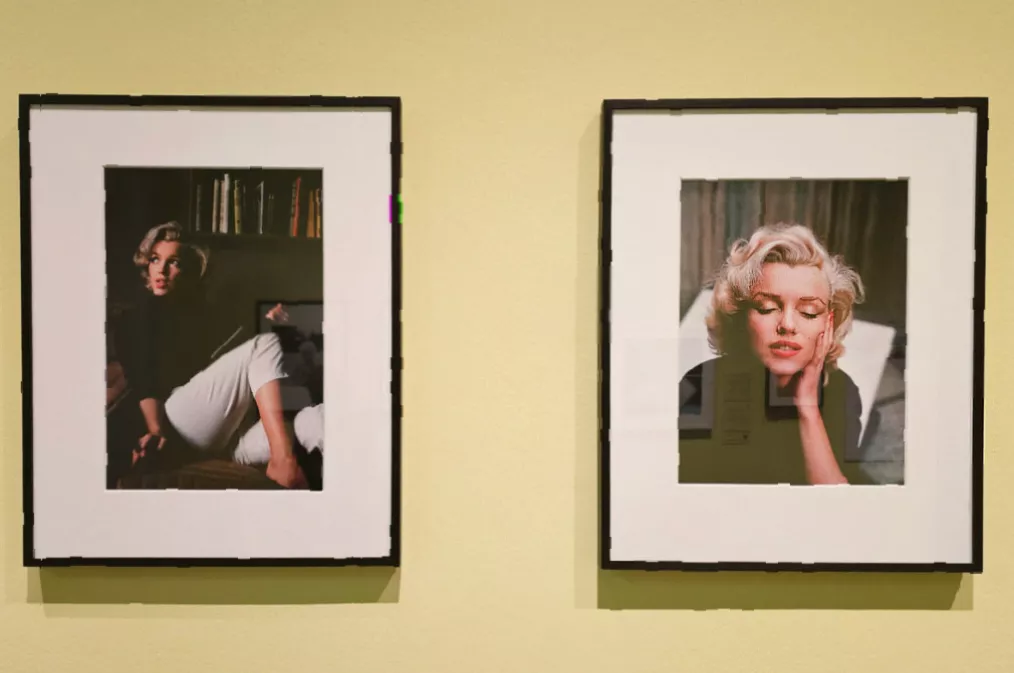
The National Portrait Gallery presents the transformation as a deliberate act of self-creation. Monroe, the curators argue, was no passive muse. She reviewed contact sheets for hours, forbade certain images from publication, and in 1955 founded her own production company — Marilyn Monroe Productions — to wrest creative control from the studio system. The walls are filled with photographs by more than twenty leading twentieth-century photographers: Cecil Beaton, Richard Avedon, Eve Arnold, Milton H. Greene, Sam Shaw, George Barris, Philippe Halsman, Henri Cartier-Bresson, André de Dienes, and others. Alongside them hang painted portraits by artists including Willem de Kooning, Richard Hamilton, Pauline Boty, and, of course, Warhol himself. The effect is a smorgasbord of Marilyn in swimwear, in monochrome, in colour, lounging, posing, always watched. The exhibition acknowledges that so many of these images are set pieces taken by professionals that the woman underneath rarely peeks through — but then, as the gallery notes, the entire point of Marilyn Monroe was the glamour, and there is a sense that the curtain should not be pulled back too far.
The dress, the crowd, the spectacle
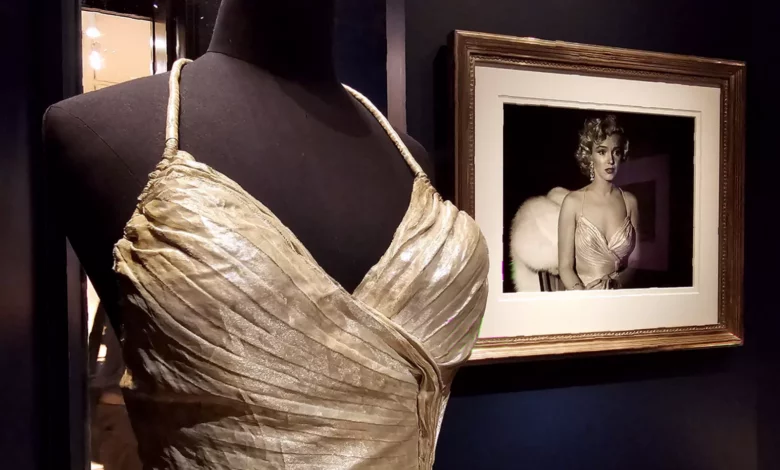
The show gives its fullest treatment to the most famous image in Monroe’s career: the white dress billowing over a subway grate. The photograph, credited to Sam Shaw, who first conceived the flying-skirt idea, is here. So is the film still from The Seven Year Itch. But the exhibition makes a point of displaying a wider shot taken from further back — one that reveals the crowd. On September 15, 1954, Monroe stood over a grate on Lexington Avenue at 52nd Street in Manhattan while hundreds of onlookers pressed in to watch. The scene was a public spectacle, not a closed set. The noise from the crowd was so loud that the original footage proved unusable; the scene had to be re-shot later on a soundstage at 20th Century Fox, with the sound re-recorded in private. The white halter dress itself, designed by William Travilla, has become one of the most famous garments in cinema history. What many people assume was a quiet film set with a handful of crew members was in fact a raucous urban event, replicated in newspapers the next morning as a shared image of the day — a collective experience that, the exhibition suggests, we will never see again in an age of phones delivering news alone.
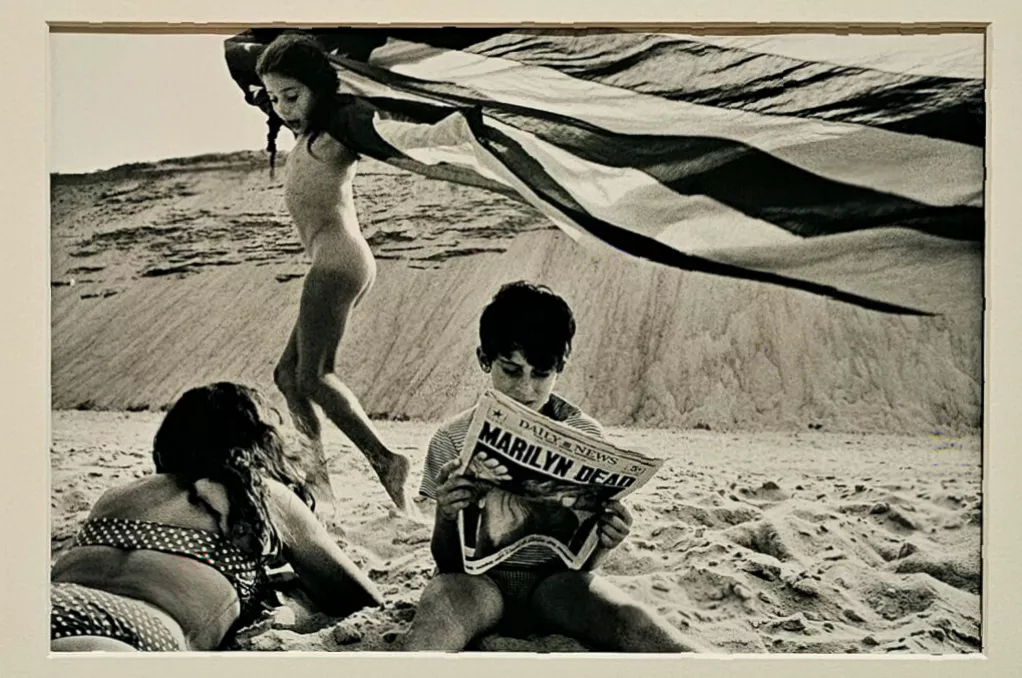
The exhibition does not shy away from the darker side of that fame. Behind the glamour lies Monroe’s death on August 4, 1962, at age 36, officially ruled a probable suicide by barbiturate overdose. The circumstances have long been subject to speculation, with some theories suggesting an accidental overdose or even homicide. The National Portrait Gallery includes artworks that respond to her death, and the curators note how the front pages of newspapers became a shared urban landscape — commuters holding up those headlines on trains and in parks, a collective portrait of a vanished star. It is a reminder of a time before news became singular, private, scrolled on a screen.
The mystery that remains
Personal artifacts — books, scripts, clothing — sit alongside the photographs, offering glimpses of the woman behind the icon. She studied at the Actors Studio, took on dramatic roles in Bus Stop and The Misfits, and won a Golden Globe for Some Like It Hot. She was, the exhibition argues, a savvy image-maker who understood the power of the camera and wielded it. Yet the exhibition leaves its visitors with a question it cannot answer. What if she had lived? Our image of Monroe is fixed: a young, sultry actress famous for looks more than skill. But many lauded actresses today went through a youthful phase as they built their craft. Could Marilyn Monroe have grown into a critically admired performer, her early decade of pin-ups and bombshell roles buried under later awards? It is a mystery that will never be solved. The exhibition ends with the star frozen at thirty-six, fixed in memory forever.
The BFI Southbank will run a complementary film season, Marilyn Monroe: Self Made Star, throughout June and July. The National Portrait Gallery on Charing Cross Road is fully accessible, with step-free entrances, lifts, accessible toilets including a Changing Places facility, and hearing loops. Visitors can request wheelchairs, large-print maps and portable stools. The nearest public car park is Q-Park Leicester Square as the gallery has no on-site parking. Ticket prices also include a National Art Pass rate and reduced entry for those on income support or named benefits, as well as for children aged 12 to 15.