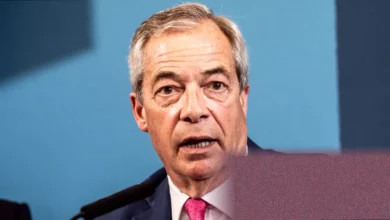
The idea that people of colour have been elevated above white people, accorded privileges that go far beyond mere equality, has moved from the fringes to the mainstream. It surfaces in the rejection of diversity, equity and inclusion initiatives, in accusations of “two-tier policing”, and in the belief – articulated by Reform UK leader Nigel Farage – that there is “a two-tier culture in this country, where the rights and privileges of white people matter less than those of ethnic minorities”. This is not a new notion. It is the latest iteration of a backlash that has followed every wave of civil rights progress and enfranchisement.
The long arc of backlash
Earlier struggles for racial equality were fought and contested in the arena of policy: voting rights, anti-discrimination laws, access to public accommodation. The pushback came in legislative chambers and courtrooms. Today the battlefield has shifted decisively to culture. Social movements such as #MeToo, women’s marches and Black Lives Matter now demand not sweeping legal changes but cultural transformation. The reaction has taken the same form: “not all men”, “white lives matter” – a competing identity politics grounded in a claim of victimhood. The result, as the columnist Nesrine Malik has observed, is a struggle in which groups compete for the prize of most subjugated, using the mimetic language of grievance that racial justice movements have themselves popularised.
This cultural contestation is driven by a paradox. The gains of recent years have produced a fleeting but intense cultural saturation with the symbolic: taking the knee, removing statues, debates over imperial history and academic curricula, and the expansion of diversity measures in private enterprise and public life. The effect has been to create a widespread perception of racial elevation of minorities and a high visibility of race discourse. Yet the material conditions of ethnic minorities remain stubbornly unequal. People in Bangladeshi, Black African and Pakistani households are roughly three times more likely to fall into very deep poverty each year, according to official data. Black individuals are stopped and searched at a rate 2.2 times higher than white individuals, and arrested at 2.2 times the rate. Charge rates for similar offences are higher for Black Caribbean suspects (77.5%) than for white suspects (69.9%). The gap between perception and reality generates a distinctive irritation: some white people who have experienced the past years of racial justice advocacy as a surfeit of redress ask, with baffled resentment, “what are you still going on about?”
The drivers of cultural contestation
The shift from policy battles to cultural ones did not happen in a vacuum. It is the product of a wider erosion of the mechanisms through which people once identified shared material interests and organised collectively. The trade union movement has been weakened. Labour itself has become more precarious and atomised. Deindustrialisation destroyed working-class communities and the social infrastructure that surrounded them. Austerity closed youth clubs, family support centres and other free spaces where people mixed, driving them indoors and onto their phones. The result is what Malik calls a “rapacious individualisation” – a state in which people are isolated, hermetically sealed, and prone to competing for status rather than bargaining for material goods. That competition now takes the form of a cultural land grab: protests and counter-protests over symbolic ground, from statues to social media hashtags, while the underlying scarcity of housing, healthcare and state schooling intensifies the sense of siege.
Into this chasm have stepped figures ready to exploit tragedy for political gain. The murder of Henry Nowak, an 18-year-old accountancy and finance student at the University of Southampton, has become a cause célèbre for the “two-tier policing” narrative. Nowak was fatally stabbed five times with a dagger by Vickrum Digwa, a 23-year-old British Sikh man, after a verbal altercation on December 3 last year. Digwa, who falsely claimed Nowak had racially abused him, was convicted of murder on May 28 and sentenced to life imprisonment with a minimum term of 21 years. His mother, Kiran Kaur, was convicted of assisting an offender for hiding the weapon. Body-worn camera footage showed that responding officers handcuffed Nowak as he lay dying, despite his repeated protests that he was stabbed and could not breathe; one officer was heard saying, “I don’t think you have, mate.” The Independent Office for Police Conduct (IOPC) is investigating the officers’ actions, and Hampshire Police have apologised to Nowak’s family.
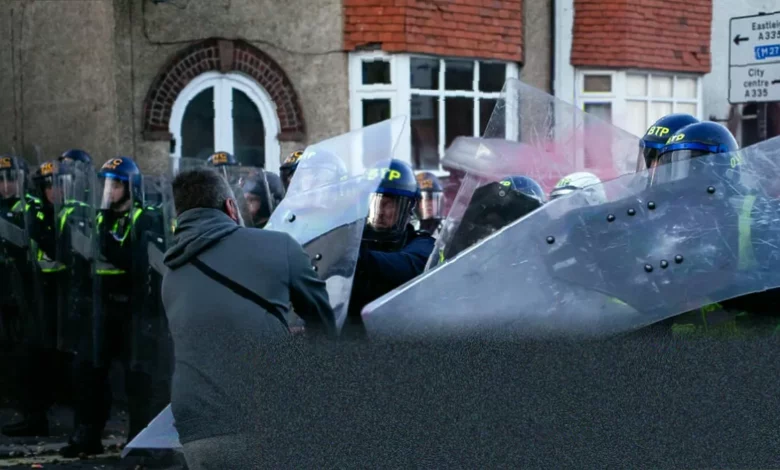
This single incident has been seized upon by Nigel Farage, who calls it evidence of “anti-white prejudice”; by Elon Musk, who has posted repeatedly on X and offered to fund a private prosecution against the police; by Tommy Robinson (Stephen Yaxley-Lennon), who joined protests promoting the same narrative; and by US Vice President JD Vance, who claimed Nowak’s death would not have happened if “generations of European elites had stood their ground against the politics of self-hatred and the mass invasion of migrants”. The US State Department issued a statement calling the police response a “glaring symptom of civilisational decline” – an intervention condemned by the Liberal Democrats as “flagrant foreign interference”. The UK government, through Downing Street, Justice Secretary David Lammy and Home Secretary Shabana Mahmood, has rejected the “two-tier policing” characterisation. Prime Minister Keir Starmer accused Musk and Farage of exploiting the killing to “whip up division”.
The machinery of outrage
The amplification of the Nowak case illustrates a deeper alliance between big tech platforms and the far right in what might be called an outrage arms race. The language of victimhood, once the preserve of movements seeking equality, has been copied and repurposed to bind a different group identity: one that imagines itself under systemic attack. Malik has noted how racial justice discourse has become a “mimetic language, a narrative, a binding story of identity” – one that those who would not swap places with an ethnic minority for a day can nevertheless covet and adopt, using the streets themselves as a literal arena for competition. The backlashes against #MeToo and Black Lives Matter are formulated in identical terms: “not all men”, “white lives matter”. The result is a politics in which the most oppressed group is the most powerful identity – and in which the conditions that might unite people across racial lines, such as shared economic precarity, are never articulated.
That failure is not accidental. Both Labour and Conservative governments have resigned themselves to the inevitability of austerity, undermining the public spaces and collective institutions that once allowed people to recognise themselves as members of a class exploited by a capital- and asset-owning elite. Instead of a new class politics, the vacuum is filled with the calls of figures such as Farage, Musk and Vance, who feed an ambient sense of an overlord class that has thrown ordinary people under the bus. The awful killing of Henry Nowak has been so energetically campaigned around because it offers an opportunity to position people of colour and their white allies as a victorious enemy, drunk on the triumph of wokeness. And in doing so, it marshals loyalty towards politicians who have no interest or ability to do the hard work of government – the work of rebuilding collective institutions, addressing scarcity, and forging a politics that does not array people in competition for the prize of most subjugated.