Google Search requires user consent for cookies, a digital gatekeeper that demands agreement before allowing users to access its search function. Yet, in the wilds of the Cairngorms National Park, a very different kind of consent is unfolding — one that involves released female wildcats choosing to return to the same site, behaviour that has, for the third consecutive year, led to the birth of wild kittens. The parallel between these two worlds of permission, technological and ecological, highlights the importance of understanding and respecting consent in all its forms.
The necessity of user consent for cookie usage is rooted in the principle that individuals should control how their personal data is collected and processed. When a visitor lands on a website using Google Custom Search, they are presented with a prompt to “Allow and Continue” before the search feature becomes operational. This is not merely a bureaucratic hurdle; it is a legal and ethical requirement. Cookies or similar technologies may be employed to tailor the search experience, track usage, or serve advertisements, and without explicit permission, the service cannot function. The privacy policy of the website explains these practices in detail, ensuring that users are fully informed before they grant access. This framework of informed consent mirrors the careful, regulated approach taken by conservationists working with critically endangered species.
Consent in the Wild: How Released Wildcats Signal Readiness
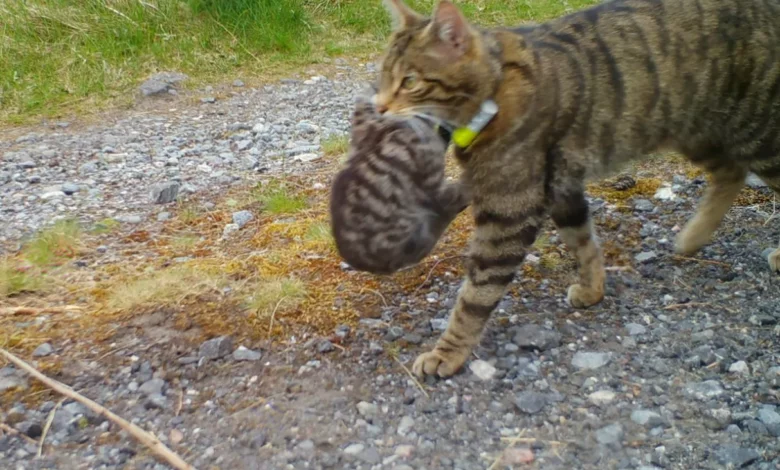
In the Cairngorms National Park, the “Saving Wildcats” project — a European partnership led by the Royal Zoological Society of Scotland (RZSS) in collaboration with NatureScot, Forestry and Land Scotland (FLS), and the Cairngorms National Park Authority — has observed a striking pattern. For the third year running, released female wildcats have given birth to kittens in the wild, following similar successes in 2024 and 2025. The team suspected births were imminent when the females began to return consistently to a single location, a behavioural cue that constituted their own form of consent to a new phase. Trail cameras confirmed this on June 2, 2026, capturing visual evidence of a released female carrying kittens. The exact number of females that have given birth and the size of each litter remain unknown, with ongoing monitoring through GPS collar data and further camera surveillance providing the search function for these elusive births.
The search for signs of reproduction is a meticulous process, not unlike the consent-driven search on a website. Project researchers must rely on indirect evidence — changes in travel patterns, repeated visits to a den site — before they can confirm that a new generation has arrived. This is the search function of conservation fieldwork: a combination of observation, technology, and patience. Since 2023, 46 wildcats have been released into the Cairngorms National Park, and research published in IUCN’s Cat News shows the first year was highly effective, with 95% of released cats surviving their first ten months and reproduction rates exceeding expectations. Those cats gained significant weight and showed minimal signs of injury or disease, demonstrating that the reintroduction strategy is working.
Privacy, Protection, and the “Highland Tiger”
The concept of privacy in the wildcat world is less about data and more about physical space and genetic integrity. The Scottish wildcat, known as the “Highland tiger,” is classified as Critically Endangered in the UK, and by 2019 the population was considered functionally extinct due to hybridisation with domestic and feral cats, habitat loss, disease, and historical persecution. To protect these cats, the “Saving Wildcats” project operates the UK’s first dedicated conservation breeding for release centre at the Highland Wildlife Park near Aviemore. There, animals are bred, treated by veterinarians, and given specialised training to prepare them for life in the wild. This intensive preparation respects the privacy of the cats by minimising human interference once they are released, while still gathering essential data through remote monitoring tools such as new weighing boxes that track weight without disturbance.
Public interaction with wildcats is governed by a strict privacy policy: the cats are protected by law, and the public is advised not to seek them out. If encountered, they must not be disturbed. This mirrors the digital privacy policy that accompanies any request for cookie consent — a clear set of rules designed to protect both the user and the service. For wildcats, the major threats to their privacy and survival include hybridisation, which has created a “hybrid swarm” where pure wildcat genes are increasingly rare. Efforts to address this involve trap-neuter-vaccinate-return (TNVR) programmes for feral domestic cats, as well as collaboration with landowners, gamekeepers, and local communities to address concerns about impacts on other species such as red squirrels and ground-nesting birds. Road traffic accidents and accidental killing by land managers mistaking wildcats for feral cats remain persistent dangers.
More wildcats are scheduled for release this summer to bolster the population’s genetic diversity and resilience. The “Saving Wildcats” project, building on the earlier Scottish Wildcat Action plan, works closely with organisations including the Wildlife Conservation Research Unit at Oxford University, which conducts GPS tracking research. The successes of the past three years — wild births in 2024, 2025, and now 2026 — demonstrate that when the right conditions are met and consent is respected, both digital ecosystems and natural ones can thrive.