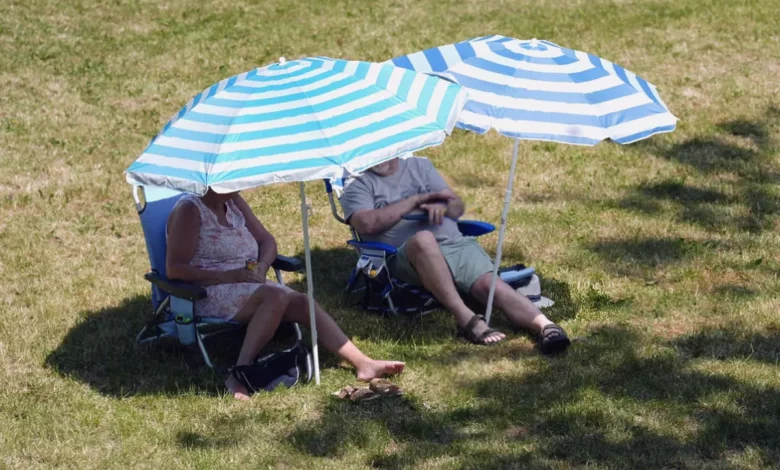
Temperatures will climb significantly this weekend, reaching above average levels across much of the UK, with the south expected to experience the warmest conditions. The Met Office has forecast a distinctly warmer spell from Saturday, with values in some areas likely to reach well into the high 20s Celsius and possibly exceeding 30°C.
According to Met Office deputy chief meteorologist Steven Keates, the outlook from this weekend includes a “distinctly warmer and drier component” that will bring a “prolonged spell of above-average temperatures.” Forecast maps indicate that more than 30 UK counties could see at least 26°C on Saturday and Sunday. Southern parts may reach between 26°C and 28°C by Sunday, and Met Office forecasters have said there is “definitely a chance of temperatures scraping into the above 30 degrees on Sunday, and then more so on Monday.”
The expected warmth marks a sharp contrast with recent days. Met Office meteorologist Dan Stroud said: “We’re looking at temperatures climbing into the weekend, particularly on Saturday and Sunday, so feeling much warmer than recent days, with temperatures quite widely above average, especially across the south come Saturday, and even more so on Sunday.” The predicted highs for Sunday and Monday could approach or break the 30°C threshold, which would be significantly above the typical June average for most of England and Wales. For context, the UK recently experienced a record-breaking May heatwave: on 26 May, temperatures reached 35.1°C at Kew Gardens in London and 32.9°C at Cardiff Bute Park, marking the hottest May day on record for both England and Wales. Heathrow recorded 33.5°C, provisionally beating the all-time May record. Scientists warn that climate change is making such extreme heat events more likely. A Met Office study found that the likelihood of a summer as hot or hotter than 2018 is now over 1 in 10 and is 30 times more likely than before the industrial revolution.
Despite the anticipated warmth, the Met Office has cautioned that this is likely to be a “more modest and short-lived warm spell, rather than a repeat of the notable conditions experienced at the end of May.” An official heatwave requires temperatures to meet or exceed specific county-level thresholds for at least three consecutive days, and forecasters currently see “little evidence to suggest that these conditions will be met across a wide enough area for long enough to constitute a formal heatwave.” However, independent forecaster MeteoGroup has predicted higher than average temperatures throughout summer 2026, with the possibility of significant bursts of heat.
The warmth will not be evenly distributed. While southern areas stand the best chance of high temperatures, northern and western regions are more likely to see greater cloud cover and occasional rain. Scotland and Northern Ireland are expected to remain cooler, with temperatures generally ranging from the mid-teens to the low 20s Celsius. The Met Office has already issued “very warm or hot” conditions warnings for mid-June and has warned of a “potentially scorching summer” with an “increased chance of heatwaves and heat-related impacts.”
When temperatures do climb, the UK’s experience of heat can feel more intense than similar temperatures elsewhere. Humid 30°C days in Britain can be far more uncomfortable than drier 30°C days in parts of Europe, because sweating becomes less effective. Many UK homes and buildings lack widespread air conditioning, and traditional building designs are not optimised for high temperatures. The population, accustomed to milder average summer days, is not acclimatised to extreme heat. These factors mean that even a short warm spell can bring health risks. Vulnerable groups – including babies and children, people with underlying health conditions, and the elderly – are at particular risk. Extreme heat can lead to heat exhaustion and heat stroke, and can worsen chronic illnesses. Health alerts warn of a potential rise in deaths among older people and those with health conditions, and increased pressure on health and social care services.
Infrastructure is also vulnerable. During a heatwave in 2003, 137 rail buckles occurred across the UK network, costing £2.5 million in delays and repairs. Parliamentary projections suggest buckling events could be four to five times more frequent by the 2050s. Appliances such as refrigerators, freezers and washing machines can be placed under extra strain during heatwaves, using more electricity and potentially reducing cooling efficiency or increasing the risk of breakdowns.
Health authorities advise staying informed by following weather updates and taking heatwave warnings seriously. People are urged to keep houses cool by closing curtains during the day, using fans, and ensuring ventilation systems are working. Central heating should be switched off. Staying hydrated, avoiding alcohol, taking breaks in the shade, wearing light clothing, and protecting eyes with sunglasses are recommended. Those managing chronic conditions should consult their doctors. Checking on friends, neighbours and relatives – especially those at higher risk – is also important. Caution is advised around water, as sea surface temperatures are not as high as in mid-summer, and unnecessary journeys during the hottest hours should be avoided. Experts warn the UK remains dangerously unprepared for the consequences of extreme heat.