The government has added £170m to the budget for the Lower Thames Crossing, bringing its total public investment in the controversial road tunnel to £3.1bn amid growing concerns over spiralling costs and a lack of transparency.
The extra cash — £174m to be precise — will be used for public works on both sides of the tunnel and is being drawn from existing budgets, the Department for Transport (DfT) confirmed. The move takes the total public funding earmarked for the project to £3.1bn, with the government hoping to unlock a further £7.5bn from the private sector.
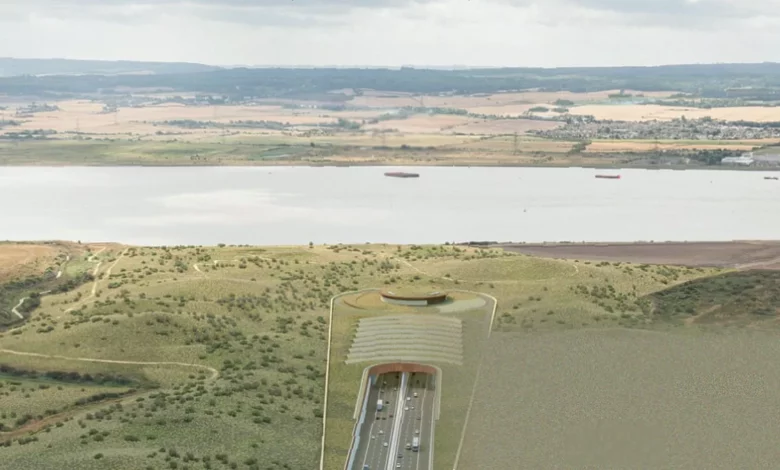
The Lower Thames Crossing, a proposed £11bn road tunnel linking Kent and Essex, is designed to ease congestion on the M25 and at the Dartford Crossing. However, its cost has soared from an initial estimate of £5.3bn to £8.2bn and now £11bn — a 17% jump in just nine months, according to December 2025 figures. At roughly £769m per mile, it already exceeds the cost per mile of the HS2 high-speed rail line, which stands at about £734m.
Completion is now scheduled for 2034, a delay from earlier targets of 2029 and 2032. Construction began in March 2026 with early works including archaeological surveys and ground preparation, after the Development Consent Order was granted on 25 March 2025. The DfT has taken direct control of the project, forcing National Highways to hand over its role in planning and oversight — a move seen as an attempt to tighten ministerial grip over a scheme beset by cost overruns and delays.
Funding model and private finance
The government’s preferred funding route is the Regulated Asset Base (RAB) model, under which private investors would provide the bulk of the capital in return for a guaranteed, regulated return over the asset’s lifetime. Under this plan, investors would begin drawing revenue from the existing Dartford Crossing during the construction phase, and the new tunnel would also be tolled once operational. A licence to run both the new tunnel and the existing Dartford tunnel, about seven miles to the west, is expected to be awarded to a private consortium in 2029, offered in perpetuity and overseen by an independent regulator.
The chancellor, Rachel Reeves, and the transport secretary, Heidi Alexander, have both described the project as “vital”. In last autumn’s Budget, Reeves allocated £891m to the Lower Thames Crossing, calling it “the final tranche of government support to enable the private sector to take forward construction and long-term operation”. A further £590m was provided in the 2025 spending review, and the latest £174m came from a road investment strategy document published in March.
The DfT has yet to publish an “outline business case” — a standard document that would normally be produced before large-scale works begin. Despite this, significant sums have been spent, including on securing planning permission, taking total public outlay to £3.1bn.
Criticism mounts over secrecy and diverted funds
The decision to divert extra money from existing National Highways budgets has drawn particular ire. Campaigners accuse the DfT of “siphoning” funds from the roads agency to feed the tunnel project without informing parliament.
Rebecca Lush, a roads campaigner at the Transport Action Network (TAN), said: “At the autumn budget, the chancellor announced the ‘final tranche’ of public funds for the Lower Thames Crossing. Yet now we find out that the DfT have bunged another £174m towards this privatised road project, whilst refusing to publish the outline business case. The spiralling costs and secrecy have all the hallmarks of HS2, with LTC already costing more per mile than HS2. Whilst the government is nationalising the railways it is privatising our roads, demonstrating the utter incoherence in transport policy.”
The lack of a published business case is particularly striking given the project’s weak economic case. According to TAN, the Benefit Cost Ratio (BCR) has fallen to as low as 0.48, meaning that for every £1 spent, only 48p is returned in economic benefit. Environmental groups have also raised objections over the destruction of ancient woodland, increased traffic and higher carbon emissions. Thurrock Council in Essex, which lies near the northern portal, has consistently opposed the scheme, citing negative economic, social and environmental impacts.
Concerns have also been voiced about the impact on drivers’ wallets. Under the RAB model, tolls at both the Dartford Crossing and the new tunnel could rise significantly — some calculations suggest Dartford tolls could triple — in order to repay private investors. The DfT has stressed that no final decisions have been made on charging, and that any tolls will be regulated by an independent body to keep prices “fair for drivers”.
The tunnel itself will consist of twin bores, each around 4.2km long, making them the longest road tunnels in the UK. The route is classified as an all-purpose trunk road, not a motorway. Construction involves significant earthworks and tunnelling through complex geology, including landfill and unstable soils near the northern portal. National Highways has said it will aim to minimise environmental damage by building green bridges, planting one million trees and landscaping to hide 80% of the route from view.
A DfT spokesperson said: “We have committed £3.1bn to the Lower Thames Crossing to date, including £891m to complete the publicly funded works needed to unlock private investment. While no decisions have been made on how users will be charged, any tolls will be regulated by an independent regulator to keep prices fair for drivers.”