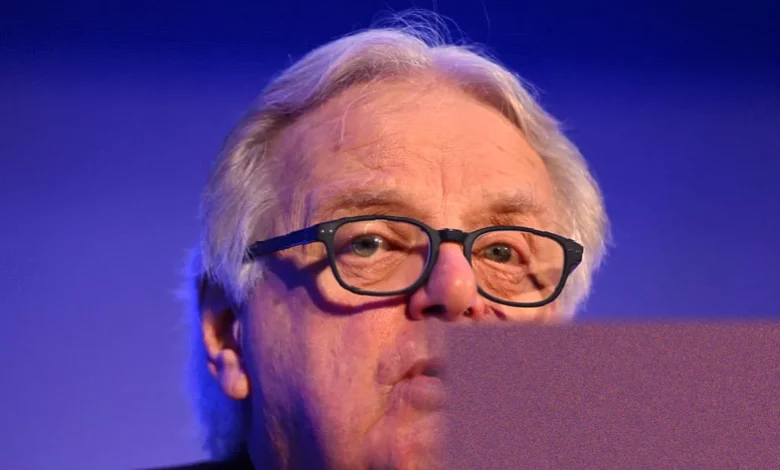
Lord Grade, the former chair of Ofcom, has ignited a fresh row over broadcasting impartiality after a series of outspoken post-departure interviews in which he defended GB News and suggested compliance with the regulator’s rules could be as simple as “a sentence in a script”. The Conservative peer, who stepped down from the role earlier this year, declared himself “free of the shackles” of the job and promptly stirred controversy by arguing that a politician could “absolutely” present BBC Radio 4’s Today programme, and that critics of the right-leaning channel were “embarrassed” because GB News “speaks to the agenda of the majority” on issues such as Brexit and immigration.
Critics accuse Grade of misunderstanding impartiality rules
The core disagreement centres on the interpretation and application of the “due impartiality” rules that Ofcom is tasked with enforcing. The Ofcom Broadcasting Code defines due impartiality as “adequate or appropriate to the subject and nature of the programme” – it does not require equal time for every view, but demands that differing perspectives are given “due weight” over appropriate timeframes. Grade has suggested that compliance is straightforward, telling the BBC that GB News “have to obey the same rules as the BBC, as ITN, as Sky” and that a different news agenda is “good in the name of freedom of expression”. But those who helped write and implement the code say his view represents a fundamental misunderstanding of how the rules operate.
Chris Banatvala, Ofcom’s founding director of standards who drafted the broadcasting code and its investigation procedures, said Grade’s remarks reflected “a complete misunderstanding of how the impartiality legislation is set out in the Communications Act, how it is set out in the broadcasting code and how it should be applied”. Banatvala argued that broadcasters dealing with controversial topics must give “due weight” to other views, and that a single line in a long programme would usually not be enough. “Sometimes on GB News or other channels, you have a presenter and three guests all agreeing and one person not agreeing,” he said. “The idea that sometimes only one sentence can achieve the required impartiality is absurd.” In his view, if Ofcom is taking the approach that a single sentence suffices, “we may have finally got to the bottom of why GB News and other broadcasters are now allowed to do what they do”.
Stewart Purvis, a former chief executive of ITN and a former Ofcom content and standards partner, said Grade’s intervention was “quite shocking”. “This debate has been going on inside certain parts of broadcast media for about three years,” he said. “Now we have the retiring chairman of Ofcom pretty much confirming some of the things we’ve been complaining about and doing it in a very colourful way… This is classic out-of-the-horse’s-mouth stuff.” Purvis added that his longstanding relationship with Grade – both came from an era when regulators were seen as “the bad guy” – meant Grade was still “fighting yesterday’s war against regulators”, creating a culture at Ofcom that “has not been interventionist enough”.
Roger Mosey, a former head of BBC TV News, described Grade as “very charming” and “very warm”, but said his regulatory period was “not the finest piece of his broadcasting life”. Mosey expressed concern that Ofcom had effectively weakened broadcasting rules and “sort of lean[ed] over backwards to enable” GB News, “because they thought it’s the right thing to do, politically”. He added: “I can see why they did that. The problem is, it then got into contorting itself in its regulatory decisions.”
Critics also point to wider concerns about the “Foxification” of UK broadcast news – a trend towards more opinionated, partisan journalism akin to US outlets such as Fox News. The historical commitment to due impartiality in British broadcasting, enshrined in the Communications Act 2003, was designed to prevent such partisanship. Grade’s stance on politicians presenting programmes has further alarmed former regulators. While the Ofcom code (rule 5.3) prohibits politicians from acting as newsreaders, interviewers or reporters in news programmes unless editorially justified – in which case their political allegiance must be made clear – there is no blanket ban on politicians hosting other types of programmes outside election periods, provided due impartiality is preserved. Banatvala and others argue that Grade’s comments blur this distinction, risking a steady erosion of standards.
Ofcom distances itself but stands by its record
Ofcom has moved to distance itself from Grade’s personal views, insisting they do not represent official policy. A spokesperson said: “We apply our rules fairly and equally to all broadcasters, taking action when they fall short, as we have done with GB News. The role of Ofcom’s chairman is not involved in the application of the broadcasting code or the decision-making process for individual cases. Any personal views a former chairman has expressed do not represent Ofcom policy.”
Despite this distancing, Ofcom has defended its overall approach to GB News. The regulator has previously found GB News in breach of its broadcasting code on several occasions, including for repeating a homophobic slur and for impartiality breaches relating to political interviews. However, GB News has had some success in challenging Ofcom’s decisions in the High Court. In one notable case, the court quashed rulings that GB News’ use of MPs such as Jacob Rees-Mogg as presenters breached the code, concluding that Ofcom had erred in its interpretation of the rules, particularly the distinction between “news programmes” and other content. That judgment led Ofcom to withdraw other similar investigations and to launch a consultation on amending its Broadcasting Code to clarify and potentially strengthen the rules around politicians presenting news programmes.
GB News itself has consistently maintained that it abides by the broadcasting code. In a statement, the channel said: “GB News is Britain’s number one news channel. We have achieved this by serving the people of the United Kingdom with bold, fearless journalism. We are regulated by the Ofcom broadcasting code, not members of the media establishment elite.”
Grade, now 83, was installed as Ofcom chair in 2022 by Boris Johnson’s government after a failed attempt to appoint Paul Dacre, the former Daily Mail editor. Concerns were raised at the time about Grade’s lack of expertise in online harms and his past political utterances, including a dislike of “the woke brigade”. Yet his extensive broadcasting experience – he held senior positions at LWT, BBC One, Channel 4 and ITV, and was known as a master of commissioning Saturday night entertainment – meant many welcomed his arrival. Mosey recalled: “When he arrived at Ofcom, it was a good moment. He’s an old-fashioned, big analogue-channel ‘Saturday night entertainment show’ kind of guy.” But Purvis summed up the view of many former colleagues: Grade’s approach, he said, was that of a man who “grew up thinking that regulation was censorship” – and that mindset, he argued, has left Ofcom less willing to intervene at a time when the boundaries of impartiality are being tested as never before.