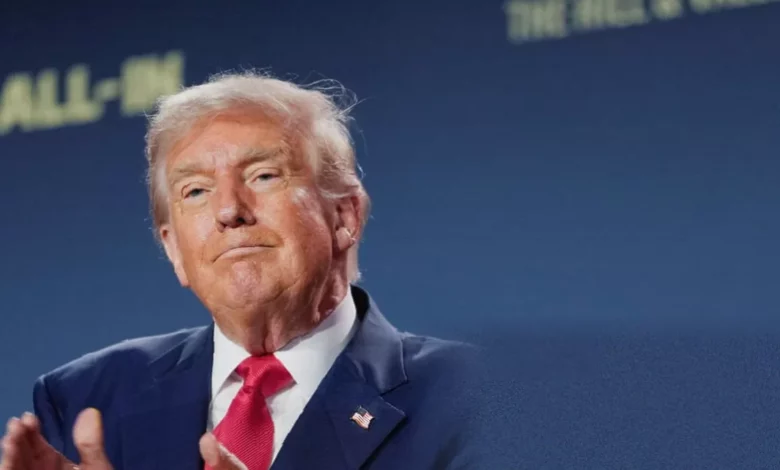
Donald Trump is reportedly considering taking financial stakes in the United States’ leading artificial intelligence companies, a move that would align the federal government’s interests with the growth of the sector rather than its restraint. The president told reporters last week that his administration would “look into” the idea, describing it as “something very interesting” that could create “a partnership with the American public.” Sam Altman, chief executive of OpenAI, has participated in discussions on the matter with senior White House officials, according to people familiar with the talks. Trump’s remarks and Altman’s involvement suggest the concept is being taken seriously at the highest levels of the administration.
White House eyes AI equity stake
The notion of the US government taking an ownership position in AI firms has been floated since the start of Trump’s second term. Altman has reportedly pitched the idea as a way to distribute the economic benefits of artificial intelligence more broadly, and has also met with Senator Bernie Sanders to discuss public ownership – though he stopped short of endorsing Sanders’ specific proposal for a 50% tax on stock. Trump himself has expressed interest in a structure where the American public can “benefit” from AI’s success. A government stake could cut two ways: the administration might use its leverage as a major shareholder to restrict development in the name of safety, or it could encourage firms to maximise growth and profitability so the federal government can cash out like a venture capital investor. Given the president’s stated priorities, the latter appears far more likely.
Executive orders cement growth-first approach
The trajectory of Trump’s AI policy has been clear for years. Since his first term, which began with the “American AI Initiative” in February 2019, the administration has consistently prioritised accelerating innovation over imposing safety rules. That ethos was codified into law through the National AI Initiative Act of 2020. More recently, two executive orders signed in early June 2026 underscore the same philosophy. The first, titled “Promoting Advanced Artificial Intelligence Innovation and Security,” establishes a voluntary framework for developers of “frontier AI models” to engage with the government for up to 30 days before public release, focusing on cybersecurity reviews. This is a noticeably weaker version of an earlier draft that would have mandated a 90-day advance review. Trump reportedly pulled that stronger version in late May because he did not want to do anything that might hinder America’s lead over China.
The second order, a National Security Presidential Memorandum (NSPM-11), directs the national security enterprise to accelerate AI adoption. It creates a framework for “rapid onboarding of the most advanced AI models from multiple vendors” and prohibits companies from unilaterally disabling, degrading or modifying AI systems used by warfighters without prior government approval. It also requires an updated directive on autonomous weapon systems. The order asserts that the US leads in AI “because we refuse to stifle this innovation with overly burdensome regulation”.
These actions build on a series of earlier directives. In July 2025 Trump released an AI Action Plan with three pillars: accelerating innovation, building AI infrastructure and leading international diplomacy. That same month he issued an executive order preventing the federal government from using AI models with ideological biases or social agendas. In December 2025 Executive Order 14365 aimed to preempt state AI regulations that could impose “undue burdens” on the industry. And in January 2025 Executive Order 14179 rescinded parts of the Biden administration’s October 2023 AI safety order, reorienting policy toward innovation. The cumulative effect is a regulatory landscape that remains fragmented – the US has no comprehensive federal AI law – but is increasingly tilted toward growth at all costs, with executive orders guiding federal agencies while leaving private companies largely unconstrained.
Anthropic’s safety rhetoric meets market ambitions
Into this vacuum of federal oversight, one company has stepped forward with a conspicuous display of conscience. Anthropic, the developer of the Claude chatbot, last week advocated for a possible “temporary pause” on advancing AI capabilities, saying it would convene policymakers to discuss the risks of cutting-edge technology. In the same public post, the company warned that its progress would soon lead to “recursive self-improvement” – a model capable of making better, more powerful versions of itself. The call for a pause, however, comes at a time that is remarkably convenient for Anthropic’s own finances.
Just days before issuing that plea, Anthropic confidentially filed for an initial public offering on the US stock market. The company has now surpassed OpenAI in valuation, having raised $65bn in May 2026 to reach a valuation of $965bn. Its annualized revenue is projected to exceed $47bn, and it has achieved profitability for the first time. OpenAI, meanwhile, was valued at $852bn in March 2026 after raising approximately $122bn. Both firms are racing to go public in what could rival the listing of SpaceX, underscoring investor eagerness to profit from the AI boom.
The timing of Anthropic’s pause call has drawn scepticism. A freeze on AI development would lock in the current standings, giving Anthropic – the newly minted leader – a chance to cement its advantage while competitors are barred from catching up. The company has not specified who such a pause would apply to, or whether outwardly ethical labs like itself would be exempt. Its branding as a safety-conscious counterweight to OpenAI, staffed by engineers who fear their own creations, has been remarkably effective. Anthropic’s slow rollout of its Mythos cybersecurity product only to trusted partners signals a desire for responsible deployment, but OpenAI followed the same playbook with its own cybersecurity tool. Both companies compete on similar product release schedules, making the hand-wringing seem like a marketing posture rather than a genuine brake on progress.
The question that lingers is straightforward: if AI development is truly so dangerous, why continue at all? Anthropic is under no obligation to build ever more powerful models. Yet the company remains on a clear growth trajectory, preparing for one of the stock market’s largest debuts. Its calls for a pause, however well-intentioned they may sound, appear self-serving when weighed against its financial incentives. The same could be said of its endorsement of government oversight – a stance that, if realised, could be tailored to benefit the incumbent leader.
The environmental costs of this expansion add another layer. Analysis shows that a majority of new AI data centres in the US are being built on drought-hit land, with the industry’s water consumption projected to reach 264bn gallons annually. Apple has meanwhile introduced enhanced child safety features across its devices, including redesigned parental controls and communication safety measures, as tech companies respond to societal pressures. And Nick Clegg, Meta’s former head of global affairs, has noted that Silicon Valley, including Meta, has embraced Trump-era politics. These developments illustrate an industry that is racing ahead on multiple fronts, with calls for restraint often overshadowed by the imperative to grow.