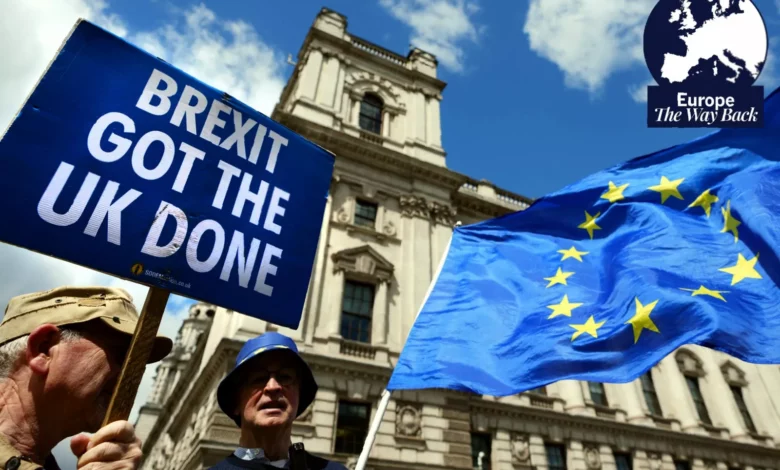
Brexit is now widely regarded by voters as a “big disappointment” and “not worth it,” according to the UK’s leading pollster, Professor Sir John Curtice, whose analysis of more than 500 polls conducted since the 2016 referendum reveals a decisive and consistent shift in public opinion against leaving the European Union. Writing in Sir Anthony Seldon’s book, The Brexit Effect, serialised as part of The Independent’s new “Europe: The Way Back” campaign, Curtice argues that the narrow vote to leave has “not withstood the test of time” and that a modest majority of Britons now wishes to be back inside the bloc.
Voter sentiment: from leave to regret
Within a year of the referendum, the balance of opinion had already begun to swing against the decision, Curtice writes. By the time the UK formally left the EU, there was a clear if narrow majority against Brexit, and within a couple of years that lead had widened into double digits. As of April 2026, polling shows 55% of British voters would back returning to the EU, with just 33% opposed — a marked reversal from the 2016 result. Support for rejoining is strongest among progressive party supporters, with 80% of Labour voters, 74% of Liberal Democrat voters, and 84% of Green Party voters in favour, while only 28% of Conservatives and 11% of Reform UK voters back the move. A broader majority — three in five (63%) — also supports a closer relationship with the EU without necessarily rejoining, and the same proportion supports the reintroduction of freedom of movement in principle.
Curtice says the hopes that Leave voters once had for Brexit appear to have been “thoroughly dashed.” Many voters now believe that the economy is worse off as a result of leaving, that immigration has increased rather than fallen, that Britain has less influence in the world, and that the promise of regaining sovereignty has not been realised. “All in all, then, Brexit has proven a disappointment for many voters,” he concludes.
How perceptions of the economy and immigration shifted
The most dramatic shifts in public perception have come on two fronts: the economy and immigration. Before the referendum, many Leave voters anticipated that leaving the EU would deliver economic benefits — or at least not cause serious harm. Curtice notes that for many, the economic outcome has “proved markedly worse in practice than they had anticipated.” This lived experience is backed by hard data. Most serious estimates suggest UK GDP is several percentage points below where it would otherwise have been; by 2025, Brexit had reduced GDP by an estimated 6% to 8%, a hit that accumulated gradually over time. The Office for Budget Responsibility has long assumed that Brexit will reduce long-run productivity by around 4%, while other studies put the reduction at 3% to 4%. Business investment has been particularly hard hit, estimated to have been on average 18% lower than in comparable countries, with a shortfall of 12% to 18% by 2025. Trade has suffered too: UK goods exports are estimated to be 10–15% lower than they would otherwise have been, with similar effects on imports, because leaving the single market increased paperwork and administrative costs, making cross-Channel commerce more cumbersome and expensive.
On immigration, voters’ expectations have been turned upside down. The 2016 Leave campaign promised that leaving the EU would allow the UK to “take back control” of its borders and reduce overall migration. In practice, the opposite has happened — in a way that many voters blame on Brexit itself. The end of free movement led to a sharp reduction in EU migration: estimates suggest there were approximately 785,000 fewer EU-origin workers in the UK in 2024 than would have been expected without Brexit, and EU immigration fell by over 80% between 2016 and 2025. However, non-EU immigration expanded dramatically to fill the gap. Between 2021 and 2024, 3.6 million non-EU nationals migrated to the UK, leading to a compositional change in the workforce so that non-EU workers now outnumber EU migrants in many sectors. “Voters seem to have reacted to this unexpected experience by blaming Brexit,” Curtice writes. Where they expected lower immigration, many now believe that Brexit has resulted in higher levels overall — a perception that polling confirms is now widespread.
Curtice’s verdict: the referendum has not withstood the test of time
Professor Sir John Curtice’s analysis, drawn from 500 polls taken over a decade, leads him to a stark conclusion: the 2016 ballot “has failed to resolve the debate about whether Britain should be inside or outside the EU.” The country now finds itself outside an institution of which a modest majority would like to be a member, and a significant body of voters has decided that being outside is not worth it. Even among those who voted Leave, expectations have been largely unmet — on the economy, immigration, global influence, and sovereignty. “Brexit has largely failed to live up to Leave voters’ expectations,” Curtice states. “This suggests it is unsurprising that support for being outside the EU is much lower now than it was when a narrow majority voted in 2016 to Leave.”
The findings appear in The Brexit Effect, a new book edited by Sir Anthony Seldon that brings together politicians, academics and lawyers to examine why the referendum happened, how Brexit became law, and its impact on British life. Scheduled for publication on June 23, 2026 — the tenth anniversary of the referendum — the book includes Curtice’s assessment alongside contributions from a wide range of figures. The Independent’s “Europe: The Way Back” campaign is serialising extracts from the book as part of a broader effort to foster a clearer conversation about how the UK can rebuild its shattered links with Europe, focusing on rebuilding cooperation, trust, trade, mobility, security and cultural ties.
Curtice’s final verdict is unequivocal: “The narrow vote in favour of Brexit has not withstood the test of time particularly well.”