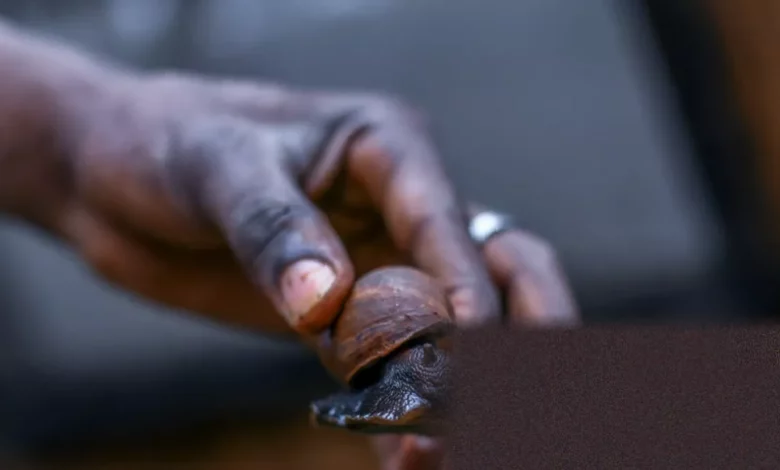
A Ghanaian marine biologist is pioneering a snail farming initiative to save endangered guitarfish along the country’s 335-mile coastline, persuading fishers to swap their nets for a more lucrative and sustainable harvest on land. Dr Issah Seidu, a lecturer in the wildlife department at Kwame Nkrumah University of Science and Technology in Kumasi, founded the biodiversity organisation AquaLive Conservancy in 2019 with three staff and a team of volunteers. His strategy centres on replacing the income fishers lose by not targeting guitarfish with the farming of giant African land snails — a fast-growing, low-cost alternative that can generate ten times the monthly earnings of artisanal fishing.
Snail farming, Seidu explains, requires little capital outlay and offers two harvest cycles each year. The meat of the species Achatina achatina is already in high demand across Ghana as a nutritious source of protein, sold in chop houses and markets. By contrast, an average artisanal fisher earns between 750 and 1,000 Ghanaian cedis (£50 to £65) a month. Snail farming, he says, can bring in as much as 10,000 cedis — a figure that has already persuaded some to abandon the sea entirely. Domestic supply of snails remains weak, with Ghana importing the gastropods from neighbouring countries, creating a clear business opportunity for new farmers. Some entrepreneurs are also exploring uses for snail shells in animal feed and snail slime in cosmetics, adding further earning potential. Seidu has so far convinced 43 fishers to take up snail farming, and a total of about 200 have agreed to either stop or scale back their harvest of guitarfish after his team worked with them on training in better fishing practices and safe release protocols.
The need for such an alternative is acute. Guitarfish — an ancient, shark-like ray with a flattened body and a tail resembling a shark’s — are among the most critically endangered fish in the ocean. The International Union for the Conservation of Nature (IUCN) categorises more than half of the 55 known guitarfish species as critically endangered. Seidu’s own checks with the IUCN found that 70% of these species are listed as threatened with extinction. In Ghana, the sawfish, a related species, is already extinct in local waters, and wedgefish populations have been so severely depleted that no sightings have been recorded since the 2010s. Guitarfish are slow to mature, produce young only annually, and are described by the IUCN as an “indicator species” — their decline signals broader damage to coastal ecosystems. The most valuable fish landed in Ghana, guitarfish are caught both for their fins, which are exported to China, and for their meat, a local delicacy. But industrial fishing has piled on the pressure. Chinese distant-water fleets dominate Ghana’s industrial fishing sector, often through opaque ownership and illegal practices, leading to ecosystem degradation and socio-economic disruption. Artisanal fishers, who once used purse seiners to catch tuna, anchovies and sardinellas, have turned to gill nets — banned in many places because they snare everything in the water. Marine megafauna, including sharks, rays and guitarfish, are caught as bycatch. Some fishers began targeting sharks and rays deliberately to supplement meagre incomes as fish stocks dwindled. Small pelagic stocks have fallen to less than 10% of their 1992 levels, driven by overfishing, industrial trawling, and the practice known as “Saiko” where trawlers illegally target juvenile fish. Climate change, warming ocean waters, and a lack of effective management have compounded the crisis, threatening the livelihoods of over 100,000 fishers and nearly two million people involved in fish processing and marketing.
Seidu first encountered the extinction threat by accident while visiting his uncle in Dixcove, a small coastal town in western Ghana. He saw fins from sharks, rays and guitarfish being sold to traders for export. Initially met with hostility from fishing communities who feared for their livelihoods, he gradually built trust by enlisting fishers to monitor guitarfish populations and by highlighting the risk of local extinction. His team now trains local volunteers as “fisher biologists” to record catches and collect scientific data. Among the four species his project focuses on are the common guitarfish, white-spotted guitarfish, blackchin guitarfish and spineback guitarfish. The project also aims to expand critical habitat mapping from 15 km² to 25 km², a step toward establishing Ghana’s first locally managed marine area. In April 2026, the country declared its first Marine Protected Area, the Greater Cape Three Points Marine Protected Area, covering approximately 703 km², as part of its commitment to the Kunming-Montreal Global Biodiversity Framework’s target of protecting 30% of oceans by 2030. Seidu’s long-term goal is to create a community-led network of such protected zones.
Seidu’s work has now earned international recognition. In 2025, the IUCN appointed him co-chair of its shark specialist group for Africa. Last month, the Whitley Fund for Nature honoured his conservation efforts with an award presented by Princess Anne at the Royal Geographical Society, accompanied by £50,000 in project funding. Dr Rima Jabado, chair of the IUCN species survival commission’s shark group, said: “What Issah is doing in Ghana, through his work with fishers to record catches, is exactly the kind of effort needed.” The Whitley funding will allow Seidu to expand his work to four additional coastal communities, strengthening local capacity and moving closer to Ghana’s first locally managed marine area. “Ghana’s coastline is more than just a place,” Seidu said. “It is life, culture and survival for millions of people.”