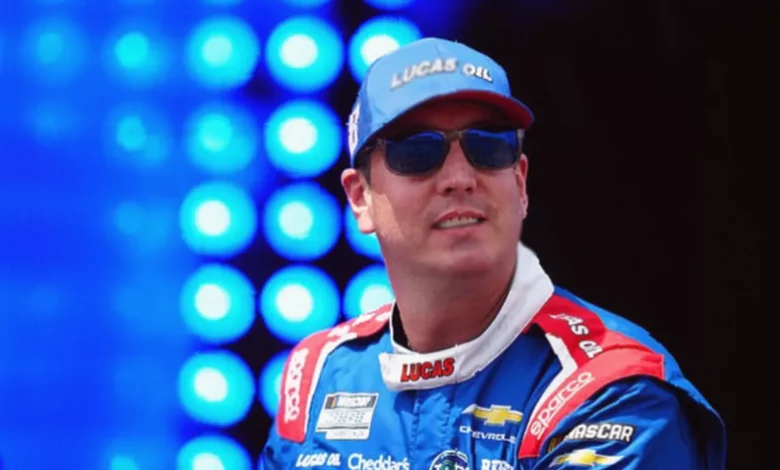
NASCAR faces its third tragedy since mid-December with the death of two-time Cup Series champion Kyle Busch, who died on Thursday after being hospitalised with a severe illness. The 41-year-old’s passing follows the plane crash that killed fellow icon Greg Biffle and his family last December, and a house fire that claimed the life of Denny Hamlin’s father just 10 days after that.
Busch, who competed in more than 760 races over a 24-year career with Joe Gibbs Racing and won Cup championships in 2015 and 2019, was taken to hospital after becoming unresponsive while testing in a racing simulator. He had been unable to compete in the Coca-Cola 600. Less than two weeks earlier, during a Cup Series race at Watkins Glen on May 10, Busch had radioed his crew requesting medical aid for a sinus cold that was exacerbated by the G-forces and elevation changes of the New York road course; he finished eighth. He then went on to win his record fifth Truck Series trophy at Dover on May 15 — his 69th career win in the series. In a poignant post-race interview he said: “You never know when the last one is going to be, so cherish them all.” Busch is survived by his wife Samantha and their two children, Brexton, 11, and Lennix, four. The family had celebrated Brexton’s birthday just three days before his death.
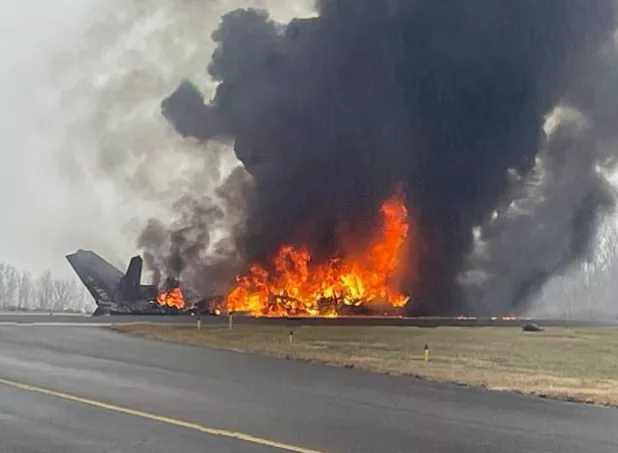
The first of the recent tragedies occurred on December 18, when former NASCAR driver Greg Biffle, 55, his wife Cristina, their daughter Emma, 14, and their son Ryder, five, were among seven people killed when a Cessna Citation business jet crashed while attempting to land at Statesville Regional Airport in North Carolina. The aircraft was seen engulfed in flames to the right of the runway shortly after 10:15am. Biffle’s mother-in-law said Cristina had texted “We’re in trouble, emergency landing” moments before the impact. The National Transportation Safety Board (NTSB) is investigating the crash and has recovered the cockpit voice recorder; preliminary information indicates the jet had departed Statesville and was attempting to return. The aircraft was registered to a company run by Biffle. In the wake of the crash, lawsuits have been filed against the estates of Biffle and the pilot, Dennis Dutton, alleging negligence and improper maintenance. Biffle, who after retiring from full-time racing had driven in the Truck Series for Kyle Busch Motorsports and GMS Racing, was honoured in 2024 for his humanitarian efforts using his personal helicopter to deliver aid to flooded areas of North Carolina after Hurricane Helene.

Just ten days later, on December 28, a fire broke out at the home of Denny Hamlin’s parents in Stanley, North Carolina. The two-story house, built in 2015 and owned by Denny Hamlin’s real estate company, was home to his father Dennis, 75, and mother Mary Lou, 69. Dennis died of his injuries; Mary Lou was critically injured but survived, having risked her own life to drag her husband away from the flames, according to neighbours. A report by Gaston County Emergency Management & Fire Services later ruled the fire accidental, stating it originated in a bedroom but that the cause of ignition was undetermined. The property loss was estimated at $776,360. The fire occurred around the time of the couple’s 52nd wedding anniversary. Denny Hamlin, a leading driver with 60 Cup Series wins including three Daytona 500 victories, has spoken of the immense financial sacrifices his parents made to support his career. He and Michael Jordan co-own the car driven by Tyler Reddick that won this year’s Daytona 500. Mary Lou has since attended races, including the Daytona 500, while recovering from her injuries.
Decades of Aviation Tragedy
The recent losses sit within a far longer pattern of aviation disasters that have haunted NASCAR for decades, a pattern that has led many inside and outside the sport to speak of a “curse”. The first such tragedy struck in 1970, when Hall of Fame driver Curtis Turner was killed alongside professional golfer Clarence King when Turner’s Aero Commander 500 crashed near Punxsutawney, Pennsylvania, shortly after takeoff en route to Roanoke, Virginia. Turner, then 46, was preparing for a one-off race at Charlotte. An official review suggested that King had suffered a heart attack in flight, leading to a struggle that cost both men their lives. Turner was known for his hard-partying lifestyle and his efforts to form a drivers’ union, which resulted in a ban by NASCAR founder Bill France Sr.
The most devastating year was 1993, when the sport lost two of its brightest stars just 102 days apart. On April 1, reigning Winston Cup champion Alan Kulwicki — known as “Special K” and the “Polish Prince” — died when his Swearingen Merlin III crashed on approach to Tri-Cities Regional Airport in Tennessee. The NTSB found that the pilot had failed to properly operate the engine inlet anti-ice system, likely because of icing conditions. Three others on board, including two executives from his sponsor Hooters, also died. On July 12, Davey Allison attempted to land his Hughes 369HS helicopter in the paddock at Talladega Superspeedway while on his way to watch family friend Neil Bonnett test a car. The nose of the helicopter tipped upward and the aircraft crashed. Allison, 32, died the following day. An NTSB report noted that Allison had only 2.8 hours of instruction and 54 hours of total flight time on the helicopter. The crash was the latest in a series of family tragedies: his younger brother Clifford had been killed in a racing accident the previous year, and their father, Bobby Allison, had suffered career-ending injuries in a 1988 crash.
In 1998, the sport was again shaken when Julian Martin — father of NASCAR legend Mark Martin — died while piloting a twin-engine Piper that crashed into the Great Basin National Park in Nevada, starting a forest fire. The crash also killed his wife Shelley and their 11-year-old daughter Sarah. Mark Martin, who had just finished a race at Watkins Glen, later described his father as a personal hero who had taught him to steer a car long before his legs could reach the pedals.

Perhaps the single deadliest aviation disaster to hit the sport came in October 2004, when a Beechcraft Super King Air 200 carrying the inner circle of the Hendrick Motorsports empire vanished into fog over the Blue Ridge Mountains in Virginia. The aircraft was en route to a race at Martinsville Speedway when it missed its approach in heavy mist. All 12 people on board were killed, including John Hendrick, president of Hendrick Motorsports, his twin daughters Kimberly and Jennifer, and Ricky Hendrick, the heir to the Hendrick empire. The NTSB cited pilot error and controlled flight into terrain in inclement weather as the probable cause. The conditions bore an eerie similarity to the low clouds reported in the December crash of Greg Biffle’s jet.
Other NASCAR legends have narrowly escaped the same fate. Ernie Irvan and Neil Bonnett both survived separate aviation incidents before later dying in on-track crashes — a reminder that for all the noise on the ovals, it is often the quiet moments in the air that have proved most lethal to the sport.