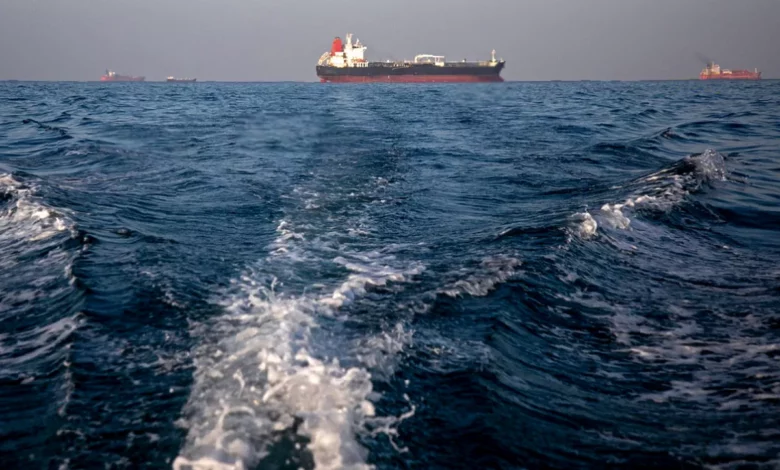
Oil prices rose again on Tuesday after US military strikes in southern Iran shattered hopes of an imminent peace deal, sending a fresh jolt through markets that had been pricing in a diplomatic breakthrough just hours earlier.
Brent crude climbed by $1.40, or 1.5 per cent, to $97.56 a barrel in morning trading, reversing some of the 7 per cent plunge on Monday that had been triggered by positive noises from both Washington and Tehran about progress in Doha. West Texas Intermediate, the US benchmark, fetched $91.25 — still 5.5 per cent below Friday’s close, with no settlement on Monday due to the US Memorial Day holiday.
The uptick followed overnight strikes ordered by US Central Command, which said its forces had hit missile launch sites and Iranian boats attempting to lay mines near the Strait of Hormuz. CENTCOM described the action as “self-defence strikes” designed “to protect our troops from threats posed by Iranian forces” and said the military was “using restraint during the ongoing ceasefire”. Iranian media reported explosions in the southern port city of Bandar Abbas and nearby coastal areas along the strait. Some reports indicated a missile strike on the runway at Bandar Abbas airport, although this was not officially confirmed. Iranian outlets described the situation as “under control”.
Failed peace talks and fragile hopes
Monday’s optimism had been driven by a fresh round of talks in Doha involving Iran’s top negotiator, its foreign minister Mohammad Bagher Ghalibaf, and the central bank governor, who met Qatar’s prime minister to discuss a potential deal to end the three-month war. Both sides said they had made progress on a memorandum of understanding that would halt fighting and give negotiators 60 days to reach a final agreement. Under the reported terms, Iran would clear mines from the strait within 30 days, after which vessels from all countries could navigate freely, with Tehran also ending transit fee collection. The delegation also discussed the potential release of frozen Iranian funds and sanctions relief.
Yet Iranian officials played down expectations, saying conclusions had been reached on many topics but a deal was not close to being signed. They cited “frequent changes” and contradictions by the US side as presenting “problems and obstacles”. President Donald Trump on Monday repeated his demand that Iran hand over its enriched uranium to the United States for destruction, underlining how far apart the two sides remain. He also insisted that more Middle Eastern countries, including Saudi Arabia and Pakistan, must join the Abraham Accords as part of any agreement. Trump wrote on social media: “It will only be a Great Deal for all or, no Deal at all.”
While hinting that talks were continuing despite the strikes — “negotiations with Iran are proceeding nicely,” he said — Trump cautioned that Washington could resume military action if discussions collapsed. The pattern of getting close only to fall apart is now familiar. “We’ve routinely gotten close and then collapsed on the details multiple times over the past couple of months and Hormuz remains closed,” Rory Johnston, founder of the Commodity Context newsletter, told Reuters before Tuesday’s strikes.
Tim Waterer, chief market analyst at KCM Trade, noted that before the attacks “traders were betting heavily that a breakthrough will finally free up the long-paralysed tankers stuck in and around the Strait of Hormuz.”
The Strait of Hormuz chokehold
The world’s most vital energy chokepoint remains effectively sealed. The Strait of Hormuz handles roughly 20 to 25 per cent of global seaborne oil trade and a fifth of the world’s liquefied natural gas supply. Since the war began, Tehran has halted nearly all non-Iranian shipping into and out of the Gulf, choking off about a fifth of global oil and gas flows and driving prices up by 50 per cent or more. The International Energy Agency has described the situation as the “largest supply disruption in the history of the global oil market”.
Estimates suggest over 11 million barrels per day of Gulf crude and condensate production has been curtailed, triggering panic buying and severe disruption to petroleum products and LNG supply chains worldwide. A report by Wood Mackenzie warned that a prolonged closure poses the “single greatest threat to global energy markets in decades”, with a worst-case scenario that could drive Brent crude close to $200 a barrel by the end of 2026.
There have been tentative signs of movement. Ship-tracking data showed three liquefied natural gas tankers had passed through the strait in recent days, heading to Pakistan, China and India, along with a supertanker carrying Iraqi crude to China after being stranded for nearly three months. Iranian media reported that 33 commercial vessels had transited in the preceding 24 hours after coordination with the Islamic Revolutionary Guard Corps. Some vessels have been moving with their transponders switched off to evade detection.
The IEA has warned that oil markets could enter a “red zone” this summer as global stocks deplete if the strait does not reopen ahead of the travel season. US Secretary of State Marco Rubio has insisted the waterway “has to be opened one way or the other”, describing its closure as “unlawful, it’s illegal, it’s unsustainable for the world”.
Adding a further layer of uncertainty, Israel signalled on Tuesday it may intensify strikes against Hezbollah in Lebanon. Prime Minister Benjamin Netanyahu ordered the Israel Defence Forces to escalate its offensive to “crush” Hezbollah, citing repeated drone attacks. A senior US official hinted that the Trump administration would support an escalation in Israeli military action in retaliation for Hezbollah’s ceasefire violations.