US approval clears major hurdle for media mega-merger
The United States Department of Justice has approved the $111bn (£87bn) merger of Paramount Skydance, the studio controlled by the Ellison family, and Warner Bros Discovery, the parent company of CNN, HBO and the Warner Bros film studio. The antitrust division announced its decision on Friday evening after an eight-month investigation, concluding that the combination is not likely to harm competition or American consumers in three key areas: streaming video on demand, linear television, and the studio development, production or distribution of films for theatrical release.
The approval was granted without any requirement for divestitures, behavioural remedies or other concessions from the merging parties. During its review, the division examined more than two million documents from over 80 custodians and received extensive submissions from third parties across the media and entertainment ecosystem, according to a department statement. “The division has completed its analysis … and determined based on the evidence received in its investigation that the transaction is not likely to result in harm to competition or American consumers,” the agency said.
Opponents of the deal reacted sharply. Craig Aaron, co-chief executive of the media reform group Free Press, said in a statement: “Despite all the talk about conducting a thorough investigation, the fix was in at the Trump Justice Department from the start. Paramount Skydance has fêted, flattered and promised sweeping changes to news coverage to win the administration’s approval, despite evidence that giving one corporation this much media power – all the movie studios, cable channels and newsrooms – will undermine competition, destroy jobs, slant the news and endanger our democracy.” Senator Elizabeth Warren, a Democrat who has been a vocal critic of the merger, described the decision as “terrible news for every American who doesn’t want Trump-aligned billionaires to control what they watch and how much they pay”, adding that the deal “has reeked of corruption and influence-peddling”.
Regulatory hurdles remain in UK and Europe
While the US green light marks a major milestone for the transaction, significant regulatory obstacles remain in other jurisdictions. The UK’s Competition and Markets Authority (CMA) has opened a Phase 1 investigation to determine whether the merger could result in a “substantial lessening of competition” in the British market. The CMA has set a deadline of 7 August 2026 to decide whether the deal warrants a more in-depth review.
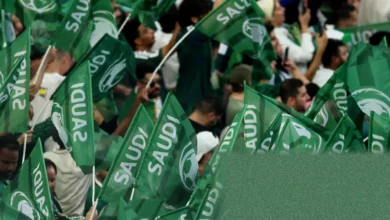
In the European Union, regulators are conducting two separate probes. The European Commission’s traditional merger review has a deadline of 7 July, while a parallel investigation under the bloc’s Foreign Subsidies Regulation is examining the funding behind the deal. That subsidy review, which has a deadline of 14 July, is focused on the role of three sovereign wealth funds from the Gulf that have committed a combined $24bn to the transaction: Saudi Arabia’s Public Investment Fund (PIF) is contributing approximately $10bn, alongside the Qatar Investment Authority (QIA) and Abu Dhabi’s L’imad Holding Company. The funds are expected to take minority, non-voting stakes designed to avoid triggering US national security reviews. Paramount Skydance has indicated it is willing to divest its children’s television network assets if required to secure EU approval.
Australian regulators have already cleared the merger. The Australian Competition and Consumer Commission (ACCC) concluded that the deal “is unlikely to have the effect of substantially lessening competition in relation to the wholesale supply of films for theatrical release in Australia”, according to a regulatory filing. That approval is subject to a 14-day waiting period expiring on 23 June 2026. Competition authorities in New Zealand, Saudi Arabia, Ukraine, Serbia and North Macedonia have also given the green light, and foreign direct investment approvals have been obtained from Germany, Slovenia, Belgium, Czechia, Italy, France and Romania.
This is terrible news for every American who doesn't want Trump-aligned billionaires to control what they watch and how much they pay.
The Paramount-Warner Bros. deal has reeked of corruption and influence-peddling.
This fight isn't over. State AGs must block this merger. https://t.co/CmEpox1WzV
— Elizabeth Warren (@SenWarren) June 12, 2026
Industry fears over job losses and editorial control
The most acute concerns centre on the likely human and competitive costs of the merger. The joint companies have promised to deliver more than $6bn in “synergies”, a figure that industry observers widely expect to translate into substantial job cuts across the combined workforce. Warner Bros Discovery’s own financial reports show the company’s total revenue fell to $37.210bn for the year ending 31 March 2026, while it ended 2025 with $29.0bn in net debt—a financial picture that underscores the pressure to reduce costs.
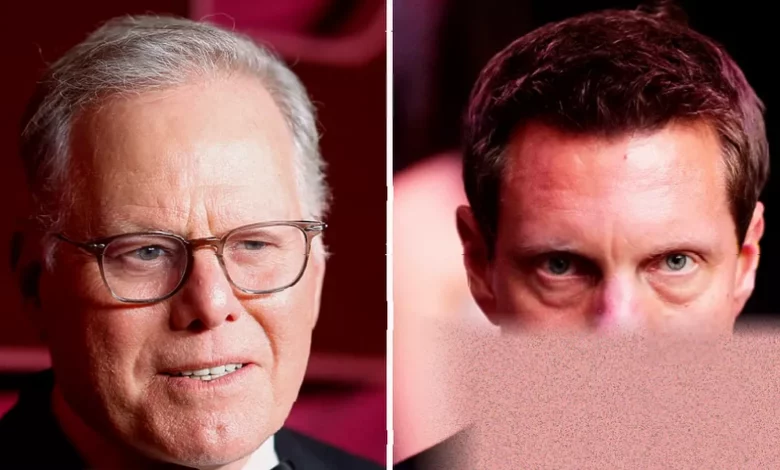
Journalists at both CBS News and CNN have voiced alarm at the prospect of the two news networks being folded together, a move that would probably entail heavy redundancies. There is also long-standing unease within CNN about the editorial direction the network might take under the ownership of David Ellison and his father Larry Ellison, the Oracle co-founder and a long-time associate of President Donald Trump. David Ellison pledged in March that CNN’s editorial independence would be protected, insisting the network would remain in the “truth business” and the “trust business”. However, speculation persists that he could choose to place Bari Weiss—currently the embattled editor-in-chief of CBS News, whom Ellison hired to run that network—in charge of the cable news channel, a move that would alarm many inside CNN.
Beyond the newsrooms, opposition to the deal has been widespread across the broader entertainment industry. More than 1,000 film and television professionals, including actors and union representatives, have signed an open letter protesting the merger, citing concerns about compromised integrity, independence, diversity, job losses and reduced competition. The Writers Guild of America (WGA) and the Teamsters have both urged regulators to block the deal unless safeguards against job cuts and commitments to US production are secured. In Europe, a coalition of film and television trade organisations—including the European Producers Club (EPC), the Federation of European Screen Directors (FERA), the Federation of Screenwriters in Europe (FSE) and the International Union of Cinemas (UNIC)—have raised concerns with the European Commission about the impact of the consolidation on independent production across the continent. UNIC, which represents cinema operators, is pushing for an in-depth EU probe, warning that a reduced supply of theatrical films could lead to cinema closures.
The deal itself emerged after a bidding contest for Warner Bros Discovery, with Paramount Skydance reportedly outbidding Netflix, which had previously agreed to acquire WBD for $83bn. The definitive merger agreement was signed on 27 February 2026, under which Paramount will acquire WBD for $31 per share in cash. The total equity value is approximately $81bn, with an enterprise value of $110bn. The Ellison family, through Skydance Media, had already acquired Paramount Global in 2025. Financing for the transaction includes about $54bn in debt from institutions including Bank of America, Citigroup and Apollo Global Management, in addition to the Gulf sovereign wealth commitments. Warner Bros Discovery’s shareholders voted in favour of the sale on 23 April 2026. David Zaslav, the outgoing CEO of Warner Bros Discovery, is expected to receive a payout of around $500m from the deal.
State attorneys general weigh legal challenge
A separate threat to the merger could come from within the United States itself. A coalition of state attorneys general is considering filing a lawsuit to block the transaction on antitrust grounds, a move that could reportedly happen within the next few weeks. The action is expected to be led by California’s Attorney General Rob Bonta. Craig Aaron of Free Press called on state prosecutors to step up, saying: “The attorney generals have the evidence they need to stop this deal; now the public needs them to take action.”