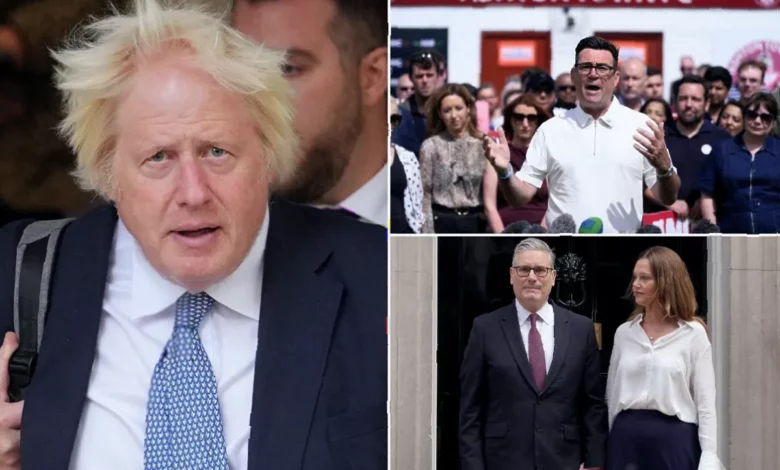
Boris Johnson has launched a blistering attack on Andy Burnham, declaring the Greater Manchester Mayor “doesn’t deserve” to become Prime Minister and accusing him of lacking any credible plan for the nation’s energy policy. The former Prime Minister’s intervention came just minutes after Sir Keir Starmer announced his resignation on the steps of Downing Street, triggering a leadership contest that Burnham is widely expected to enter.
Johnson questions Burnham’s credentials and energy vision
Speaking at the Octopus Energy Tech Summit in London, Johnson dismissed Burnham’s potential elevation to Number 10, arguing that the man he “expected” to take over had not earned the right to govern. “He doesn’t deserve a job at all as far as I’m concerned, but he’s going to get it,” Johnson said. “He hasn’t been elected, he isn’t going to be elected.” The former Prime Minister’s remarks were steeped in his long‑standing political rivalry with Burnham, which intensified during the COVID‑19 pandemic when the two clashed over the imposition of Tier 3 restrictions in Greater Manchester – Johnson, then Prime Minister, had expressed frustration with Burnham’s demands for additional financial support for the region.
Johnson’s most detailed criticism centred on energy policy, an area in which he claimed Burnham was unprepared. The former Prime Minister suggested that the “new guy” should immediately adopt “modal pricing” for energy costs – a system more accurately described as nodal pricing, or locational marginal pricing (LMP), which sets electricity prices based on the location of supply and demand within the grid, accounting for network congestion and delivery costs. Proponents argue such a model could deliver significant consumer savings and better integrate renewable energy, but Great Britain currently operates a national pricing model that does not reflect local constraints in the wholesale market. Johnson asserted that Burnham “didn’t deserve” to receive this advice because he lacked an energy plan of his own.
“Energy is a huge issue,” Johnson told the summit, an annual event hosted by Octopus Energy that focuses on innovation in the clean‑energy transition. He warned the incoming Prime Minister not to heed the advice of Ed Miliband, the current Secretary of State for Energy Security and Net Zero, who has championed Labour’s commitment to net‑zero targets and plans to triple offshore wind, double onshore wind and triple solar capacity by 2030. “Whatever [Ed] Miliband says, I’d strongly advise not to listen to him, frankly,” Johnson said. “This is a massive opportunity for him.”
Johnson painted a stark picture of the challenges facing the next occupant of Number 10. “Britain is an incredible country. My advice would be, that you don’t have much time. The clock is ticking, your honeymoon will not last long,” he said. “And who knows what will happen? He may be full of brilliant ideas with a wonderful agenda, but some asteroid will hit you, like Covid. Do go fast.” He emphasised that the new Prime Minister, “whoever that may be”, must produce a comprehensive energy plan, describing the current system as “mad”.
Starmer steps down after less than two years
Johnson’s outburst came after a morning in which Sir Keir Starmer announced his resignation as Prime Minister, bringing a tenure that lasted less than two years to an end. Starmer’s departure followed mounting pressure from within the Labour Party, exacerbated by significant losses in local elections and controversies including the appointment of Peter Mandelson as ambassador to the United States. In his farewell address on the Downing Street steps, Starmer said he would remain as caretaker Prime Minister until a new leader is chosen, a process expected to conclude before Parliament reconvenes in September. He indicated his decision was based on his party’s sentiment regarding his ability to lead them into the next general election.
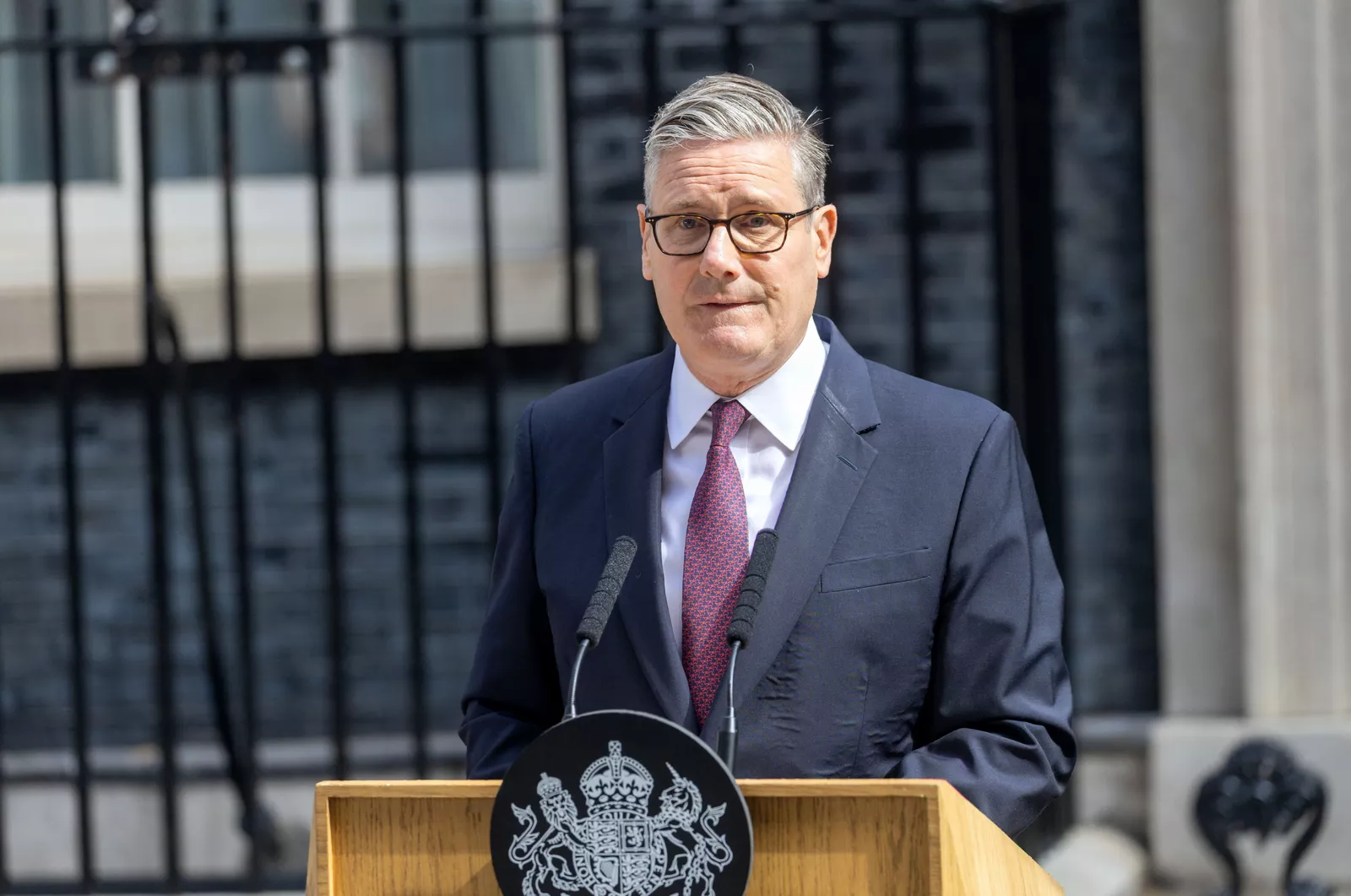
“I want to thank all of those friends and colleagues who have been at my side for the last six years or so, for their incredible commitment, service and support,” Starmer said. “I want to thank the brilliant No 10 staff and our country’s extraordinary Civil Service who dedicate their lives to public service.” He added that he would give his successor his “full and unequivocal support”, and that they would inherit a Britain “far stronger and fairer than the one I inherited two years ago”. “And when I leave the biggest job in the country, I shall spend more time on the most important job, being the best husband I can to my fantastic wife Vic, who has been a rock by my side through good times and bad, and being the best dad I can to my beautiful children, who are my pride and my joy. Thank you very much.”
Burnham’s pathway to power
Burnham has already confirmed his intention to stand for the Labour leadership, following a decisive victory in the Makerfield by‑election that has dramatically boosted his national profile. He has called for an “orderly and responsible” transition and outlined a vision that includes bringing utilities such as water and energy under public control – a policy aimed at improving performance and cutting consumer bills, though critics have noted that the details of his “public control” proposals remain vague. Burnham’s allies argue that reversing decades of privatisation would be a core agenda item should he reach Number 10.
Starmer’s resignation – the latest in a decade of political volatility that could see the UK instal its seventh Prime Minister in ten years – opens a leadership contest in which Burnham is considered a strong contender, alongside other potential candidates such as Wes Streeting and Angela Rayner. Reform UK, led by Nigel Farage, also looms over the political landscape. The process of succession means that the Labour Party will internally select a new leader, who will then be invited by the Monarch to form a government, without a general election.
Johnson’s advice to whoever succeeds Starmer was blunt and urgent: act fast on energy, ignore Miliband, and beware of unforeseen crises. But his most pointed message was reserved for Burnham – a man Johnson believes has no plan and, in his view, no right to the highest office in the land.