Andy Burnham’s decisive victory in the Makerfield by-election has laid the groundwork for a direct challenge to Sir Keir Starmer’s leadership of the Labour Party, thrusting a divided government into a period of intense internal uncertainty. The Greater Manchester mayor secured 24,927 votes, or 54.8 per cent of the vote, on June 18, 2026, defeating Reform UK’s Robert Kenyon by more than 9,000 votes in a contest that was widely seen as a staging post for a Labour leadership bid.
Burnham’s path to Westminster
The by-election was triggered by the resignation of the Labour MP Josh Simons on May 14, 2026 — a move orchestrated to create a parliamentary vacancy for Burnham, who was not an MP. The last time a similar manoeuvre was staged was the Leyton by-election in 1965. Burnham’s victory in Makerfield, a safe Labour seat that has been held by the party since its creation in 1983, was achieved with an increased turnout of 58.75 per cent, up from 52.4 per cent at the 2024 general election. The constituency, which includes towns such as Ashton-in-Makerfield and Hindley, has historically been a Labour stronghold, though the party’s majority fell sharply in 2019. In 2024, Reform UK moved into second place there, pushing the Conservatives into third.
Consequences for the Labour leadership
Burnham has openly signalled his intention to challenge Keir Starmer, describing the by-election as a potential “turning point” for British politics. Starmer has responded by stating he will “stand” in any leadership contest and will not “walk away”. The result has intensified pressure on the prime minister, with some Labour allies privately hoping for an “orderly and managed transition” to avoid a damaging internal battle. Burnham, who identifies as a socialist and is associated with the soft left of the party, is perceived as to the left of Starmer, a position that could appeal to Labour members. His commanding win has prompted some commentators to speculate about the possibility of a swift “coronation” as leader.
The broader context of Labour’s electoral difficulties adds weight to the leadership question. In the 2026 local and devolved elections, the party suffered substantial losses of council seats, while Reform UK and the Green Party made gains, reflecting a fragmented political landscape described as “five-party politics”. Makerfield is part of the so-called “Red Wall” — working-class constituencies in northern and central England that have traditionally voted Labour but have become battlegrounds in recent years. Burnham’s victory suggests he was able to assemble a coalition that drew support from voters on the left, centre and even some from the right, indicating a wider appeal beyond the core Labour base. The subdued campaigns of the Liberal Democrats and the Green Party are thought to have helped by allowing Labour to absorb a broader range of voters.
Reform UK’s setback
The by-election was a significant reversal for Reform UK, which had been polling ahead of Labour nationally and was widely expected to perform strongly in Makerfield. Robert Kenyon secured 34.5 per cent of the vote, a defeat that follows another by-election loss earlier in 2026 and suggests the party’s momentum may be slowing. The emergence of the new hard-right party Restore Britain split the anti-Burnham vote, further complicating Reform UK’s position.
Mayoral vacancy
Burnham’s election to Parliament automatically disqualifies him from serving as Mayor of Greater Manchester, a role he has held since 2017. A mayoral by-election must be held within 35 working days, by August 6, 2026. This contest will test Labour’s ability to hold local power in the face of challenges from Reform UK and the Green Party, both of which have been gaining ground in the region. As mayor, Burnham was known for his populist themes, criticising the UK’s political system as “too London-centric” and attacking neoliberal economic policies. He championed green initiatives, including a target for Greater Manchester to achieve carbon neutrality by 2038, and focused on improving public transport.
Cartoonist’s commentary
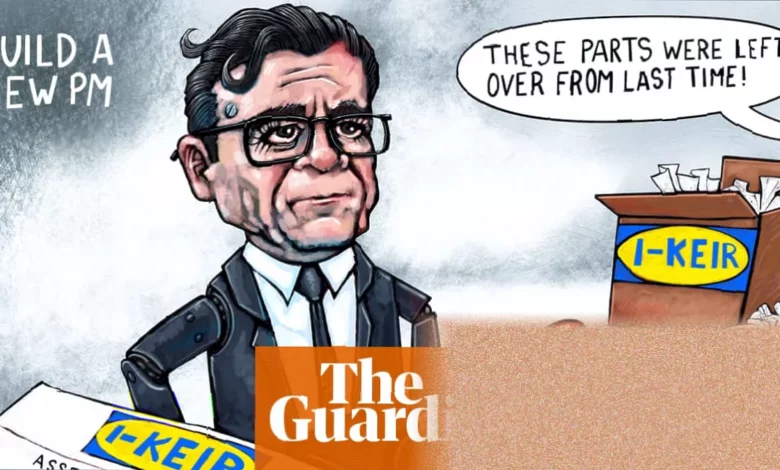
The political consequences of Burnham’s victory were captured in a cartoon by Stephen Lillie, whose work regularly appears in the Opinion section of The Guardian. Lillie, an illustrator known for a “cartoonish style” and a history of commenting on UK politics — including previous pieces on Keir Starmer’s leadership challenges and prison overcrowding — produced a visual take on the implications for the Labour party and the wider political landscape. His cartoon, produced under tight deadline, reflects the sense that Burnham’s win is not merely a by-election result but a potential pivot point in British politics, with Starmer’s position now under direct threat and the opposition’s internal dynamics thrown into sharp relief.