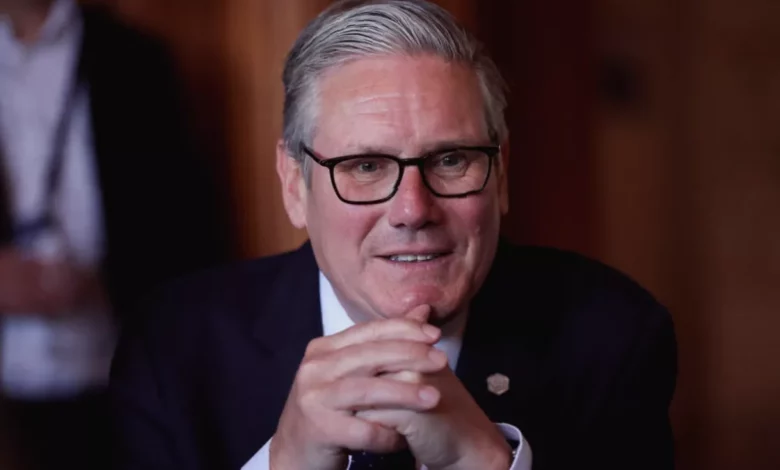
Google Search requires user consent to function. That simple proposition, displayed on countless websites as an unobtrusive prompt, embodies a principle that extends far beyond the mechanics of online browsing: no service can operate legitimately without the active permission of the people it serves. It is a lesson that Keir Starmer, the UK prime minister, appears to have learned too late.
Consent as a condition of service
When a visitor lands on a page that uses Google Custom Search, the underlying technology cannot activate without a clear signal from the user. The system relies on cookies or similar tracking technologies to deliver results, and those tools are considered non-essential under data protection law. Consequently, the site must ask each individual for their consent before loading the search widget. The request is explicit: “To use the search feature, we need your consent to load Google Custom Search, which may use cookies or similar technologies.” No consent, no search.
This mechanism mirrors the contract between a government and its electorate. A prime minister governs only as long as they retain the consent of their party, their parliament and, ultimately, the public. For Starmer, that consent has been withdrawn in stages. Internal party polling shared with Labour MPs in November 2025 indicated that half of voters who backed Labour in the 2024 general election had deserted the party. By the end of that year, opinion polls rated Starmer as one of Britain’s most unpopular prime ministers, drawing comparisons to Liz Truss. The YouGov UK surveys in May 2026 found that around 69% of Britons held an “unfavourable” opinion of the Labour leader, making him the least popular prime minister on record. A YouGov poll in June 2026 placed his approval rating at just 19%, while Ipsos polling the same month showed 20% favourable and 58% unfavourable opinions, producing a net favourability rating of -38.
Consent, once given, can be revoked. Starmer led Labour to a landslide victory in the July 2024 general election, returning the party to power for the first time since 2010. But that electoral mandate has been eroded by a series of defeats. Local elections across England on May 7, 2026 saw Labour lose over 1,400 councillors. The party also suffered a significant defeat in the Welsh parliament (Senedd) elections and went backwards in representation in the Scottish parliament. Polling prior to those elections indicated Labour was on track for its worst-ever local election performance, with vote share potentially falling to historic lows. Reform UK and the Green Party have made significant gains, challenging Labour’s traditional dominance.
The privacy policy behind the prompt
Every consent request is accompanied by a privacy policy that governs what happens to the data collected. In the case of Google Custom Search, users are directed to that policy before they decide. Transparency, in theory, allows informed choice. For Starmer’s government, the equivalent transparency has revealed a series of controversies that shattered public trust. The appointment of Peter Mandelson as British Ambassador to the United States has been a significant point of contention, particularly due to his ties to Jeffrey Epstein. Police are reportedly investigating alleged misconduct in public office related to this appointment. Policy U-turns and missteps have also taken their toll: an unpopular initial decision on winter fuel payments for the elderly, welfare benefit reforms, and tax increases. The government has faced a “stumbling economy,” a cost-of-living crisis, and a £20 billion hole in public finances, leading to planned tax increases.
The privacy policy of a website does not change unless the company decides to update it. Starmer’s political privacy policy — the set of principles and promises that secured his election — has been rewritten repeatedly, leaving voters uncertain about what they had actually consented to. Labour peer Charlie Falconer stated in June 2026 that Starmer has “absolutely no authority” and that “everybody assumes” Andy Burnham will challenge for the leadership and likely win.
The button that decides
The final step in the search consent process is the button itself. “Please click ‘Allow and Continue’ below to enable search,” the prompt reads. It is a single binary decision: allow or deny. Starmer now faces a similar binary decision from his own party. By mid-May 2026, over 95 Labour MPs had called for him to resign or set out a timetable for his departure. One cabinet minister — Health Secretary Wes Streeting — four junior ministers, and four ministerial aides resigned in protest. Some ministers are reportedly urging Starmer to set a timeline for his resignation, with one cabinet minister stating his departure is “inevitable.” There are reports that ministers from within Starmer’s government are privately asking him to step down.
On June 19, 2026, Starmer stated he would contest any leadership challenge, warning it would cause “chaos.” On June 20, reports emerged of ministers urging Starmer to set a resignation timeline. On the night of Saturday, June 21, The Observer reported Starmer is expected to resign as early as Monday, June 23, having concluded his position is “no longer sustainable.” On Sunday, June 22, further reports indicated Starmer had discussed stepping down with his wife at Chequers.
The button, in this case, is not pressed by a single user. It is a cumulative verdict cast by Andy Burnham, the Mayor of Greater Manchester, who won a special election for the Makerfield seat in Parliament on June 16, 2026, providing a route back to the House of Commons. Polling in Makerfield suggests voters would prefer Burnham over Starmer as Prime Minister. Burnham is widely considered the frontrunner to succeed Starmer; on June 19, he signalled his intention to challenge for the leadership. Other potential candidates include Wes Streeting, Angela Rayner, Ed Miliband, David Lammy, Shabana Mahmood, and Al Carns. Betting odds as of mid-June 2026 make Andy Burnham the overwhelming favourite to become the next prime minister, with odds as low as 1/100 or 1/40 with some bookmakers. Odds on when Starmer will be replaced as Labour leader suggest a replacement is most likely between July and September 2026, with a significant probability of it happening in April–June 2026.
Tony Blair, the former prime minister, has recently commented on the future of the Labour Party, with his favourability ratings being mixed. The populist right-wing Reform UK party, led by Nigel Farage, continues to pose a substantial challenge to Labour. But for now, the decision rests with Starmer himself — a single button that, once allowed or denied, will change the function of the government he leads. Unlike a website, there is no privacy policy to review, no cookie notice to dismiss. There is only the question of whether he will click “Allow and Continue” or finally accept that consent has been withdrawn.