Brands are quietly deploying AI-generated influencers on social media to simulate genuine customer experiences, an investigation has found, with no requirement to tell consumers the people they are watching are not real. The practice – which includes videos of fake brides endorsing photo apps and AI models modelling clothes with missing fingers – is raising urgent questions about transparency, consumer trust and the future of influencer marketing.
How it works
Content creators hired to produce these AI avatars are often forced to sign non-disclosure agreements that prevent them from discussing their work, a practice described by one insider as “plausible deniability”. Clarissa Mansbridge, a former celebrity manager who now creates hyperrealistic digital humans through her Mia Metaverse portfolio, told the investigation that between 40% and 60% of promotional content from some major brands is now made with AI. “If you sign with a brand, they’ll make you sign an NDA saying you can’t talk about the fact they’re using [AI], because consumer trust is still being built,” she said.
Mansbridge explained that brands commission entirely new AI avatars for user-generated content (UGC) – paid-for content designed to look like an authentic customer review. A beauty company, for example, might pay for a realistic video of an anonymous 20-year-old applying sunscreen beside a pool in Bali, then post it directly on its own social channels as if it were submitted by a real influencer. The appeal is clear: AI eliminates the costs of traditional photoshoots, which Mansbridge said can run from $20,000 to $70,000, and avoids the reputational risks associated with human influencers, such as bad press or personal opinions. “Unfortunately, human influencers killed the market for themselves,” she added. Research on industry practices confirms that AI can reduce campaign costs by 40–60% while offering brands complete control over messaging and 24/7 engagement.
Examples of AI influencer use
Among the brands identified in the investigation is Once, a photo app that allows phones to create disposable camera-style images. According to analysis by Reality Defenders, a cybersecurity company specialising in deepfake detection, the app has likely used AI-generated influencers in its Instagram promotions. Several videos show a bride crying and saying she was pleased to have used the Once app at her wedding. In one she states: “Everyone expected a no-phone wedding, so I gave them cameras instead.” The post was captioned “The app I used is called @oncefilmapp.” Once did not respond to a request for comment.
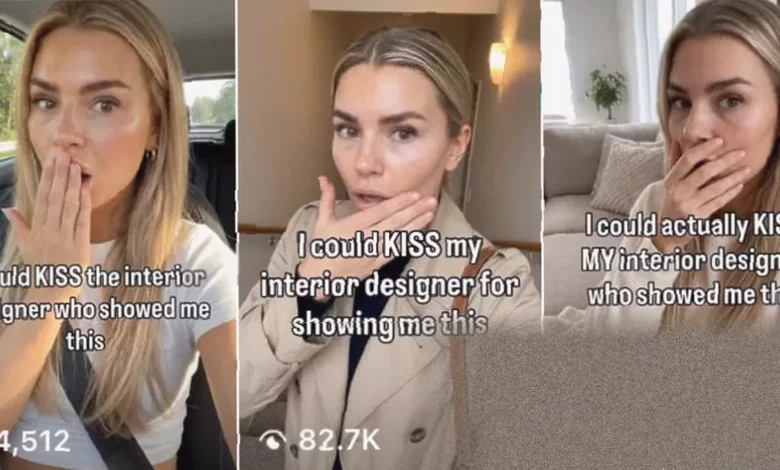
Another video features a woman who appears to be AI-generated saying “I could kiss the interior designer who showed me this” before demonstrating the Maket app, which uses AI to design housing projects. Maket acknowledged the practice, saying: “AI-generated influencers have been one of several ways for us to test creative concepts and marketing hooks at a small scale before investing in broader campaigns. This is not a core part of our marketing strategy, but rather an experiment.”
Dubai-based fashion brand Ashle posted a photograph of a woman wearing its clothes at a restaurant – but the woman appears to have an extra finger. After being approached by the investigation, the brand deleted the image. A spokesperson said the garments were real and handmade to order, and that the marketing imagery “utilised AI during our initial launch phase to showcase designs”. The spokesperson added that the photos were removed because those designs were no longer in the collection, “not because they were AI-generated”.
Separately, the lifestyle brand Sheerluxe faced criticism after using four AI influencers – usernames included the word “bot” – for fashion and beauty promotions, with posts carrying AI disclaimers. The incident highlighted concerns about replacing human employees and alienating audiences. Meanwhile, platforms such as MakeInfluencer.ai, Higgsfield and Pykaso.ai now offer tools to create and manage AI influencer campaigns, further lowering the barrier to entry.
Leeds-based artist Zac Rossiter was approached by a marketing agency that offered to create an AI-generated unboxing video featuring one of his prints. Unboxing videos, in which customers open and react to products on camera, are widely viewed as authentic recommendations. The agency wrote: “Pick one of your products. I’m thinking your artwork prints, but it’s up to you. We will use our AI studio to generate you a complimentary piece of ad creative for it.” Rossiter declined, saying: “I would never work with an agency that used fake AI unboxing videos over actual, real people.”
Regulatory gaps and ethical concerns
There are currently no specific rules in the UK requiring brands to disclose when advertising content has been created using AI. The Advertising Standards Authority (ASA) said there was nothing in its rules that explicitly prohibits posting AI-generated promotional content without disclosure. “The content would, of course, still need to stick to the advertising rules. For example, it mustn’t be misleading and it must be socially responsible,” a spokesperson said. The ASA added that the use of AI itself is not the issue it would assess; rather, it would ask “whether the ad itself is misleading, rather than the use of AI being inherently problematic”.
In the European Union, new rules under the Artificial Intelligence Act will begin applying in August, requiring clear labelling for AI-generated or manipulated content such as deepfakes. That legislation will not apply in the UK.
The consumer group Which? called for mandatory transparency, citing its own investigation which found that 70% of people were unable to correctly identify all real and fake videos shown to them. Lisa Barber, editor of Which? Tech, said: “It is concerning that consumers are not able to trust the content they are seeing online. Companies must be transparent when content has been created using AI, particularly if AI-generated influencers are appearing in the content.”
Research on consumer attitudes reveals deep mistrust. A majority of UK consumers – between 62% and 75% – express concern about the accuracy of automated content, and simply labelling content as AI-generated can trigger a “trust penalty”, making audiences warier. Over half of consumers want advertisers to disclose the use of generative AI, according to surveys. Younger adults (18–24) are more trusting of AI in retail (34%) than those aged 55 and over (14%), but across age groups AI influencers are consistently perceived as less trustworthy and less human than real influencers.
Beyond deception, ethical concerns include the setting of unrealistic beauty and lifestyle standards, the displacement of human influencers and creative professionals, and the risk that AI models trained on existing data perpetuate biases and stereotypes. The “uncanny valley” effect – where near-human AI content triggers discomfort – further undermines audience trust. Intellectual property issues also loom: UK law currently lacks robust statutory protection for image rights, leaving a grey area when real people’s likenesses are used without consent to train AI or create synthetic personas.
Detection technology exists – firms such as Reality Defender, Sentinel AI and IdentifAI offer deepfake analysis – but the Which? figures show that consumers remain highly vulnerable. Mansbridge, who continues to create AI avatars for brands, summed up the current climate: “I call it plausible deniability.”