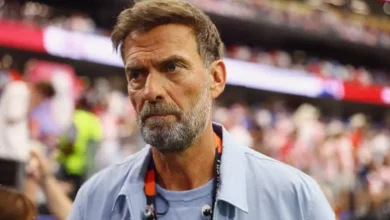
Roy Keane has described being lauded for his on-pitch efforts as “almost insulting”, likening praise of a footballer doing his job to thanking a postman for delivering letters. The former Manchester United captain’s remarks, drawn from his reaction to Sir Alex Ferguson’s famous tribute to his performance in the 1999 Champions League semi-final second leg, cut to the heart of a long-standing personal creed: that extraordinary effort is merely the baseline of professional duty, not something meriting special recognition.
Belgium and Iran eye knockout breakthrough in Group G
Keane’s uncompromising view of professionalism came as the World Cup’s 38th match got under way at SoFi Stadium in Los Angeles, with Belgium and Iran both seeking a first victory in Group G after opening draws. Belgium, ranked 10th by FIFA, were held 1-1 by Egypt, while Iran, ranked 22nd, fought back from two goals down to draw 2-2 with New Zealand — leaving all four sides level on one point.
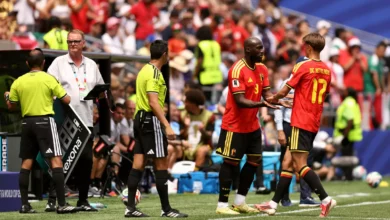
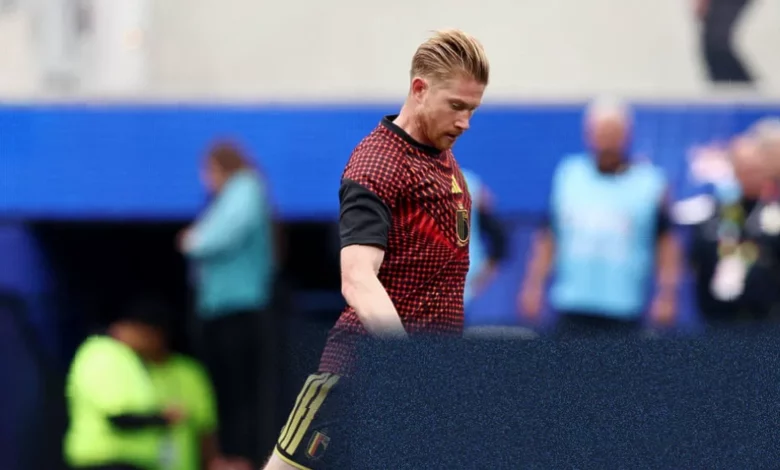
Belgium manager Rudi Garcia made four changes from the Egypt game. At right-back Castagne was replaced by De Cuyper; in midfield Raskin came in for Onana; the ill Jérémy Doku was replaced by Saelemaekers; and Romelu Lukaku, Belgium’s all-time leading scorer with 89 international goals, was deemed fit enough to start, with De Ketelaere dropping out. The Red Devils lined up in a 4-2-3-1 formation: Courtois; Meunier, Ngoy, Mechele, De Cuyper; Raskin, Tielemans; Saelemaekers, De Bruyne, Trossard; Lukaku. Kevin De Bruyne, their playmaker, was expected to orchestrate attacks, with full-barks pushing forward to deliver crosses — a tactical expectation noted in the pre-match analysis.
Iran, under Amir Ghalenoei, switched from a 4-4-2 to a more defensive 5-4-1 shape, making three alterations. Rezaeian made way for Hardani in defence, Kanani was added in a back five that also included Khalilzadeh, Nemati and Hajisafi, while Moghanlu was benched. The starting XI read: Beiranvand; Hardani, Kanani, Khalilzadeh, Nemati, Hajisafi; Rezaeian, Ghoddos, Ezatolahi, Mohebbi; Taremi. The plan, as described by analysts before kick-off, was to absorb Belgian pressure and seek opportunities on the counter-attack or from set pieces — a pragmatic approach given the strength of the opposition. Mehdi Taremi, Iran’s captain and focal point with 60 goals in over 100 international appearances, was tasked with leading the line, supported by wingers looking to exploit the space behind Belgium’s centre-backs, who lack pace. The referee for the encounter was Argentina’s Darío Herrera.
Keane’s professional ethos: praise as an insult
Keane’s intervention came during his punditry work on the fixture, a role that has seen him offer characteristically blunt assessments. His broader perspective on praise and duty was crystallised in his response to a passage from Ferguson’s autobiography. The former Manchester United manager had written of Keane’s display in the 1999 Champions League semi-final second leg against Juventus: “Running every blade of grass, competing as if he would rather die of exhaustion than lose. He inspired all around him. I felt it was an honour to be associated with this player.”
Keane’s reply was dismissive. “Stuff like that kind of almost insults me. What am I supposed to do? Give up? Not cover every blade of the grass? Not do my best for my teammates? Not too much to ask from a club. To be honest, I actually get offended when people throw quotes like that at me, as if I’m supposed to be honoured by it. It’s like praising the postman for delivering your letters – he’s supposed to, isn’t he? That’s his job. My job was to win football matches for Man United.” The logic applies universally, in Keane’s view: excellence is not exceptional; it is the minimum requirement of a paid professional. The same standard was applied to an interview with Declan Rice, aired moments earlier, in which the England midfielder praised new manager Thomas Tuchel’s preparation and communication. Keane’s reaction — captured in the commentary — was that such praise was simply recognition of what a manager is paid to do.
The contrast with other pundits working the tournament was notable. Emma Hayes, the Chelsea Women’s manager, was described in the live commentary as “the undoubted star” of UK World Cup coverage, praised for her ability to “identify what sets the pattern of a match, simplifying complex tactical plans without being patronising”. Her co-commentary on BBC radio was recalled as uniquely compelling. Meanwhile, Thierry Henry was noted as having improved in the punditry role after transitioning into coaching, with his deeper tactical obsession now adding value — a shift compared with, say, the lively exchange between Henry and Alexi Lalas that one writer had enjoyed dissecting.
World Cup’s wider stage: freedom, identity and unrealised potential
Beyond the pitch, the tournament carries emotional and political weight that distinguishes it from club football. As the original commentary noted, “where club and international football diverge is in their grand project: the former deals mainly with identity, whereas the latter necessarily relates to freedom.” For Iran, that burden is acute. The team’s participation at the 2026 World Cup has been overshadowed by the country’s “awful, painful situation”, with every match “freighted with meaning way beyond itself”. The question of whether the squad represents the people or the regime remains difficult, but few Iranians are ambivalent. The team based their camp in Tijuana, Mexico, after visa complications, and key players such as Sardar Azmoun, Allahyar Sayyadmanesh and Mohammad Javad Hosseinnejad are absent from the squad. Iran have never advanced past the group stage in seven World Cup appearances; a win against Belgium would put them on the brink of that historic achievement.
Belgium, by contrast, embody “unrealised potential”. The so-called golden generation — Thibaut Courtois, Kevin De Bruyne, Youri Tielemans, Romelu Lukaku — has long carried the tag of underachievers, despite a third-place finish in 2018. Now supplemented by younger talents such as Amadou Onana and the ill Jérémy Doku — players “who don’t carry the same pressure and wounds” — the side has “one final chance at redemption”. Their draw with Egypt disappointed, but, as the live commentary put it, “it’s rare the one that plays best at the start is the same one dancing about at the end – sometime in 2029.”
The 2026 World Cup, hosted across the United States, Canada and Mexico, features 48 teams and 104 matches — the largest edition in history. For UK viewers, the timing of matches — with an 8pm BST kick-off here — prompted reflection on the ideal schedule. “The security of knowing that, come teatime, there’s a feast to assault, is a banging feeling,” one observer noted, acknowledging the loss of working-day matches but welcoming a reliable evening slot.
Belgium and Iran have met only once before, at the 1998 World Cup, when Belgium won 2-1. On that occasion, the margins were tight. Here, with Roy Keane’s voice still resonating in the studio, the contest was about more than three points — it was a test of whether doing one’s job to the fullest, without expectation of praise, could be enough to break through.