Google Search requires user consent to function. Any website embedding the Google Custom Search tool must first obtain permission from its visitors before the search box becomes operational, a process that triggers the loading of cookies or similar tracking technologies. Without that explicit approval, the search feature remains disabled, meaning readers cannot look up content until they have clicked a button labelled “Allow and Continue” and acknowledged the site’s privacy policy.
How the consent process works
The consent mechanism is straightforward by design but carries significant implications for user control. When a visitor lands on a page that includes Google Custom Search, a prompt appears explaining that the search tool requires consent to load. By clicking “Allow and Continue”, the user agrees to the use of cookies or similar technologies that Google may deploy for the search function. The website’s privacy policy provides further details on how those technologies handle data. Until that consent is given, the search field remains greyed out or hidden, effectively blocking access to one of the most fundamental functions of a modern news site: the ability to find specific articles, updates, or background information.
The necessity of this step is rooted in data protection regulations, particularly the General Data Protection Regulation (GDPR) in the UK and Europe, which mandates that user consent must be freely given, specific, informed, and unambiguous before any non-essential cookies are placed. Because Google Custom Search may use cookies for analytics, personalisation, or ad-related purposes, publishers cannot assume default acceptance. This makes the consent request a mandatory gatekeeper for anyone trying to search the site.
What the search function reveals: the Serena Williams story
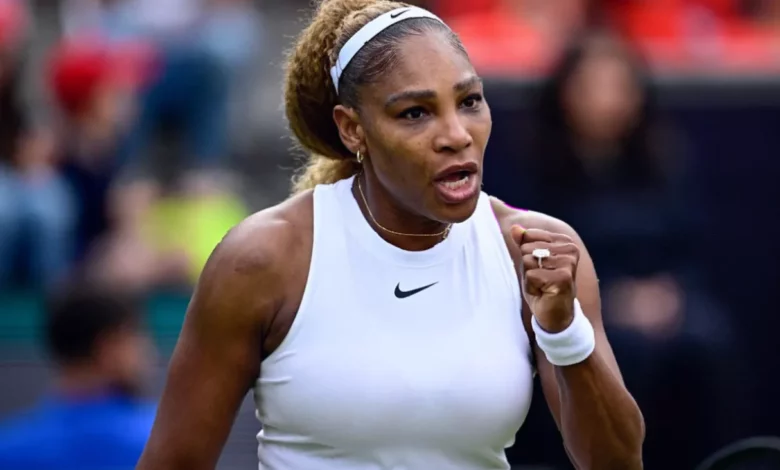
Once a user gives consent, the search bar becomes live and can return results from across the site. A timely example of the kind of story readers might be searching for — and one that illustrates the depth of information a consent-based search can unlock — is the unexpected Wimbledon comeback of Serena Williams. According to research compiled by our newsroom, the 44-year-old, widely regarded as the greatest female tennis player of all time, has been handed the final singles wildcard for the women’s main draw at Wimbledon.
This marks a dramatic return for a player who had previously stated she would “evolve away from tennis” after the 2022 US Open, rather than officially retire. Her last singles match at Wimbledon was in 2022, when she lost in the first round to Harmony Tan. Since then, Williams had been absent from professional singles competition, though she recently began playing doubles matches at Queen’s Club and the Berlin Open. Her doubles partner at Queen’s, Victoria Mboko, unfortunately suffered a knee injury during singles play, curtailing their run.
Williams has expressed that a key motivation for returning is so her daughters, Olympia and Adira, can see her play. Her husband, Alexis Ohanian, has been present at her recent matches. She is a seven-time Wimbledon singles champion, with her last title coming in 2016. Her seven singles titles at the All England Club place her second in the Open Era, behind only Steffi Graf and Martina Navratilova, who each have nine. She has also won six women’s doubles titles at Wimbledon with her sister Venus, equalling the record for the most doubles titles at the grass-court major.
Overall, Williams holds 23 Grand Slam singles titles, more than any other player in the Open Era, and has won a combined 39 singles and doubles Grand Slam titles. Grass is her most successful surface, with an 87% win rate in singles matches. The wildcard decision was announced on Sunday, 21 June 2026. Wildcards are typically awarded to players whose rankings do not guarantee automatic entry but who have strong career records, are returning from injury, or are high-profile names. Prior to the singles wildcard, it was confirmed that Serena and Venus Williams had accepted a wildcard for the women’s doubles tournament, which was seen as a stepping stone toward a potential singles return.
Williams’s current coaching team includes Head Coach Jarmere Jenkins, Assistant Coach Rennae Stubbs, and Fitness Trainer Derick Pierson. Stubbs also coached Williams during her farewell appearance at the 2022 US Open. Williams has been seen practising at Wimbledon’s Aorangi Park, with videos posted on Instagram showing her with her daughters. Patrick Mouratoglou, her former long-time coach, believes she would only return if she felt capable of winning and beating the best players, and suggested that her initial focus on doubles was a strategic way to test her level before committing to singles.
The Williams sisters are credited with ushering in the “power era” of women’s tennis, inspiring a new generation of players including Coco Gauff and Sloane Stephens. Beyond tennis, Serena Williams is a significant cultural symbol, advocating for female athletes and equitable prize money, and expanding her influence through fashion and venture capital. She has spent 319 weeks as the WTA world No. 1 and is the only player to achieve a career Golden Slam in both singles and doubles. Other prominent players who have received Wimbledon wildcards in recent years as part of comebacks from maternity leave or injuries include Naomi Osaka, Angelique Kerber, Emma Raducanu, and Caroline Wozniacki.
Privacy and the consent trade-off
The consent prompt that enables readers to search for stories like Serena Williams’s wildcard entry also raises important privacy questions. Google Custom Search may use cookies or similar technologies for purposes that go beyond the basic functioning of the search tool — for instance, tracking user behaviour across sessions or serving targeted advertisements. The website’s privacy policy is the document that explains exactly what data is collected, how it is used, and what rights the user retains. By requiring consent before loading the search function, the site aims to comply with legal obligations while still offering a useful feature. However, the trade-off is that every search query a reader makes after clicking “Allow and Continue” may be subject to data processing that the user has only broadly agreed to.
The Serena Williams material itself, uncovered through research prepared by our newsroom, demonstrates the kind of rich, contextual reporting that a consent-gated search tool can help surface. But the process of obtaining that information begins with a single click — one that grants permission for a technology whose data practices are not always transparent. The final singles wildcard for Williams was announced on 21 June 2026.