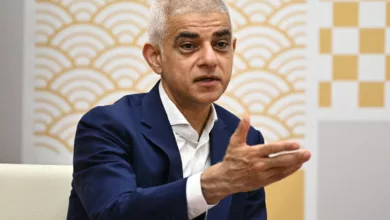
A new blueprint proposes reversing 40 years of privatisation by taking over failing utilities, using state intervention to reclaim control of essential services from private hands. The policy paper, titled The Productive State and subtitled A Framework for Manchesterism, sets out a long-term strategy for the government to step in when companies collapse, issue bonds in exchange for shares, and establish publicly owned competitors. Its author, Mathew Lawrence, is a close ally of Andy Burnham – the newly sworn-in MP for Makerfield and widely expected challenger for the Labour leadership – and has worked with him on shaping the mayor’s agenda for greater public control of utilities.
The core proposal: a state that owns, invests and provides
The essay, published by Mainstream – the Labour group that has become the vehicle for Burnham’s leadership ambitions – argues that the privatisation of essential industries lies at the heart of Britain’s growth and productivity struggles. “A state that owns, invests and provides to make life affordable. A politics that takes back control of the foundations of a decent life: clean water, cheap energy, warm homes, reliable transport, built and run by institutions that answer to the public,” Lawrence writes. The paper explicitly distances itself from blanket nationalisation, which it acknowledges would cost hundreds of billions, but insists that a framework for greater state intervention is essential to protect households from soaring costs and from footing the bill for failing private companies.
Lawrence, who is director of the thinktank Common Wealth, drafted the essay independently of Burnham, though it was inspired by the mayor’s arguments and agenda. The concept of “Manchesterism” – Burnham’s political philosophy, already tested in Greater Manchester through bus re-regulation – is presented as a “modern and functional response to the high-inequality, low-growth trap” created by the privatisation drive of the 1980s. The ultimate goal, the paper states, is “an economy … in which the essentials of life are treated as rights rather than revenue streams, and society builds the abundance, security, and stability it currently lacks”.
The ‘privatisation premium’: a hidden tax on households
The central economic argument of the blueprint revolves around what it calls the “privatisation premium” – a regressive hidden tax embedded in everyday bills that transfers wealth from households to investors. Research conducted by Common Wealth estimates that the British public has paid nearly £200 billion to shareholders of key industries since privatisation. In the energy sector alone, a quarter of the average household bill in 2024 funded corporate profits, with shareholders receiving at least £70.7 billion in dividends between 2010 and 2025. The paper argues that the premium is driven by the higher cost of capital faced by private entities and by coordination frictions that arise from unbundling integrated sectors.
“For millions of households, the basic non-negotiable expenses of life – rent, energy bills, water charges, transport fares, the cost of care – now consume so large a share of their income that insecurity has become a permanent condition,” the essay contends. “Britain’s essential sectors cost more than comparable alternatives not because they deliver more, but because they are organised to extract more. Working people pay the price.”
The government is then forced to subsidise those inflated costs with welfare transfers such as housing benefit or energy bill support, creating what the paper describes as a fiscal drag. “Rebuilding Britain’s systems of public provision is not the alternative to fiscal prudence. It is fiscal prudence,” the authors argue. The cost-of-living crisis, the essay insists, is a direct consequence of this privatisation premium – a point echoed by Miatta Fahnbulleh, the former minister who has been advising Burnham on policy. “At the heart of the cost of living crisis gripping this country is a basic truth,” she said. “The essentials that everyone needs to survive – a decent home, clean water, electricity, transport – have become unaffordable for too many.”
Methods of state assertion: from special administration to bond-for-share swaps
The blueprint sets out three main routes for the state to reassert control over utilities, depending on a company’s financial health. For firms already in distress – most notably Thames Water, which is carrying more than £17.6 billion in debt and has been on the brink of collapse – the government can use a special administration regime (SAR). Recent reforms to the SAR have been designed to facilitate the rescue of a company as a going concern, rather than simply selling off its assets. The Guardian has previously reported that Burnham’s allies have discussed a 10‑year project to take large parts of the water and energy sectors into public control, likely starting with Thames Water.
For financially healthy utility companies, the law typically requires the government to pay fair market value for any acquisition. To avoid a massive upfront cash expense, the essay proposes a “bond-for-share exchange” – the state would issue bonds to shareholders in exchange for their equity. Lawrence acknowledges that such a move would require new legislation and would almost certainly provoke significant legal challenges. Burnham’s allies have also talked about eventually bringing energy transmission and supply companies, possibly including National Grid, into public control.
The third route involves the state gradually building its own commercial public corporations to compete with existing private providers. This approach would require potentially major borrowing, but the paper argues it allows the government to increase its footprint in a sector without the immediate cost of acquisition. The essay has been praised by a number of Labour figures. Stewart Wood, the Labour peer and former economic adviser to Ed Miliband, called it “a valuable contribution to rethinking a social-democratic case for a more active state that helps to generate wealth and improve lives across the country”. Yuan Yang, the Labour MP for Earley and Woodley and a member of the soft‑left Tribune Group, said: “Change requires a diagnosis and a solution that matches the scale of our challenges, and a broad consensus is emerging within the Labour party on the need for bolder measures to tackle the cost of living crisis at its root.”
Luke Hurst, the national coordinator of Mainstream, argued that a new leadership in Labour could not be “business as usual” and that the party needed “a much more transformative offer and real debate within the party about our platform and priorities”. He described The Productive State as “an urgent rethinking of Labour’s political economy”.