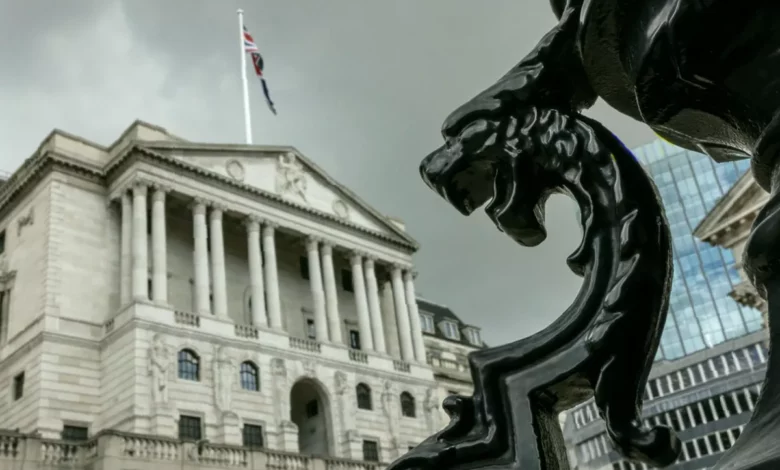
Forty-six financial firms are stress-testing their systems against a severe global recession scenario, following a directive from the Bank of England that targets the fast-growing but lightly regulated private credit market.
The cohort includes banks, pension funds, insurers and asset managers that are active in private credit and private equity. Participants range from major alternative asset managers such as Apollo Global Management, Blackstone, Ares Management and KKR to groups including Arcmont Asset Management, Bain Capital, Barings, Carlyle, CD&R, CVC Credit Partners, Goldman Sachs Asset Management, Hayfin Capital Management, Hg, ICG, Oaktree Capital Management and Permira. The exercise, known as the System-Wide Exploratory Scenario (SWES), is a voluntary collaborative effort that examines how a broad range of market participants behave collectively during periods of severe stress, rather than focusing solely on the resilience of individual firms.
Private credit under scrutiny
Private credit is a form of lending in which businesses borrow from a private company rather than a bank, typically through negotiated deals. Private equity, by contrast, involves financing in return for a stake in a business. The sector has expanded rapidly with total assets in private credit and equity funds soaring to approximately $11 trillion (£8.3 trillion) over the past decade. Globally, private markets now manage around $16 trillion in assets, of which private equity and private credit account for $11 trillion.
Despite this growth, the private credit market has operated with considerably less regulation and oversight than the traditional banking system. Concerns came to the fore in 2025 following the collapses of US auto parts firm First Brands and car dealer and lender Tricolor. Regulators have pointed to opaque financing structures, weak collateral controls, alleged fraud and the fallibility of credit rating systems as vulnerabilities exposed by those failures. The Financial Conduct Authority has cited both cases as “case studies” of how linkages between banking and private credit function in a crisis.
The Bank of England’s stress test is designed to identify potential risks linked to the private credit market, including the use of leverage, opacity in valuations and the interconnectedness of private credit with banks, insurers and other parts of the financial system. The Financial Stability Board has warned of challenges arising from limited data, unclear identifiers for financial instruments and borrowers, and the inability to assess risks from multi-layered investment structures. The Bank has said the exercise aims to understand systemic interactions, assess risks to financial stability and the provision of finance to the real economy, explore behavioural responses to a major shock, and address data gaps concerning leverage, opacity and interconnectedness.
The hypothetical scenario
The simulated crisis envisions a five-year global macroeconomic shock triggered by widespread supply chain disruptions that cause a scarcity of hardware components for the technology sector, coupled with a sharp escalation in energy prices. The resulting deep recession would see UK gross domestic product contract by 4 per cent, inflation soar to 7 per cent, interest rates climb to an identical 7 per cent, and the unemployment rate peak at 7.5 per cent. UK share prices would collapse by 35 per cent and leveraged loan spreads would widen by 400 basis points.
The Bank said that under this scenario the technology sector is severely impacted, and artificial intelligence development is hit by higher energy prices and hardware shortages – a connection that reflects broader concerns about AI’s significant energy consumption and its dependence on data centres and supply chains. The Bank stressed that the scenario is purely hypothetical and it is not forecasting such a shock.
Regulators globally are intensifying their focus on private markets. The FCA is considering overhauling reporting requirements for private credit firms, potentially mandating quarterly disclosures of granular loan-level data modelled on the US Securities and Exchange Commission’s Form PF. The Financial Stability Board has urged supervisory authorities to enact greater disclosure and oversight across the private credit landscape. The Bank of England’s stress test is seen as a blueprint for how global regulators might assess and potentially regulate private credit risks; the European Central Bank has already conducted comprehensive assessments of the sector.
Interim findings from the first stage of the stress test will be shared later this year, and initial information-gathering results are to be published in the Bank’s July 2026 Financial Stability Report. A final report is scheduled for 2027.