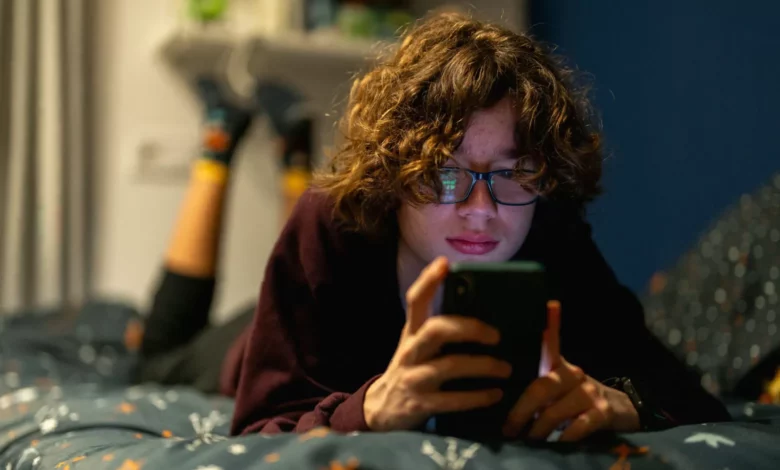
Government plans to lower the voting age to 16 are heading for a collision with its own proposed ban on social media for under-16s, MPs and campaigners have warned, raising the prospect that the youngest voters will be handed the franchise just as they lose the digital spaces where most of their generation now get their news.
A conflict of approaches
The government is simultaneously advancing two major reforms that directly affect teenagers. The Representation of the People Bill 2024-26 would lower the voting age to 16 for all UK elections and cut the registration age to 14, with the changes expected to be in force for the next general election in 2029. At the same time, a ban on social media for under-16s is due to take effect in spring 2027, meaning anyone turning 16 after that date will have been off the major platforms for at least two years before they can vote.
Downing Street has defended the ban as a necessary step to protect children from online harms, pointing to a consultation in which nine in ten parents supported the move. The regulations, to be presented to Parliament before the end of 2026, will follow Australia’s model and cover Snapchat, TikTok, YouTube, Instagram, Facebook and X. Messaging services such as WhatsApp and Signal are expected to be exempt. The government has also announced additional restrictions on live-streaming and communication with strangers for under-18s, with these measures switched on by default for 16- and 17-year-olds.
On voting, the government argues that 16- and 17-year-olds already shoulder civic responsibilities such as paying taxes and deserve a say on issues that shape their futures, including education, climate change and housing. Scotland and Wales have already extended the franchise to 16-year-olds for their devolved elections.
MPs express alarm
Josh Dean, one of the youngest MPs and among the few who grew up with social media, said he was deeply worried about the “tension” between the two policies. He recalled marching to Parliament Square at the age of 16 after the Brexit referendum – an event he discovered through social media – and described being on the Labour benches as the government lowers the voting age as “one of the great privileges of my life.”
But he told this website he feared the blanket ban would alienate young people who had engaged with the government’s consultation “in good faith” and now felt ignored. “Lots of them feel they weren’t listened to,” he said. “We want to empower young people, but I’m worried this might leave them wondering what the point is.”
Dean also warned that removing the “practical experience” of navigating social media before they turn 16 could leave new voters vulnerable to misinformation. “Young people consume information digitally,” he explained. “We can’t convince ourselves that this just means they’re going to go and pick up a newspaper. And if we want young people to engage with these things, and also if we want to help them to understand how to discern between information and disinformation, practical experience is really important.”
Impact on political engagement and media literacy
Experts and charities argue the social media ban risks undermining the very democratic engagement the voting reform is supposed to foster. Fact-checking charity Full Fact called the ban a “de facto surrender in the fight against harmful online misinformation” that “gives social media companies a free pass.” Head of public affairs Mark Frankel said it felt like “taking with one hand and giving with another.”
Full Fact’s data shows that nearly three in four (74 per cent) young people aged 13 to 14 report seeing content about news, politics or current affairs online, rising to 81 per cent among 15- to 17-year-olds. “We know that young people predominantly get their information from social media,” Frankel said. “Denying them access to information on social media platforms is a problem because you’re denying them a level of media literacy. If the government is serious about extending participation in our democratic process to 16- and 17-year-olds, restricting their access to these platforms is unlikely to help them become better informed.”
Research indicates that young people themselves feel ill-equipped to assess the news they encounter online: only about 53 per cent are confident they can tell whether information is true or false. They believe the responsibility for helping them navigate this landscape should be shared among schools, parents, government and social media companies.
The government has responded with plans to make citizenship lessons compulsory in primary schools (Years 1 to 6) from September 2028, with a new curriculum covering democracy, government, law, rights, media literacy and financial literacy to be published in spring 2027. It has also launched a campaign to give parents and carers practical tools to help children build resilience to misinformation and develop critical thinking skills online.
Dr Victoria Nash, associate professor and senior policy fellow at the Oxford Internet Institute, has warned that the ban risks leaving teenagers “protected but disempowered.” Critics argue that focusing on access rather than addressing exploitative algorithms and data-extractive business models is a blunt approach that could push young people towards unregulated corners of the internet or AI chatbots. Evidence from Australia suggests a similar ban did not prevent two-thirds of young people from retaining their accounts, and some reported seeing less news as a result.
James Armstrong, co-founder of the social media agency Social Firefly, said politicians should not rely on social media to reach young voters in any case. “Social media is a useful place to reach them, but you have to find other ways to do that, too,” he explained. He believes the ban could drive a return to traditional engagement methods such as youth clubs – which Labour has said it will invest in – and school debates. Armstrong also noted that influencers could still reach under-16s through the adults around them. “Creating content for parents and older siblings is a really important part of all of this,” he said. “You don’t target the 14-year-olds, you target the people who they listen to.”
A government spokesperson said: “This is not an either-or choice. Giving 16-year-olds the right to vote will empower young people to get involved in democracy. Our decision to ban social media companies from offering their services to under 16s reflects the fact that they have repeatedly failed to keep children safe online. Under-16s will still have access to the internet, news sites and platforms designed to be safe for them from the start. We are also strengthening the curriculum so that citizenship lessons are compulsory in primary school, and investing in projects which will help engage groups like young people in our democracy.”