“It’s a very unusual, very rare spell of very hot weather,” said Met Office meteorologist Simon Partridge, summing up a forecast that has prompted warnings across England, Wales and the Midlands. As temperatures are expected to climb past 35°C from Monday through Thursday, with highs of 38°C possible by Wednesday and Thursday, the message from forecasters is clear: extreme heat of this kind is uncommon in the UK, and the public should take it seriously.
A rare and potentially record-breaking heatwave
The Met Office has issued Amber Extreme Heat Warnings covering most of southern England, central and eastern Wales, and much of the Midlands on Monday and Tuesday. By Wednesday and Thursday the alert extends further north, into parts of Greater Manchester, Yorkshire and Cheshire. The peak of the heatwave is forecast for Wednesday and Thursday, with a 25% chance, according to the Met Office, that temperatures could exceed 40°C — a mark that would surpass the all‑time UK record of 40.3°C set in Coningsby, Lincolnshire, in July 2022.
There is “growing confidence” that this week could break the record for the hottest June temperature, which stands at 35.6°C, set in Southampton in 1976 and also recorded at Camden Square in 1957. Moreover, the UK may experience three consecutive days with temperatures of 37°C or above for the first time. By Friday, the heat is expected to ease to around 33°C in eastern areas, but the duration of the spell — from Monday until at least Thursday — makes it an unusually prolonged event for early summer.
Practical advice: how to stay safe
“People should take care, try to keep their houses as cool as possible, check in on those that are vulnerable, so the very young and very old, in particular, are more vulnerable to extreme heat,” said Partridge, adding that “everybody will feel this because it will be very hot and the overnight temperatures, in particular, will mean that people won’t be getting as much sleep.”
The general advice from the Met Office and the UK Health Security Agency (UKHSA) includes drinking plenty of fluids, keeping houses cool by closing windows and curtains during the day and opening them at night, avoiding strenuous exercise between 11am and 3pm, and staying out of the sun. Many UK homes, the research notes, are not designed for heat and can overheat, making it difficult to cool down — especially at night, when widespread “tropical nights” (where temperatures do not drop below 20°C) are expected across southern England, particularly in urban areas.
Who is most at risk — and why
The UKHSA has issued Yellow and Amber Heat Health Alerts, warning of a potential rise in deaths, particularly among those aged 65 and over or with pre‑existing health conditions. Vulnerable groups identified by the agency include the elderly (especially those over 65), babies, young children, pregnant people, individuals with chronic health conditions such as cardiovascular, kidney or respiratory problems, those on low incomes, people experiencing homelessness, and those living alone or in top‑floor flats.
Heat-related illnesses such as heat exhaustion and heatstroke are a major concern. The combination of extreme heat and very high humidity — dew points forecast to be around 22°C on Wednesday and Thursday, far higher than the single figures experienced during the record‑breaking July 2022 heatwave — will make conditions especially oppressive. As Met Office Deputy Chief Forecaster Tom Crabtree put it: “The combination of heat and humidity will be oppressive and bring impacts across society from public health and infrastructure, to power and water supplies.”
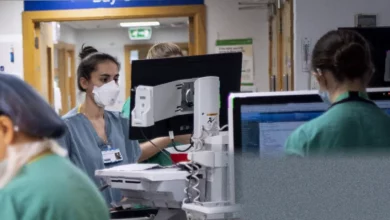
Overheating in homes, hospitals and care settings is a significant public health concern. Current regulations and public awareness, the research briefing notes, remain insufficient. Disrupted sleep due to high overnight temperatures can lead to fatigue and affect overall well‑being, while heatwaves can exacerbate existing health problems, particularly cardiovascular and respiratory diseases.
The UKHSA has also highlighted the risk to people with pre‑existing health conditions, noting that heat can worsen cardiovascular and respiratory diseases. Those on low incomes may struggle to afford cooling measures, and people living alone are less likely to have someone checking on them. The homeless population faces direct exposure to the sun and heat, with little shelter.
In addition to direct health impacts, the heatwave poses dangers from wildfires. Heatwaves combined with dry conditions significantly increase the risk of grass fires and wildfires; in July 2022, southeast England experienced unprecedented wildfires in urban areas. Climate change is projected to increase the likelihood and severity of such fires in the UK. Warmer seasons also alter phenology — the biological cycles within nature — affecting plants and animal species.
Infrastructure is under strain. Rail tracks can buckle, overhead power lines can sag, and road surfaces can melt. Local authorities have deployed gritters in past heatwaves to spread sand on softening tarmac. The electricity grid can be compromised, with power lines operating at reduced efficiency. South East Water has faced investigations for supply failures during warm weather, with thousands of properties affected by low pressure or complete outages due to high demand following dry periods. Warnings of potential water shortages and supply issues have been issued.
The economic costs are substantial: damage to infrastructure, disruptions to essential services, and agricultural output losses are projected. Annual food price inflation is likely to be sustained due to extreme heat impacts. Drought conditions can increase psychological distress and worsen mental health.
The UK Government declared a state of national emergency during the record‑breaking heatwave in July 2022. The current response is governed by the Adverse Weather and Health Plan (AWHP) published in April 2023, which replaced the previous Heatwave Plan for England and includes a heat health alert system. The National Adaptation Programme (NAP) outlines the government’s response to climate change impacts, focusing on overheating in buildings and calling for further research.
Climate change is a significant factor in the increasing frequency and intensity of heatwaves. Human influence has “virtually certainly” increased the occurrence and intensity of extreme heat events, according to research cited in the briefing. Studies indicate that climate change made the damaging fires during the 2022 heatwave at least six times more likely. Projections show that hot spells will become more frequent in the UK’s future climate, particularly in the south‑east.
“The forecast heatwave is developing into an impactful severe weather event, with record‑breaking June temperatures and very high humidity,” said Tom Crabtree. “The combination of heat and humidity will be oppressive and bring impacts across society from public health and infrastructure, to power and water supplies.”