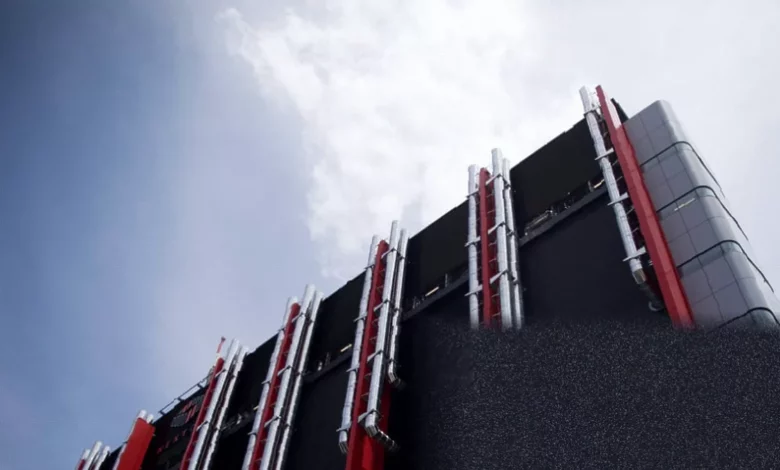
Australia faces a datacentre boom that will reshape its energy grid and economy, with one proposed site in Sydney’s outer west set to become among the largest in the world. The Mamre Road hyperscale facility, if approved, would cover 52 hectares and include six four‑storey buildings rising 40 metres high, alongside 936 cooling units and 852 diesel backup generators. With a planned power capacity of 1.2 gigawatts – the first in Australia to surpass the 1GW mark – the centre would consume more electricity than the Tomago aluminium smelter and become the country’s single biggest energy user. It is projected to use an estimated 22.4 million litres of water per year.
The Mamre Road Project
The project is part of a broader surge in datacentre investment. There are about 160 datacentres operating in Australia now, with another 90 proposed, according to the Climate Council. The nationwide investment pipeline is estimated at more than A$155 billion over the coming decade – roughly 5.6% of Australia’s annual GDP and comparable in scale to the mining investment boom. However, the net domestic GDP impact is likely to be around half that figure, approximately A$75 billion, because much of the high‑tech equipment is imported. Spillover effects could widen the GDP boost to a 60:40 ratio.
Hyperscale datacentres such as the one planned for Mamre Road are massive facilities designed for extreme scalability, typically housing at least 5,000 servers and covering at least 10,000 square feet. Major cloud operators – Amazon, Microsoft and Google – lead the hyperscale market, and Australia has become a prime investment destination, ranking second globally behind the United States in 2024. That status is attributed to its strategic location, land mass, renewable energy potential and geopolitical stability. The global rush to build infrastructure for the artificial intelligence revolution is the primary driver of the boom.
Economic Promise vs Environmental Cost
The economic case for the datacentre boom is substantial. The investment phase is projected to support around 400,000 temporary jobs, though operational roles are far fewer: studies in the United States show thousands of workers during construction but only hundreds once facilities are running. Private investment in the sector accounted for nearly 17% of all private investment in Australia in the first quarter of 2026, making it a significant economic driver in the face of slowing household spending.
Pat Bustamante, a senior economist at Westpac, describes the boom as “laying the foundation for the next wave of productivity growth”, potentially bigger than the PC and IT revolution of the late 1990s. He expects the productivity boost to materialise during the “production and usage phase” once high‑speed computing power is in place. But Alex Hooper, head of climate and energy economics at Oxford Economics Australia, cautions that the productivity argument is “not a given” and that policymakers must ask how many datacentres are good for the country and what role they should play in economic growth.
Environmental concerns centre on power and water demand. Datacentres already account for about 2% of Australia’s total grid‑supplied power. Hooper calculates that on the east coast that figure is 2.8%, rising to 7% by 2030 and above 10% by the mid‑2030s, with significant upside risk given the strength of the project pipeline. Total demand is projected to triple by 2030 to nearly 12 terawatt‑hours – equivalent to 6% of the National Electricity Market or the electricity consumption of all homes in Victoria. By 2049‑50, demand could reach 34 TWh, or about 12% of the NEM.
If that increased demand is not offset by additional renewable energy sources, wholesale electricity prices on the east coast could be 20% higher by 2035, according to the Climate Council. Other analysis suggests potential increases of up to 26% in New South Wales and 23% in Victoria by the same year if datacentre demand is met with gas rather than renewables. Without sufficient clean energy offsets, the extra demand could cause 14% more climate pollution from the national electricity grid by 2035, in addition to emissions from diesel backup generators.
Water consumption is also rising sharply. Current datacentre water use is estimated at less than 0.1% of Australia’s total, but projections suggest demand could triple by 2030. Some proposed projects have sought water allocations equivalent to 16 Olympic swimming pools per day. The Mamre Road facility alone would use an estimated 22.4 million litres per year. Concerns are mounting that this strain on water resources could worsen in a hotter, drier climate, affecting public supplies and exacerbating existing scarcity.
Land use adds further tension. Most datacentres are located in cities, sometimes too near homes. Penrith Council has formally objected to the Mamre Road project, citing suitability concerns. Residents and schools near proposed sites have raised fears about air quality and noise pollution from cooling units and backup generators. The Mamre Road area is also designated a state freight priority; critics argue that approving a datacentre on the land conflicts with New South Wales’ net‑zero goals and risk‑management strategies for critical infrastructure, as it would increase road dependence and emissions rather than favouring rail freight.
Policy and the Path Forward
Economists and experts broadly agree that rules are needed to ensure the boom benefits Australia rather than simply consumes resources. Beth Webster, an economics professor at Melbourne University who specialises in advanced manufacturing, points to the United States as a cautionary tale. “America has revealed all the problems,” she says, including failure to require developers to deliver additional energy and water and placing datacentres too close to homes. She argues that as long as Australia has rules around development, “it’s going to be a win. Foreign direct investment is a very important source of knowledge exchange, and I can’t see too many downsides.”
The Australian government has released a “national interest framework” for datacentres and AI infrastructure, prioritising projects that align with data sovereignty, environmental sustainability, local economic benefits and supporting the clean energy transition. However, the expectations are currently non‑binding and serve only as a signal for prioritised regulatory engagement. Concerns have been raised about whether they are strong enough to protect grid supplies and water sources. Federal and state energy ministers are expected to discuss legislating “triple lock” rules that would require datacentres to invest in clean energy, pay their full share of network costs and provide demand flexibility.
States are becoming more active. Victoria has launched a Sustainable Data Centre Action Plan, and New South Wales has a dedicated Investment Delivery Authority to accelerate approvals. The industry body, Data Centres Australia, advocates for industry‑led standards and faster approvals, warning that heavy‑handed regulation could deter investment. Meanwhile, some companies such as AWS have committed to renewable energy projects, though the energy demand from datacentres is materialising faster than the clean energy infrastructure needed to support it.
Scepticism about whether the datacentre boom will be a boon or a burden is partly rooted in broader anxiety about artificial intelligence. Sally Auld, chief economist at NAB, notes that people and society have “big question marks around where AI will take us,” asking whether the nation is “sowing the seeds of our own destruction” by building these facilities. Her research suggests AI will augment rather than replace most jobs, but she concedes it is hard to know the net effect. Additional studies indicate that AI may substitute for labour, potentially shifting income from workers to capital owners and exacerbating inequality, with slower employment growth in highly AI‑exposed white‑collar sectors.
Hooper of Oxford Economics Australia says policymakers need to develop a proper overarching industrial policy to make sure datacentres work for the country rather than just happen to it. “We have a lot of interest here to make sure the public sees the benefit, and for that we will need to have a vision of the future,” she says. “I think there are huge opportunities, but we have to be smart.”