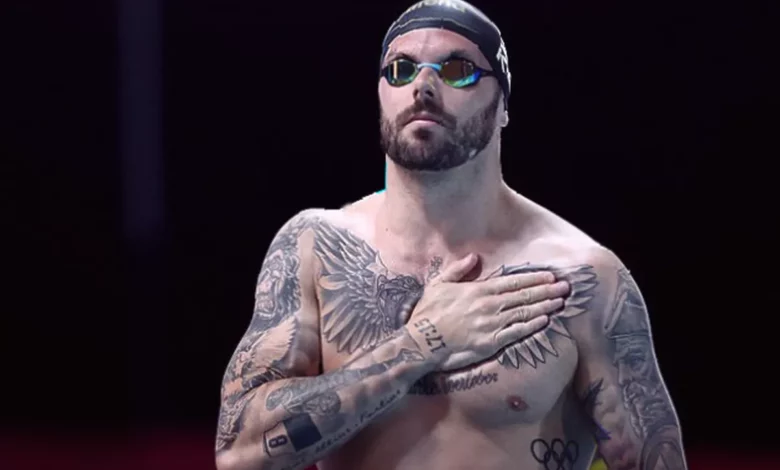
Olympic gold medallist Kyle Chalmers has revealed he paid $5,000 of his own money simply to compete at the Australian Swimming Trials – a stark illustration of the financial hurdles facing even the country’s most decorated athletes.
The 28-year-old, who has amassed six Olympic medals including gold in the 100m freestyle at Rio 2016, detailed the personal cost of pursuing a professional career in the pool. “As a 28-year-old with a young family, and a mortgage, it’s very hard to continue,” Chalmers told reporters. “We fund these things ourselves; for me to come to trials cost me $5,000, for me to race tonight cost me $36.”
That outlay covers only the entry fee for the national trials, not the wider costs of travel, accommodation, coaching or equipment that elite swimmers must absorb personally. While the Australian Olympic Committee (AOC) has introduced several funding initiatives – including a $50 million package announced in December 2025 that will provide a $5,000 “Team Selection Payment” per athlete for attending Games from Milano Cortina 2026 onwards – the burden of getting to the starting blocks remains a significant barrier.
And while Chalmers has now booked his place on the Australian team for the Glasgow Commonwealth Games by winning the 100m freestyle at those same trials, his victory came with a pointed warning for the next generation. “It’s such a hard sport … you make a lot of very hard decisions and sacrifices for what I feel is very little reward,” he said. The nine-time world champion, married with one child, stressed that the financial strain is compounded by the absence of direct prize money for Olympic medals. “I’ve won 48 international medals and I would’ve got less prize money for those medals than Hunter Armstrong, who raced clean at the Enhanced Games,” Chalmers said. “So it’s really sad to see how uneven it is, especially when the IOC president comes out and makes pretty harsh comments through that period of time.”
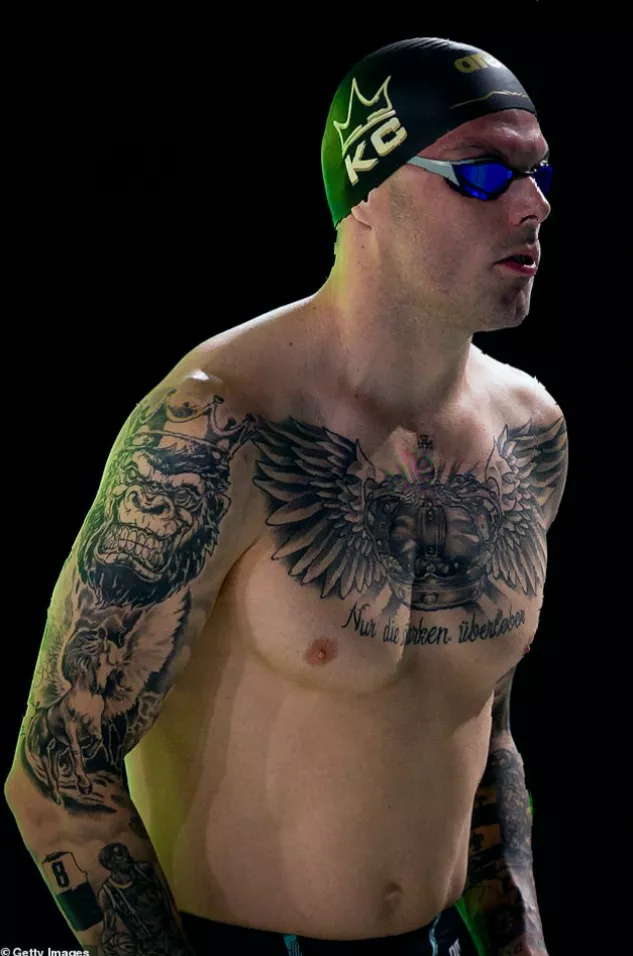
His remarks highlight a widening gap between traditional Olympic funding and the controversial but lucrative “Enhanced Games”, where American swimmer Hunter Armstrong reportedly earned $375,000 – $250,000 for winning the 50m backstroke and $125,000 for second in the 100m freestyle. Chalmers himself was offered a multi-million dollar contract to join the event but turned it down, citing his desire to compete for his country and his love for the sport. Armstrong, meanwhile, said the Enhanced Games was his only option to continue full-time swimming because of financial difficulties.
How Australian swimming funding works
The financial landscape for professional swimmers in Australia relies on a patchwork of government and institutional support. Elite athletes receive direct funding via the AOC and the Australian Sports Commission: for 2023-24, $16.6 million was allocated to 850 athletes in Olympic sports, with a maximum individual salary of $37,500. That sum must cover training, travel, equipment, and competition fees.
Swimming Australia administers targeted programmes such as the Georgina Hope Foundation Swimmer Support Scheme (GHFSSS) and, in partnership with Griffith University, offers scholarships of up to $5,000. Athletes may also apply for the Australian Sports Commission’s dAIS Grant. However, accepting a US college scholarship can rule out eligibility for these Australian funding streams, narrowing options for those seeking financial stability through study abroad.
The AOC’s Olympian Futures Fund – a $20 million component of the 2025 funding package – is designed to provide grants and retirement support, but the immediate costs of attending national trials remain a personal expense. Chalmers’ outlay of $5,000 is equivalent to the maximum scholarship value offered by Swimming Australia, underscoring how even a one-off entry fee can eat into an athlete’s limited resources.
A champion’s plea for structural change
Chalmers did not stop at describing the present struggle. He made an explicit call for the sport’s governing bodies to act. “I really hope our governing bodies can actually start to create change,” he told reporters. “It’s a sport that takes a lot from you and I really hope that from the top right down there’s gonna be some change. But if not hopefully I can at least speak up to make it a little bit better for the next generation coming through.”
His comments come amid ongoing debate about athlete welfare and the sustainability of swimming as a career. Chalmers has previously spoken out about doping in the sport, expressing distrust of some competitors, and has been open about the toll of media scrutiny on his mental health – including fabricated quotes attributed to him regarding LGBTQ+ issues. The broader context of integrity and financial pressure has added weight to his current demands.
The Australian Olympic Committee, which has steadily increased its investment in athletes, has yet to respond directly to Chalmers’ remarks. But he was unequivocal about the mismatch between the sacrifices demanded and the rewards offered: “I’ve achieved everything I could have dreamed of in the sport, but the financial reality is that it takes far more than it gives back.”