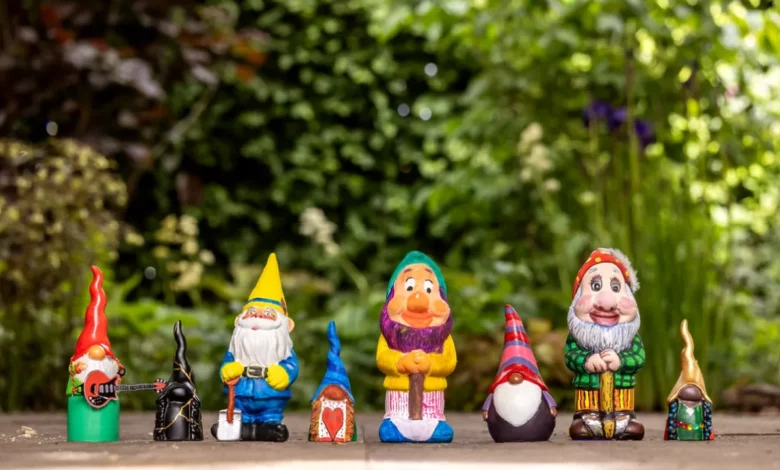
School gardening charity benefits from auction proceeds as the Royal Horticultural Society lifts its long-standing ban on garden gnomes at the Chelsea Flower Show for only the second time in history. The money raised from the sale of celebrity-decorated gnomes will go to the RHS’s Campaign For School Gardening, which helps schoolchildren access gardening, giving them the chance to learn through growing plants, developing practical skills, confidence and understanding of the environment, the charity said.
Charity’s goal: inspiring a generation through soil and seeds
The RHS Campaign for School Gardening aims to inspire schoolchildren to learn through gardening, fostering practical skills, confidence and environmental understanding. The charity provides free resources, training and support to more than 30,800 schools and groups, reaching approximately 2.1 million children. Gardening in schools is proven to boost physical and mental well-being, enhance literacy, numeracy and science learning, and encourage creativity and problem-solving, the RHS said. It also teaches children about the environment, sustainability and fosters a sense of responsibility. To help teachers integrate gardening into the curriculum, the RHS offers professional development workshops and resources. The campaign relies on donations and fundraising efforts; the gnome auction is a major charitable fundraiser, alongside the 150,000 tickets sold for this year’s show, which also contribute to community gardening programmes and climate change research.
Auction’s purpose: ban lifted for a second time
Garden gnomes were once considered “tacky” by the RHS, leading to a ban at the Chelsea Flower Show from 1912 until 2013. That ban was first lifted in 2013 to celebrate the show’s centenary and to raise funds for the same school gardening campaign, with celebrities including Elton John and Dame Helen Mirren decorating gnomes for auction. Now, for only the second time in the show’s history, the ban has been lifted again – a decision made once more to support the Campaign For School Gardening. This year’s event features gnomes decorated by a host of famous names: Cate Blanchett, Sir Brian May, Alan Titchmarsh, Dame Mary Berry, Tom Allen, Dame Joanna Lumley, Bill Bailey and Baroness Floella Benjamin. The online auction runs from Friday, 15 May, to Sunday, 24 May, and is managed by jumblebee on behalf of the RHS.
Some of the celebrity gnomes may be featured within “The RHS and The King’s Foundation Curious Garden”, a garden designed with input from King Charles, Sir David Beckham and Alan Titchmarsh that aims to spark curiosity about gardening and encourage careers in horticulture and environmental crafts. The presence of gnomes in the show reflects a tradition at Highgrove Garden, the King’s Gloucestershire residence, where a gnome is often found in “The Stumpery”, the RHS noted, adding a layer of royal endorsement to the gnome’s return.
How the Campaign For School Gardening helps children learn and grow
Beyond the auction’s immediate proceeds, the Campaign For School Gardening offers a structured approach to embedding horticulture into education. The RHS, the UK’s leading gardening charity dedicated to enriching lives through plants and making the UK greener, runs the School Gardening Awards, teacher training programmes and visits to RHS Gardens. Its broader work includes tackling climate change, improving biodiversity and supporting community gardening. Research compiled by the RHS shows that children who garden regularly gain practical skills such as planting, weeding and harvesting, which in turn build confidence and a sense of achievement. The hands-on nature of gardening helps improve literacy and numeracy – measuring plots, reading seed packets – while science learning is deepened through observing plant life cycles and ecosystems. The mental health benefits are well documented: time outdoors, physical activity and contact with nature reduce stress and improve mood. The campaign also encourages creativity and problem-solving, as children decide what to grow, how to care for plants and how to deal with pests or weather challenges. A key outcome is a greater understanding of the environment, sustainability and where food comes from, along with a sense of responsibility for living things.
The gnome auction is part of a wider charitable effort that includes the show’s sell-out ticket sales – the Chelsea Flower Show has sold out for the first time since before the Covid-19 pandemic, reflecting strong public interest in gardening. The RHS said that all funds raised from the auction will go directly to the campaign, ensuring that thousands more children can access the benefits of gardening.
Garden gnomes themselves have a rich history beyond their celebrity makeovers. They originated in 19th-century Germany, inspired by folklore, with Philipp Griebel credited with crafting the first terracotta garden gnomes. Traditionally they represent good luck, protection of crops and a connection to the land. Gnomes were first introduced to England in 1847 by Sir Charles Isham at Lamport Hall, where one original gnome, “Lampy”, still exists and is insured for more than £1 million. Despite the RHS ban, plastic gnomes became common after World War II and gained further traction through pop culture; supermarkets such as Asda have reported increased demand in recent years. A light-hearted historical prank known as “Gnome Roaming” or “Gnome-napping” – where gnomes are stolen and photographed on adventures – adds a playful footnote to their enduring appeal.