European next-generation combat aircraft scheme faces collapse unless dispute ends, warplane maker warns

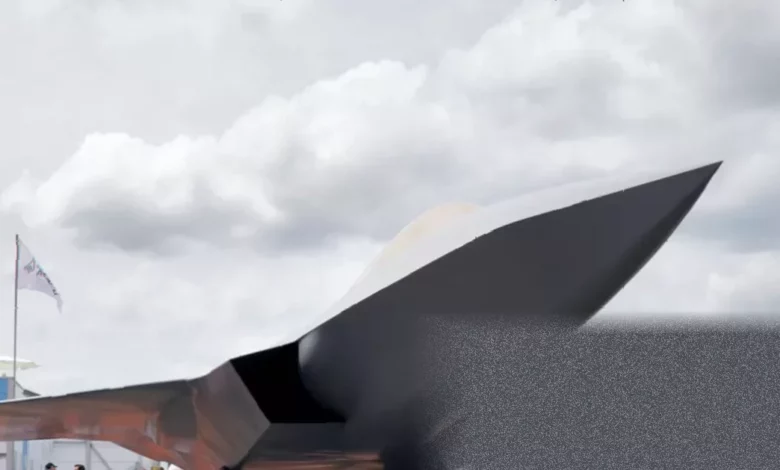
The flagship European defence project designed to secure the continent’s military future is teetering on the brink of collapse, with one of its lead industrial partners declaring it could soon be “dead”. The stark warning from France’s Dassault Aviation exposes a deep and worsening corporate rift with its German counterpart, Airbus, over the €100 billion Future Combat Air System (FCAS).
Dassault’s chief executive, Éric Trappier, used a results presentation to issue a direct ultimatum to Airbus Defence, which represents Germany and Spain in the programme. “If Airbus maintains its position of not wanting to work with Dassault, the matter is dead,” he stated. He accused Airbus of being “aggressive” and “arrogant”, and insisted his company was contractually the selected leader for the core New Generation Fighter (NGF) jet component. “I understand that Airbus doesn’t like that decision but we are making sure that we comply with the contract,” Trappier said.
A Clash of Visions and Needs
The dispute centres on fundamental disagreements over industrial leadership, technical requirements, and strategic vision. Announced nearly nine years ago by French President Emmanuel Macron and then-Chancellor Angela Merkel, the FCAS project aims to replace France’s Rafale and the German and Spanish Eurofighter fleets by 2040. It envisages a “system of systems” combining a next-generation fighter with autonomous drone swarms and an advanced “combat cloud” network.
However, the collaboration has foundered on national industrial priorities. While Dassault demands the lead role on the fighter, Airbus prefers maintaining existing rules and a more balanced workshare. This industrial stalemate is compounded by a growing political and technical schism. German Chancellor Friedrich Merz said last month that Germany’s military needs differ from France’s, specifically noting it does not require a nuclear-capable or aircraft carrier-capable fighter—a key French requisite. He characterised the impasse as a technical, not political, dispute.
Trappier publicly contested this, stating, “My highest authorities here in France say we have similar operational needs and that there is agreement at an operational level.” In response to the deadlock, Airbus CEO Guillaume Faury has floated a “two-fighter solution”—developing separate jets to meet different national requirements—as a way to salvage the wider FCAS ecosystem. This proposal has been rejected outright by Paris. “France does not support this idea of two aircraft,” Trappier confirmed.
Broken Timelines and a Rival Waiting in the Wings
The continuing friction has put the entire project’s timeline in jeopardy and spotlighted Europe’s chronic struggles with joint defence procurement. A demonstrator aircraft, once targeted for flight in 2026 or 2030, is now estimated to fly around 2029, with entry into service pushed to around 2040. This delay stands in stark contrast to the rival UK-led Global Combat Air Programme (GCAP), also known as Tempest, being developed with Italy and Japan, which aims to get its aircraft airborne by 2035.
The existence of this alternative is increasingly shaping the crisis. There have been persistent suggestions that Germany could abandon the troubled FCAS project in favour of joining GCAP. Tufan Erginbilgiç, the boss of Rolls-Royce, which is building engines for the British jet, told the Guardian he would “definitely be open” to Germany joining the scheme.
Further complicating the picture is Germany’s separate decision to purchase American F-35 fighter jets, a move analysts suggest unsyncs procurement cycles and could provide the Luftwaffe with a fifth-generation platform for decades, potentially easing any decision to walk away from FCAS.
The implications of a collapse extend far beyond corporate boardrooms. EU Defence Commissioner Andrius Kubilius has described FCAS as a “failure” and a prime example of the lack of success in pan-European defence projects, undermining the bloc’s ambitions for strategic autonomy. For his part, Airbus’s Guillaume Faury has suggested cooperation remains essential, even if talks are difficult, and that Dassault is “free to decide to move out of FCAS” if unhappy.
With France, Germany, and Spain soon expected to decide whether to fund the next phase of the programme or drop the fighter component, Trappier has laid out a stark choice. He has indicated that France could proceed with developing a next-generation aircraft alone, though at great cost. As the warnings grow ever more dire, the future of Europe’s most ambitious defence collaboration now hangs by a thread, caught between competing industrial giants and diverging national strategies.