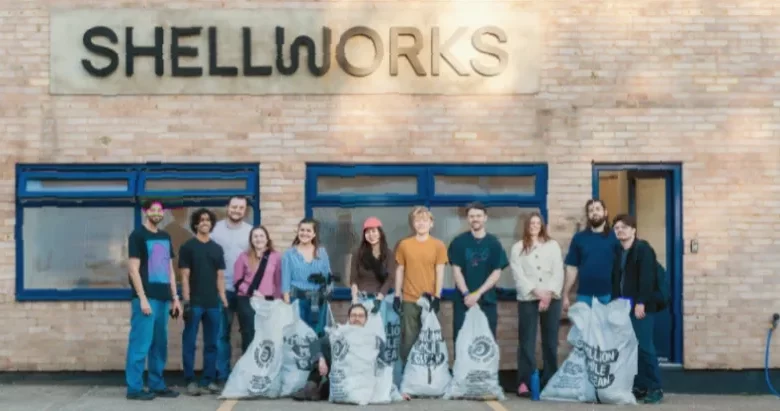
A London biomaterials startup has secured a $15 million investment to scale a home-grown plastic alternative that it claims has already achieved cost parity with traditional packaging materials, challenging one of the biggest barriers to sustainable adoption.
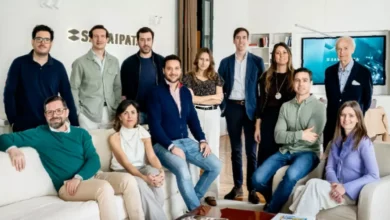
Shellworks, founded in 2019, will use the Series A funding to expand production of its Vivomer material into the United States and Europe, aiming to capitalise on growing demand for plastic-free solutions in the beauty and personal care sector. The round was led by the Paris-based impact investment fund Alter Equity, with participation from Nat Friedman through NFDG, JamJar Investments, and existing backers including Founder Collective, LocalGlobe, and Third Sphere.
The Microbial Material
Vivomer is a bio-based material created through microbial fermentation of second-generation feedstocks, such as used cooking oil. The company says it is naturally plastic-free, petroleum-free, and contains no toxic additives like BPA or PFAS. Designed to mimic conventional plastics during use, it is engineered to fully biodegrade after disposal, even in home composting systems, without leaving microplastics or toxins. In landfill, it breaks down at a rate similar to cellulose.
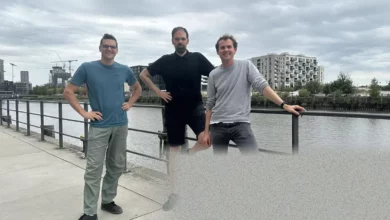
The startup’s origins lie in the work of co-founders Insiya Jafferjee and Amir Afshar, who met while studying for Master’s degrees at the Royal College of Art and Imperial College London. Their initial innovation focused on creating bioplastics from chitosan derived from crustacean shells, which won the 2020 Venture Catalyst Challenge. In early 2020, the company pivoted to develop the vegan, microbially-derived Vivomer.
“For too long, the conversation around sustainable materials has been dominated by the perception that they’re too expensive for mass adoption. We’re proving that’s no longer true,” said CEO Insiya Jafferjee. She stated that at just a fraction of plastic’s scale, with approximately 5 million units produced so far, Vivomer is already cost-competitive with alternatives like glass and aluminium.
Beauty Brands and Breakthroughs
Shellworks is currently focused on the beauty and wellness industry, where its material is being adopted by a range of brands. Early partners include the Unilever-owned personal care brand Wild, Pamela Anderson’s Sonsie Skin, and Phil’s, whose products are on shelves at Whole Foods Market. Other brands using Vivomer packaging include Abel, Eclo, People Care. Planet Care. (formerly Haeckels), Sam McKnight, Wildsmith, Bybi, Liha, and Sana Jardin. Wild’s product line using the packaging is also sold in Tesco.
The company has developed what it calls the world’s first fully home-compostable pipette dropper for beauty products, made entirely from Vivomer, to address waste from mixed-material components. Shellworks claims its compostable solutions have replaced over 90 tonnes of conventional plastic to date.
Freddy Ward, co-founder and CEO of Wild, said: “Vivomer is at the forefront of sustainable material innovation and has helped Wild deliver on our mission. Their desire to drive change and solve problems has been amazing to watch.”
Scaling the Solution
The new capital will fuel a significant manufacturing expansion. Shellworks plans to establish new production capacity in the US and Europe, utilising technologies like blow moulding to support large-scale packaging production. This strategy is designed to reduce transportation emissions and strengthen supply chain resilience by creating regional production networks.
This Series A follows earlier seed funding, including a $6.2 million round led by LocalGlobe in May 2022 and a £4.6 million raise the same year. The founding team brings relevant expertise: Jafferjee previously worked in manufacturing at Apple, Bose, and Ford, while Afshar’s background is in design with a focus on natural materials.
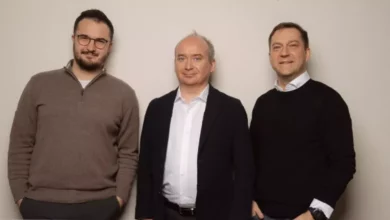
Félix Mounier from lead investor Alter Equity said the startup represents the kind of innovation needed in the materials economy. “They’re not just creating a better material, they’re building the infrastructure to make it accessible at scale. That’s what will drive real change and contribute to the plastic-free economy we are supporting,” he said.
Shellworks has also published a Life Cycle Assessment indicating its upcycling solution can lead to a substantial reduction in CO₂ emissions. The company has a five-year partnership with the brand Haeckels, now known as People Care. Planet Care., underscoring its deep collaborative approach. Jafferjee has framed the company’s vision as breaking reliance on the petroleum industry by building a new standard of packaging that is performant, cost-competitive, and truly sustainable.