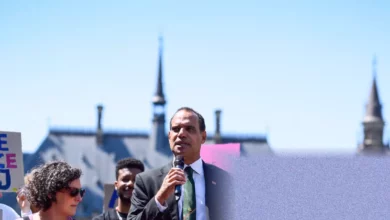
Britain aims to close a loophole allowing illegal migrants to remain, as ministers gather for a crunch summit in Moldova where a declaration is expected to be published by the Council of Europe, the body that oversees the European Convention on Human Rights (ECHR). Foreign Secretary Yvette Cooper, who will represent the UK at the meeting, has called for a “common sense approach that reflects the realities of today” ahead of the talks, while the Foreign Office has said a “more modern” interpretation of the convention is set to be agreed.
The summit, organised by the Council of Europe and taking place in Chișinău, is designed to produce a political declaration that clarifies how the ECHR should be interpreted by European and domestic courts. Attorney General Richard Hermer is also attending. The UK, which is pushing for reform, wants to prevent what is seen as the exploitation of two specific articles of the convention that have been used by human rights lawyers to stop individuals with no right to be in Britain — including foreign criminals — from being sent home.
The legal loophole: Articles 3 and 8 under scrutiny
The two articles in the spotlight are Article 3, which prohibits torture and inhuman or degrading treatment, and Article 8, which protects the right to private and family life. Their application in deportation cases has become a major flashpoint, with critics arguing they are being used to frustrate removals on grounds that stretch the original intent of the convention.

Article 8 is a “qualified” right, meaning restrictions on it are lawful if they are necessary and proportionate. However, the European Court of Human Rights (ECtHR) has historically taken a broad view of what constitutes family life, leading to claims that the system is being unfairly gamed. The term “chicken nugget migrant” has emerged in this debate, reportedly stemming from a case where a man was allowed to remain in the UK partly because his young son had an aversion to foreign chicken nuggets — an example critics cite as evidence of the absurdity of some Article 8 appeals. The government is now seeking to tighten the application of such claims and reform procedures so deportations can be sped up while still protecting human rights.
Article 3, by contrast, is an absolute right and cannot be balanced against the public interest. Its role in deportation cases is governed by the principle of non-refoulement, which prohibits returning anyone to a country where they face a real risk of torture or ill-treatment. This has proved a significant legal obstacle, even when dealing with individuals who have criminal convictions. The government wants to clarify how this principle should apply in practice, arguing that the current interpretation allows too many people to avoid removal.
The ECHR is interpreted by the ECtHR as a “living instrument”, meaning its meaning can evolve over time to reflect contemporary societal values. Lord Hermer, the attorney general, has championed this flexibility, saying: “The convention is 75 years old, but it has never been static. It has shown its ability to adapt and to respond to new challenges.” He added: “That is why this country is proud to be part of a process to work with colleagues across the continent to modernise how the ECHR works, including how to protect our borders in the national interest, to ensure the convention endures for another 75 years and beyond.” Hermer, a former human rights lawyer, has previously compared critics of the ECHR to the Nazis — comments he later admitted were “clumsy” — and has faced criticism from political opponents who seize on his remarks to argue for withdrawal.
Of the three most popular parties in Britain according to the latest national polling, only Labour is committed to staying inside the ECHR. Robert Jenrick, the former Tory Home Office minister who defected to Reform UK, said: “Even in his dying days, Starmer is still trying to prop up broken human rights conventions. Attempts to reform the ECHR are as doomed as David Cameron’s attempt to reform the EU. It’s either leave or remain. The only way to secure our borders and deport the thousands of foreign criminals in our country is to quit and make these decisions in our own Parliament.” Reform UK’s policy includes withdrawing from the ECHR entirely, repealing the Human Rights Act and introducing a new British Bill of Rights. The Conservatives are also split on the issue, with prominent figures advocating withdrawal.
A complication for any party seeking to leave the ECHR is that the convention is embedded in the Good Friday Agreement as a legally enforceable safeguard, making it a politically sensitive issue.
Third-country hubs and the search for alternatives
Alongside the push for a reinterpretation of Articles 3 and 8, ministers at the summit will also discuss plans to send thousands of rejected asylum seekers to “third-country hubs”. The concept has emerged as an alternative — or a complement — to the previous Conservative government’s Rwanda plan, which was scrapped by Sir Keir Starmer on his first day in No 10 after facing legal challenges. The Supreme Court ruled the Rwanda scheme unlawful in November 2023, citing concerns that Rwanda was not a safe country and that asylum seekers could be refouled to countries where they faced persecution. The ECtHR had earlier issued an injunction halting the first planned flight in June 2022.
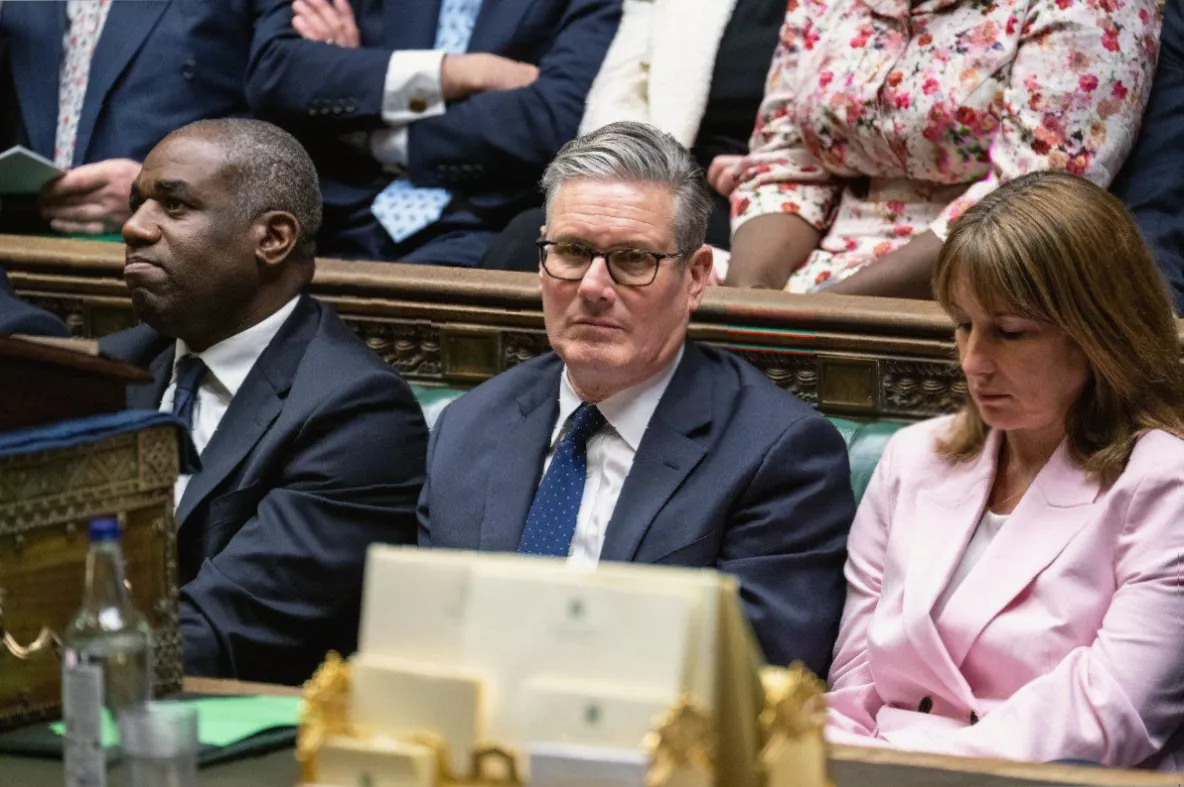
Home Secretary Shabana Mahmood has said the Home Office is in “active negotiations” with several countries, though no deals have been confirmed. Over in Europe, the EU is said to have discussed 12 possible countries for such hubs: Armenia, Egypt, Ethiopia, Ghana, Libya, Mauritania, Montenegro, Rwanda, Senegal, Tunisia, Uganda and Uzbekistan. Return-hub backers argue that these “third countries” are needed because migrants who are ordered to leave end up staying regardless. Statistics from Eurostat, the EU’s statistical office, show that over the seven years to 2023, as many as 500,000 migrants were ordered to leave the EU each year, but fewer than half did so.
Mahmood has indicated that the UK’s asylum reforms are inspired by the Danish model, which has seen asylum claims fall to a 40-year low through measures including making refugee status temporary and subject to regular review. The government is also considering visa sanctions against countries that refuse to take back their citizens whose asylum claims have been rejected. Angola, Namibia and the Democratic Republic of Congo have been mentioned as potential targets for such measures.