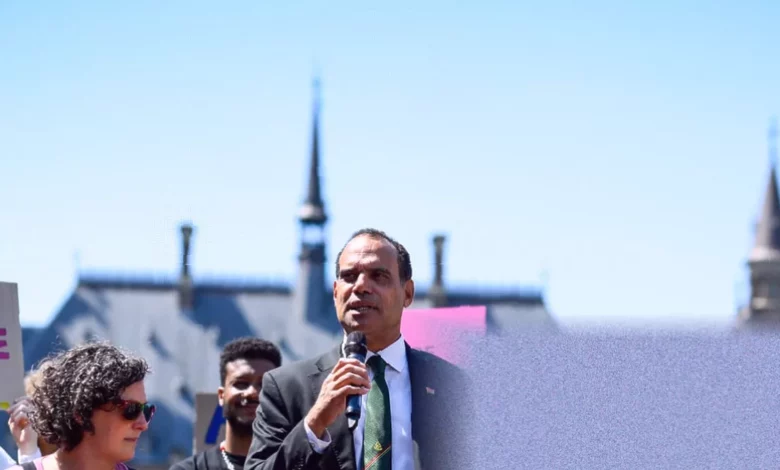
The United Nations faces a pivotal test of its commitment to addressing the climate crisis through the rule of law next week, when the General Assembly votes on a resolution that seeks to turn landmark findings on climate justice from the International Court of Justice (ICJ) into binding political action.
Every member state is being asked to endorse a series of legal conclusions reached by the ICJ in its advisory opinion of 23 July 2025 — the first time the world’s highest court has examined the international legal framework governing climate change. The vote, scheduled for 20 May 2026, will determine whether governments formally recognise their legal responsibility to cut greenhouse gas emissions, including tackling the production and use of fossil fuels.
The resolution has been spearheaded by Vanuatu, the Pacific island nation that led the original drive to secure the ICJ’s opinion. That opinion was requested by 132 states without opposition in March 2023, following a grassroots campaign launched by Pacific Island youth — specifically the Pacific Islands Students Fighting Climate Change — in 2019. The ICJ’s unanimous ruling was hailed as a “historic win” for small island states, and Vanuatu’s climate minister, Ralph Regenvanu, described it as “a collective act of multilateral confidence that law can help steer us through the climate crisis”.
“That unanimity is a gift to the membership,” Regenvanu told a UN briefing earlier this month. “It gives us legal clarity and it gives us something precious in the UN: a common reference point.”
He now wants the resolution to secure the “broadest possible support”, ideally matching or exceeding the 132 co-sponsors of the earlier resolution that requested the court’s opinion.
Significant changes since the February draft
The text of the resolution has changed markedly since an initial draft was circulated in February. Original calls for a “rapid, just and quantified phase‑out of fossil fuel production and use” were replaced with a more modest urge to “transition away” from fossil fuels. An earlier proposal to establish an international register of damage, loss or injury was dropped altogether.
Some of these changes followed pressure from the United States, which has lobbied to have the resolution dropped entirely. According to Climate Rights International, the Trump administration is pressing governments worldwide to block the resolution, claiming it poses “a major threat to U.S. industry” and dismissing human-induced climate change as exaggerated. US Secretary of State Marco Rubio has reportedly described climate action advocates as a “climate cult”.
Vanuatu’s climate justice envoy, Lee-Ann Sackett, who led the negotiations, said many states raised concerns or had comments, so significant effort was made to keep the text both “meaningful and unifying”.
“Where delegations asked for reassurance we made it explicit,” she said. “Where delegations asked for restraint, we built in safeguards.”
The final text, published on 1 May, now clearly states that the UN Framework Convention on Climate Change (UNFCCC) and the Paris Agreement are the primary international intergovernmental forums for negotiating a global response to climate change. Regenvanu stressed that the resolution does not adjudicate disputes, attribute responsibility to any particular state, create new obligations or prejudice legal positions.
Translating the ICJ opinion into actionable steps
Despite the compromises, Regenvanu insisted the resolution is far from a symbolic filing exercise. “It is not a resolution that simply files the opinion away,” he said. “It calls on all states to comply with their existing obligations as established by the court.”
The resolution is designed to help member states think through how to implement those obligations. The ICJ’s advisory opinion had made several legally significant determinations. It affirmed that the 1.5°C temperature limit is not merely an aspiration but a legally binding obligation under the Paris Agreement, and must guide all state conduct. It established that states have binding obligations under customary international law to prevent foreseeable climate harm and resulting rights violations — obligations that apply even to countries that have withdrawn from the Paris Agreement.
Crucially, the court ruled that continued fossil fuel subsidies, exploration licences and production can breach international law, and that failure to phase out fossil fuels constitutes a wrongful act. It stated that climate harm can be attributed to individual states and that no state can evade liability by claiming it is only one of many emitters. States must also regulate private actors, including fossil fuel corporations, whose emissions cause harm.
The opinion also recognised that environmental harm directly impairs the right to health and that a healthy environment is integral to other human rights, meaning failure to act on climate change can constitute a violation of human rights. States found in breach may face obligations of cessation, non-repetition and full reparation, including restitution, compensation or satisfaction.
The resolution seeks to operationalise these findings by calling on states to comply with their existing obligations, but without creating new legal duties. It is intended to provide a clear political mandate for governments to align their domestic policies with the court’s legal clarity — a step Regenvanu described as helping member states “think through how to implement these obligations”.
Broader implications for international law and vulnerable states
The ICJ’s advisory opinion is already being used in climate litigation around the world, with judges starting to reference it in their rulings. It provides a stronger legal foundation for national and regional courts to consider state responsibility and remedies. However, as a diplomatic lever the opinion has proven more intractable. It failed to make a mark at last year’s UNFCCC climate talks in Belem; Saudi Arabia called its inclusion in final texts a “red, red line”.
The opinion was more evident at the inaugural fossil fuel conference in Santa Marta, Colombia, where Regenvanu told state delegates they were “frontrunners” in doing what is both legally and scientifically required. “That is why the ICJ’s landmark advisory opinion on climate change considers international cooperation indispensable,” he said.
More broadly, the resolution is being seen as a key test for the credibility of the international legal system and the integrity of the UN itself. Sackett noted that state delegations that do not usually intervene on climate texts had engaged closely “because they recognise that this is also about the authority of the court, the integrity of the UN system and how we translate legal clarification into multilateral cooperation”.
Tania Romualdo, the permanent representative of Cape Verde to the UN representing the Alliance of Small Island States (AOSIS), said the importance of the resolution extends beyond the text itself. For small island developing states, whose very existence is threatened by sea-level rise, extreme weather and ocean acidification despite contributing minimally to global emissions, “this is about the affirmation and protection of our territories, sovereignty and fundamental rights of our populations”.
“This process has not been easy,” Romualdo added. “There have been many sacrifices along the way. These are not easy compromises but they reflect the reality of negotiation.”