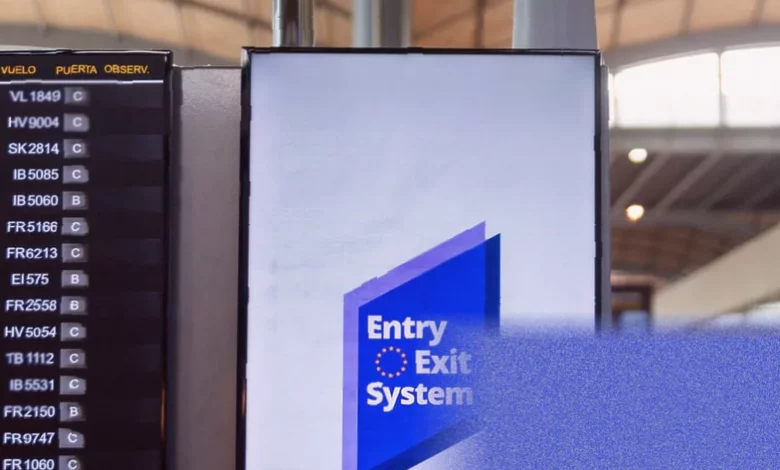
Airlines and airports have called for the European Union’s new digital border system to be suspended during the peak summer holiday period, warning that flights are departing half empty and passengers are enduring queues of up to five hours.
Mounting delays at the border
Since the Entry/Exit System (EES) began a phased rollout on 12 October 2025 and became fully operational across 29 participating European countries on 10 April 2026, travellers from outside the EU – including UK citizens – have faced significantly longer waits at border checkpoints. In an open letter to European Commission President Ursula von der Leyen, industry groups described the situation as having “reached a critical point”. Reports from major airports indicate that some flights have been forced to leave with empty seats because passengers did not reach the gate in time, while others have queued for up to five hours just to pass through immigration.
How the digital border system works
The EES replaces the old practice of manually stamping passports with a fully automated digital record. Its stated purpose is to enhance border security, reduce illegal migration, and more accurately track travellers who overstay their permitted 90 days within any 180-day period in the Schengen Area. The system applies to non-EU nationals entering any of the 29 participating countries – Austria, Belgium, Bulgaria, Croatia, Czechia, Denmark, Estonia, Finland, France, Germany, Greece, Hungary, Iceland, Italy, Latvia, Liechtenstein, Lithuania, Luxembourg, Malta, Netherlands, Norway, Poland, Portugal, Romania, Slovakia, Slovenia, Spain, Sweden, and Switzerland. Ireland and Cyprus are not part of the Schengen Area, so the EES does not apply when travelling to those countries.
The biometric registration process requires most travellers to present their passport, have their fingerprints scanned, and pose for a facial photograph – all taken at a digital kiosk or camera at the border. In some locations, self-service kiosks are available for pre-registration. The collected data – fingerprints, facial images, and passport details – is stored for three years. Children under 12 are exempt from providing fingerprints but will still be photographed. There is no charge for registration. Certain individuals are exempt from the EES altogether: British nationals living in the EU who can produce their Withdrawal Agreement residence document, and UK military personnel and their immediate family members travelling on NATO or Partnership for Peace business.
According to the system’s design, each time a traveller crosses an external EU border their biometric information is checked, creating a digital record of every entry, exit, and refusal. This automated tracking is intended to replace the old manual stamping, but the extra processing time at the border has proved problematic, particularly during peak periods. While some travellers report no noticeable impact, a significant number have described increased stress, anxiety, and delays that have forced them to build extra time into their journeys.
Industry pressure and economic fears
The disruption has prompted airlines and airports to call publicly for the EES to be suspended during the summer holiday season. In their letter to Ursula von der Leyen, they argued that the current level of delays is unsustainable and risks damaging Europe’s global competitiveness as a destination. The open letter warned that prolonged border delays could deter millions of visitors and cost billions of dollars in lost spending.
Adding to travellers’ concerns, travel insurance policies are unlikely to cover any losses caused by EES delays, because airlines may classify the waits as “extraordinary circumstances”. This means passengers who miss flights due to excessive queues may have no right to compensation.
Looking ahead, a separate system – the European Travel Information and Authorisation System (ETIAS) – is scheduled for introduction in late 2026. That system will require visa-exempt travellers, including UK citizens, to obtain an online authorisation before entering the Schengen Area, at a cost of €20 for those aged 18 to 70. The UK has already rolled out its own parallel system, the Electronic Travel Authorisation (ETA), which costs £20 for a two-year authorisation for non-UK travellers entering Britain.
For now, border staff and travel operators continue to advise passengers to allow significantly more time for journeys to and from the Schengen Area, to keep their passports and any exemption documents to hand, and to follow the instructions of officials at the checkpoint.