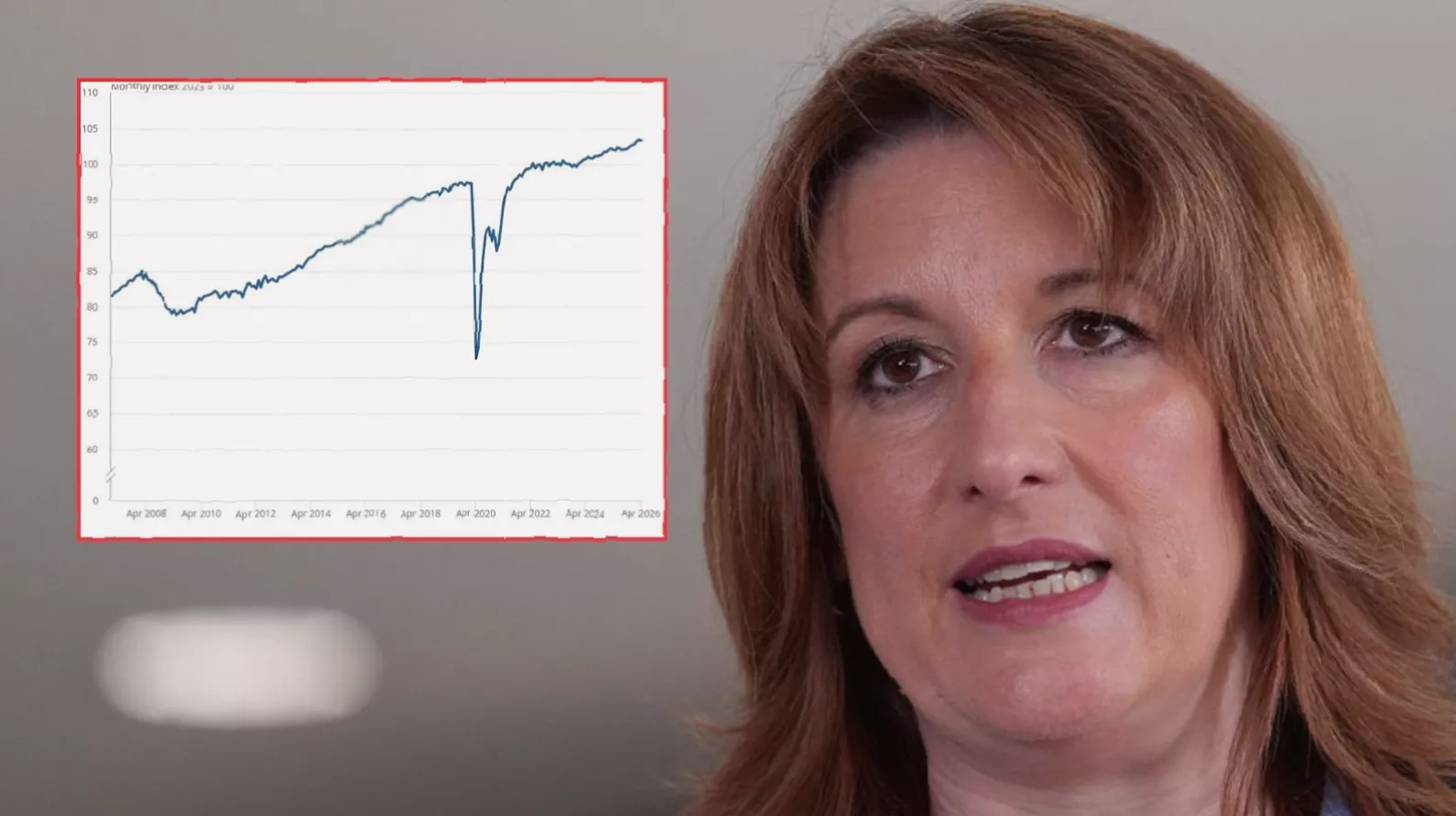
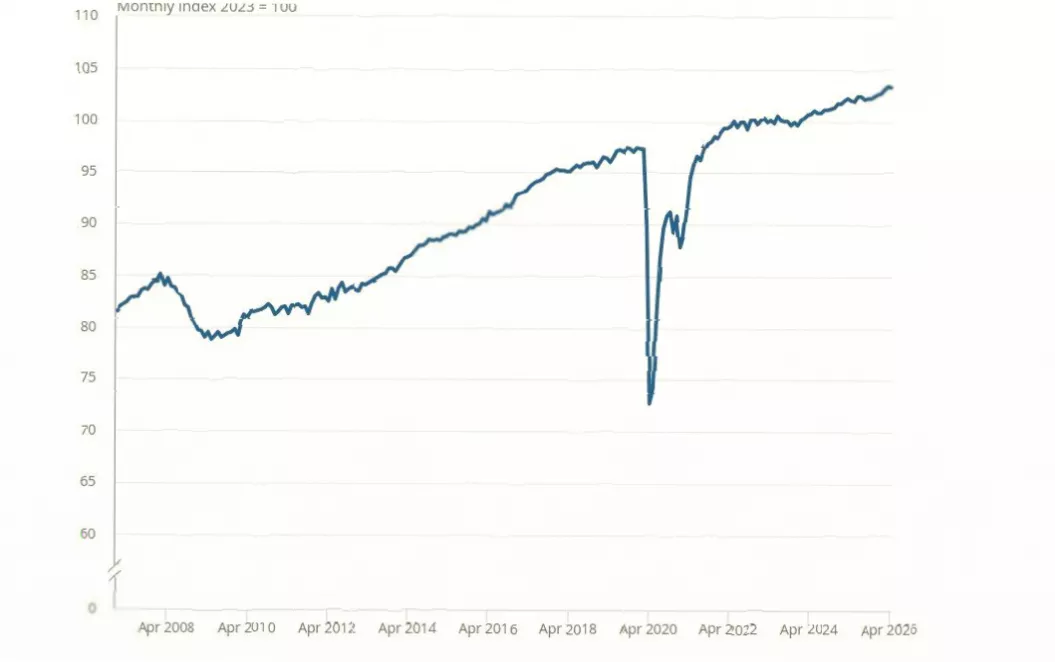
The UK economy contracted by 0.1 per cent in April, the first monthly fall since August 2025, according to the Office for National Statistics (ONS). The figure marks a sharp reversal after stronger performances in February and March, with economists pointing directly to the escalating US-Iran conflict and surging fuel prices as the primary causes.
Fuel crisis stalls services sector
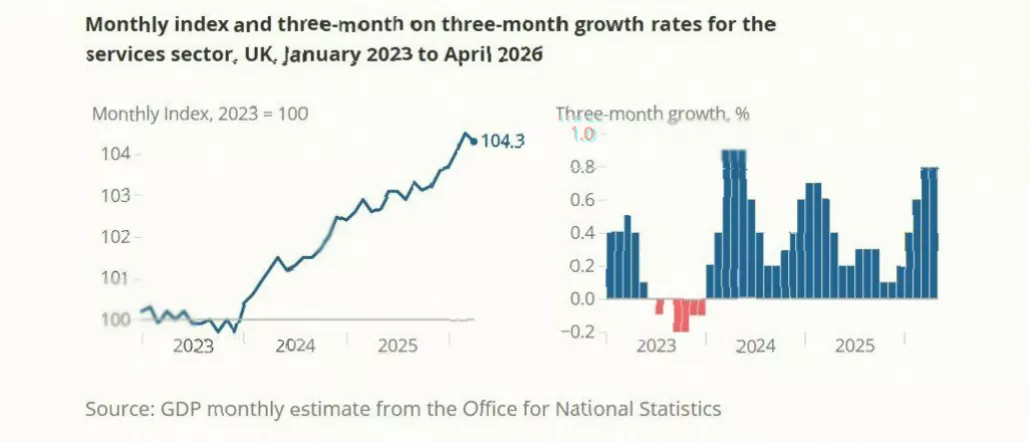
The ONS reported that services output fell by 0.2 per cent in April, while production showed no growth and construction edged up by 0.1 per cent. Within services, arts, entertainment and recreation saw a steep 4.3 per cent drop, with the sports industry contracting by 9.1 per cent – attributed to the cancellation of sporting events in the Middle East because of the conflict. Retail sales recorded their fastest fall in almost a year, down 1.3 per cent, as soaring petrol and diesel prices hammered fuel sales.
The closure of the Strait of Hormuz by Iran has disrupted approximately 20 per cent of global oil supplies and significant volumes of liquefied natural gas. Brent crude prices surged, and UK gas prices peaked at 78p per therm, though still below the levels seen during the 2022 energy crisis. Motorists, after frontloading purchases in March, slashed consumption in the face of record pump prices. Suren Thiru, chief economist at the Institute of Chartered Accountants in England and Wales (ICAEW), described the downturn as “the first economic blow landed by the Iran conflict”, adding that “skyrocketing fuel costs have noticeably altered the UK’s growth trajectory, having flipped from a tailwind to growth in March to a headwind in April”.
The conflict has also raised fears of fertiliser shortages, which could drive food prices higher if the crisis is prolonged, and has injected deep uncertainty into global supply chains.
Three-month picture still positive
Despite the monthly contraction, GDP grew by 0.7 per cent in the three months to April 2026, reflecting strong gains in February and March. Liz McKeown, ONS director of economic statistics, said: “The economy grew in the latest three months as a whole, reflecting strong growth in February and March. This was despite April showing a small fall.”
Expert warnings of stagflation
Thiru warned that even a swift peace deal would not spare Britain from a “severe spell of stagflation”, with surging energy costs expected to reduce investment and consumer spending. He noted that February’s strong growth has been “wiped out” by the war. Joe Nellis, economic adviser at accountancy firm MHA, said the UK had suffered a “sharp fall” after a promising first quarter. He highlighted persistently weak productivity, driven by years of underinvestment, and rising geopolitical tensions as ongoing drags on growth. Consumer confidence has dropped significantly, with households becoming increasingly cautious about their finances and the wider economy, he added.
The International Monetary Fund has downgraded the UK’s 2026 growth forecast from 1.3 per cent to 0.8 per cent, and then to 1.0 per cent in May – the sharpest downward revision of any G7 economy. The IMF predicts inflation will rise towards 4 per cent in 2026, with a return to the 2 per cent target delayed until the end of 2027, and unemployment projected to reach 5.6 per cent. The fund described the war’s economic shock as comparable to the 1974 oil price shock.
The Organisation for Economic Co-operation and Development (OECD) forecasts UK growth of 0.9 per cent in 2026 and 1.1 per cent in 2027, with unemployment rising to 5.5 per cent. The Resolution Foundation noted that the UK’s 2026 growth rate has been marked down by 0.5 percentage points by both the IMF and OECD, the largest downgrades of any wealthy country, reflecting Britain’s particular exposure to gas prices and interest rate sensitivity.
The Confederation of British Industry (CBI) expects growth to slow to 1.1 per cent in 2026 and unemployment to reach 5.5 per cent – around two million people – citing the conflict, rising energy costs, disrupted supply chains and increased uncertainty. Vanguard forecasts growth of 1.1 per cent but expects it to soften later in the year as higher energy costs and tighter financial conditions bite, and has upgraded its 2026 headline CPI forecast to 3.6 per cent.
The labour market is showing clear signs of fragility: the number of payrolled employees dropped by 100,000 in April 2026, the largest decline since May 2020. Business investment remains weak and stagnant, with firms reluctant to commit capital owing to economic uncertainty and higher operating costs. The housing market is subdued, with house prices falling slightly in May as higher borrowing costs, tighter lending criteria and the cost-of-living squeeze deter buyers. The Bank of England’s new forecast scenarios indicate that stagflation is a “critical risk”.
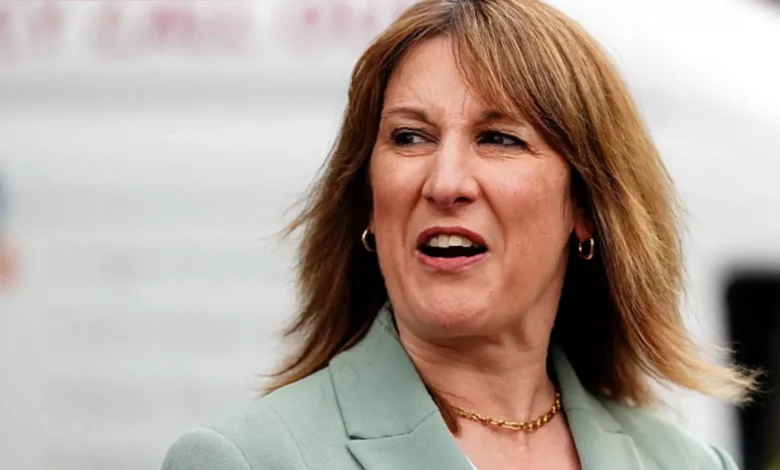
Chancellor Rachel Reeves acknowledged the impact, saying: “Before the conflict in the Middle East, growth was higher than expected and inflation was falling. This is not a war we wanted or joined, but one that will have an impact at home.” She defended the government’s economic plan, noting that both the IMF and OECD upgraded their growth forecasts before the war, and argued that her choices had put the economy in a stronger position to deal with the costs of conflict. Reeves has been critical of the war, calling it a “mistake” and criticising Donald Trump’s “folly” in unleashing it. She has emphasised the extension of the fuel duty cut, six interest rate cuts since the election, and consistent rises in real wages. However, the IMF’s downgrade – the steepest among G7 nations – underscores the severity of the blow, and Thiru’s warning that February’s strong growth has already been wiped out by the conflict.