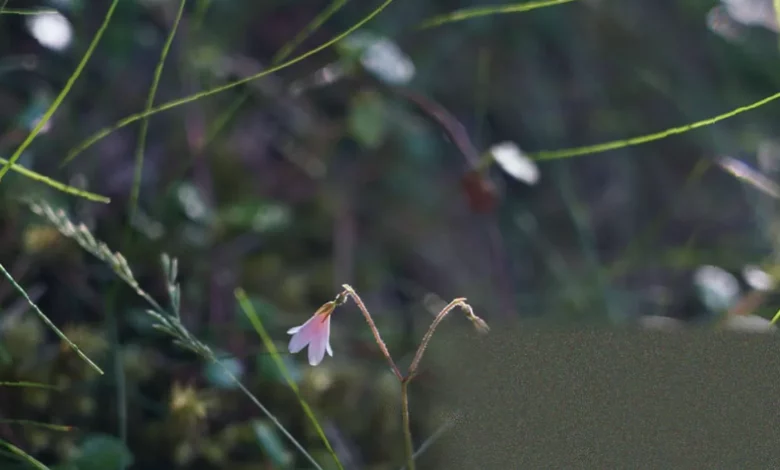
For those who know where to look, the appearance of the twinflower in the Scots pinewoods of the Cairngorms is a sure sign that summer has arrived. The plant, barely 10 centimetres tall, sends up a slender Y-shaped stem bearing two tiny, pale pinkish-white bell-shaped flowers that hang delicately. A member of the honeysuckle family, it is almost unique to Britain’s native Scots pinewoods, though it can also be found in birchwoods and heathland. Its small oval leaves, typically only five to eight millimetres in length, are paired along creeping horizontal stems known as stolons that weave among blaeberry leaves and pine needles to form a low carpet. When in bloom, a kneeling observer sees a miniature forest of flowers shivering in the dappled sunlight filtering through the treetops.
Yet this fragile emblem of the Scottish summer is in serious trouble. Since the 1970s, twinflower numbers have declined by 44 per cent, enough for the species to be listed as ‘vulnerable’ on the IUCN Red List. Fewer than 800 individual plants are now thought to remain in the UK, clinging to fragmented patches of Scots pinewood, most of them within or near the Cairngorms National Park.
Why the twinflower is disappearing
The primary driver of the decline is habitat fragmentation, itself the result of centuries of deforestation and changes in woodland management. The clearance of native woodlands before the 1930s caused severe losses, and even now the remaining colonies are too isolated for effective cross-pollination. The twinflower is largely self-incompatible, meaning it requires pollen from a different genetic individual to produce viable seed. With patches often far apart, insects such as flies, hoverflies and bumblebees cannot bridge the gaps. As a result, many populations consist of a single genetic clone that reproduces only vegetatively via its creeping stolons, creating a dangerously shallow gene pool that exacerbates the plant’s vulnerability.
Additional threats compound the problem. Overgrazing by deer and sheep can destroy young plants. Mechanical harvesting of timber and the creation of dense, single-age pine plantations leave no suitable niches for seedlings. Excessive shade from crowded forests further suppresses growth. Wildfires also pose a significant danger – recent blazes in Abernethy Forest have shown how quickly these fragile ecosystems can be devastated.
Conservation efforts gain pace
A coordinated response is under way, centred on the Cairngorms National Park, which remains the twinflower’s stronghold. The Cairngorms Rare Plants Project, part of the wider Cairngorms Nature initiative, is using innovative translocation methods to move plants closer to existing patches, aiming to boost cross-pollination and increase genetic diversity. The Cairngorms Connect programme is reintroducing the flower to new, suitable sites while reinforcing existing colonies with fresh genetic material.
A notable new initiative is the twinflower nursery established at RSPB Abernethy Forest by Plantlife Scotland and the RSPB Scotland partnership. Volunteers helped build and prepare the nursery beds, and the first young plants were introduced into the wild in April 2026. The project aims to complete 150 translocations by 2040, rearing plants in a controlled environment before planting them in appropriate habitats.
The East Cairngorms Moorland Partnership – a collaboration of six estates with the Cairngorms National Park Authority – is also active, establishing new populations with diverse genetic clones and augmenting existing colonies. Meanwhile, the National Trust for Scotland’s Mar Lodge Estate has created a Deeside twinflower clone bank containing 22 different clones, and has successfully established new populations alongside reinforcement of existing ones. These efforts are backed by broader habitat restoration work that includes expanding native Caledonian pinewoods, reducing non-native conifers, moving away from clear-fell forestry, and promoting woodlands with a variety of age structures.
The twinflower was first recorded near Aberdeen in 1795. Its scientific name, Linnaea borealis, honours the botanist Carl Linnaeus, who considered it his favourite flower. It is also the county flower of Inverness-shire and was used in Norwegian folk medicine for skin conditions and rheumatism. But its survival now depends on the success of a growing network of conservation projects. At Mar Lodge Estate, the 22 distinct genetic clones stored in the Deeside clone bank represent a deliberate effort to safeguard what remains of the twinflower’s shallow gene pool.