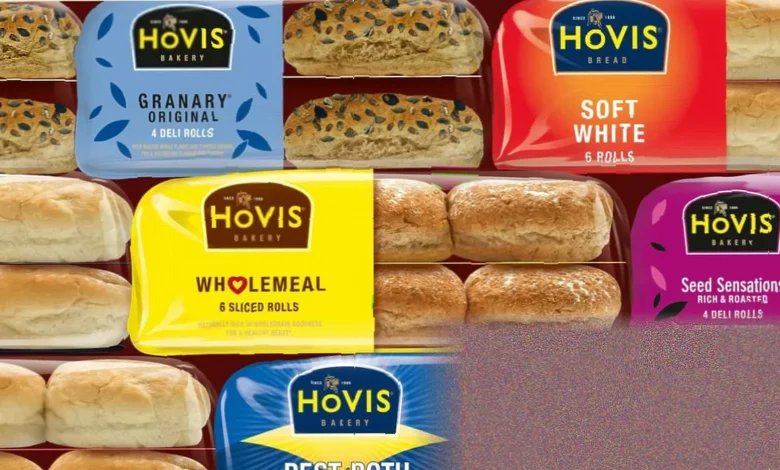
The Competition and Markets Authority has approved Associated British Foods’ £75 million takeover of Hovis, ruling that the only realistic alternative to the deal would have been the complete withdrawal of the Kingsmill owner’s British bakery arm from the market.
The regulator concluded that if the transaction were blocked, Allied Bakeries – the ABF division behind Kingsmill, Allinson’s and Sunblest – would “likely leave the market entirely”. That outcome, the CMA said, would hit lower-income households hardest because bread remains a basic staple for millions of people.
The decision ends an in-depth investigation launched in December after the deal was announced the previous August. The Independent Inquiry Group, chaired by Cyrus Mehta – a former partner and head of the EU and competition team at CMS law firm with extensive experience in competition law – examined evidence of acute distress across the UK bakery sector. The CMA had provisionally cleared the merger in March, a move that initially raised concerns about the impact in Northern Ireland, but its final ruling confirmed that Allied Bakeries’ exit was the most likely counterfactual.
Mehta said: “Bread is a basic staple for millions of people, which is why it is important we looked carefully at this deal and assessed the competition implications for households across the UK. On the basis of the wide range of evidence we received, which showed the difficult position many UK-based bakeries are in, we found Allied Bakeries – owned by ABF – would likely leave the market entirely if the deal did not proceed. Taking that into account, we have concluded the deal does not raise competition concerns.”
Why the market left Allied Bakeries with no way out
The CMA’s reasoning rests on the profound financial and structural pressures battering Allied Bakeries. The business has run up losses for 14 consecutive years, despite repeated restructuring attempts. The regulator judged those efforts “unlikely to be sufficient to turn the business around”.
The losses stem from a toxic combination of long-term trends and short-term shocks. Demand for packaged sliced bread – the core of Allied Bakeries’ business – has been in structural decline, particularly among younger consumers who are turning to artisan loaves such as sourdough and expressing concerns about the carbohydrate, calorie and sugar content of processed sliced bread. At the same time, the rise of cheaper supermarket own-label products has eroded branded sales volumes; own-label now accounts for more than two-fifths of the market, driven by the cost-of-living crisis. Meanwhile, costs for energy, wheat and distribution have surged, exacerbated by poor harvests, disrupted global supply chains, the weakened pound after Brexit, and labour shortages that have pushed up wages.
Allied Bakeries’ competitive weakness relative to rivals makes a turnaround even harder. The CMA noted that the Kingsmill brand is considered weak compared with Warburtons and Hovis, contributing to a significant decline in branded sales volumes. Allied Bakeries is one of only three British suppliers that operate a nationwide network delivering bread and other baked goods to shops six days a week, giving it high fixed distribution costs that are difficult to shed without exiting the market entirely.
Hovis, for its part, is also struggling. The brand, acquired by UK private equity firm Endless in 2020, owns Mother’s Pride and Ormo. Its pre-tax losses widened to £4.7 million in the year to 28 September 2024, from £3.6 million the prior year. In the 52 weeks to that date, Hovis posted an operating loss of £6.9 million, nearly double the £3.5 million loss of the previous term, while turnover fell by £38 million to £439.6 million and distribution costs rose.
The broader UK bakery market is under similar strain. The sector has seen a series of failures: Jacksons and Roberts bakeries were acquired in pre-packaged administration processes in recent years, and Morrisons closed its Rathbones bakery. Warburtons remains the dominant player – the UK’s number one bakery brand and fifth biggest grocery brand, with a turnover of £741.1 million and a pre-tax profit of £31.8 million in its latest financial year, supported by over £100 million in investment, including a new site and a revamped gluten-free bakery. Hovis holds the second-largest market share, while Kingsmill lags behind.
Consumer trends reshaping the bread aisle
The shift away from sliced bread reflects deeper changes in eating habits. Younger demographics in particular are opting for artisan alternatives such as sourdough, and there is growing interest in breads that offer gut-health benefits – a segment Hovis has itself targeted through a three-year licensing agreement with Modern Baker to produce the Superloaf brand. Rising household bills have also prompted consumers to trade down to own-label products, which now command over two-fifths of sales, while a smaller segment of shoppers is willing to pay a premium for higher quality, taste and unique ingredients in farmhouse loaves and sourdough. The market also faces competition from convenience foods and the foodservice sector, especially for breakfast and lunch occasions. Nearly three-quarters of UK foodservice providers reported that shoppers are veering towards value products, and 59% reported a decline in trading over the previous 12 months.
The UK bakery market as a whole is valued at approximately £7.8 billion and is forecast to grow by 15% to reach $9 billion by 2026, but much of that growth is expected to come from higher-value categories rather than standard sliced loaves.
What happens next for ABF and the combined business
ABF welcomed the CMA’s clearance. The company said: “Combining with Hovis enables Allied Bakeries to continue operating and to create a sustainably profitable UK bakeries business over the long term that is better placed to compete and establish a platform for product innovation. As the CMA found, demand for packaged, sliced bread has reduced significantly due to changing consumer tastes, and the bread market faces a difficult economic backdrop. However, we believe the market for nutritious, good value staples remains significant.”
The deal will merge the production and distribution activities of Allied Bakeries and Hovis, a move the company expects will lead to job losses. ABF is also in the middle of a major corporate restructure: it has announced plans to spin off its budget clothing chain Primark into a separate entity, a demerger expected to be completed by the end of 2027. Following the separation, the food business will retain the Associated British Foods name, with George Weston expected to lead it and Eoin Tonge heading Primark. ABF’s wider portfolio includes Twinings, Ryvita and Patak’s.
The CMA’s clearance means that, despite the severe headwinds facing the sector, the UK’s largest bread brand will now be built on a base of two ailing businesses that the regulator believes could not have survived independently. The question of whether consolidation can turn around a market where consumers are eating less bread, and paying less for it when they do, will now rest with the combined group.