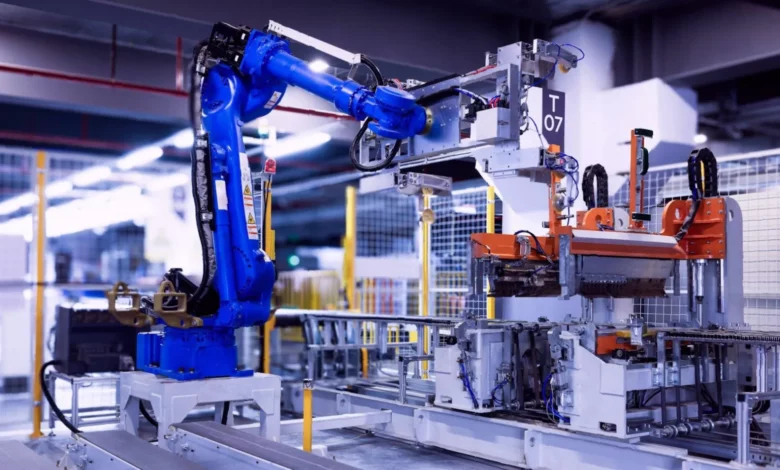
Manufacturers now prioritise running costs over speed and output for new machinery, a shift that reflects the profound pressure energy prices have placed on the sector. A few years ago, conversations about equipment began with speed, output and price. Those factors still matter, but in fabrication and metalworking — where cutting metal all day is expensive — the real cost of keeping an older machine running has become impossible to ignore.
Rising Energy Costs Reshape Investment Decisions
UK manufacturers are grappling with some of the highest electricity prices in Europe. Official figures show that in 2024, electricity costs for energy-intensive businesses were nearly double the European average, a gap driven by the country’s reliance on natural gas and the fact that 43.5% of its energy was imported in 2025. The impact has been stark: energy-intensive industries such as metals, paper and chemicals saw their output fall by one-third between early 2021 and late 2024, reaching the lowest level since 1990. For workshops, materials cost more, labour is hard to find, customers demand quick turnaround times and few are willing to pay a premium unless they see a clear reason. Energy use, often overlooked on a single job, becomes a noticeable drag across a week, a month or a year.
The government has introduced the British Industrial Competitiveness Scheme (BICS), which from April 2027 will cut electricity bills by up to 25% for eligible energy-intensive businesses and extend support to more than 10,000 manufacturers, exempting them from the indirect costs of renewable energy schemes such as the Renewables Obligation and Feed-in Tariffs. An additional £420 million Supercharger scheme, in place from April 2026, increases the discount on electricity network charges from 60% to 90% for around 500 of the most energy-intensive businesses. A broader Modern Industrial Strategy, including a Clean Energy Industries Sector Plan, aims to boost business investment and productivity over the next decade.
The Hidden Expense of Older Machinery
Plenty of workshops still rely on older cutting systems that do the job “well enough”. But well enough can quietly become expensive. Such machines may take longer to process the same work, need more maintenance and manual adjustment, and demand more operator time. In some cases, the cut quality is not as clean as newer systems can achieve, creating extra finishing work. None of these issues feels dramatic on its own, but together they slow production and add cost before anyone really notices. For a busy fabrication business, that matters.
That is why more companies are looking at machinery upgrades as part of a longer-term plan, rather than simply replacing equipment when something breaks.
Fibre Lasers Lead the Efficiency Shift
Fibre laser cutting has grown partly because it fits the way modern workshops now need to operate. The technology is known for speed and accuracy, but energy efficiency is also a major part of the appeal. Compared with traditional CO₂ lasers, fibre lasers offer lower power consumption, reduced CO₂ emissions and a minimal heat-affected zone. They can complete work faster, meaning the machine spends less time on each job — a real difference for companies processing sheet metal every day. Automation and robotics are further streamlining the process, with self-monitoring systems that adjust laser settings in real time for quality control and machines that operate with minimal human intervention, reducing downtime and enhancing consistency.
Efficiency Goes Beyond the Electricity Bill
When manufacturers talk about efficiency, it is easy to focus only on power consumption. But the bigger picture is usually much wider. A more efficient cutting process can reduce handling, rework and wasted material. Cleaner cutting can mean less grinding afterwards. Better nesting can help extract more parts from each sheet. Faster processing can free up capacity elsewhere in the workshop. The real value sits in lots of smaller improvements across the production process.
Sustainability is playing an increasingly important role, especially for companies supplying larger organisations or public-sector projects. Many customers now want to know that their suppliers take energy use and waste seriously. More efficient machinery helps reduce waste, lower energy use and support a cleaner production process — and the same changes that reduce waste also help improve profitability. Recycled steel and aluminium are increasingly used as primary inputs, and many UK manufacturers operate hybrid sourcing models that combine virgin and recycled materials. The wider shift towards a circular economy — promoting reuse, repair, refurbishment and remanufacturing — is reshaping how production is measured, with ESG reporting now a standard expectation.
Beyond cutting technology, other energy-saving measures are gaining traction. Waste heat from furnaces and melting pots can be captured and reused for heating buildings or water. Energy-efficient CNC machines, HVAC systems and LED lighting are key strategies, and many manufacturers are installing solar panels to power their operations.
Competitiveness and the Investment Challenge
For UK manufacturers, energy efficiency is becoming part of the wider competitiveness question. Businesses cannot control steel prices, wage pressure or customer demand, but they can control how efficiently their own workshop operates. High energy costs have undermined the competitiveness of UK industry in both EU and non-EU markets, and industry surveys have warned that Britain faces deindustrialisation unless manufacturers receive relief. Almost a quarter of manufacturers have considered moving production overseas or have already done so.
Yet the investment picture is mixed. The proportion of turnover invested in plant and machinery has dropped to its lowest level since 2017, signalling a potential slowdown in the sector’s ability to modernise. Spending plans for the year ahead remain weak, with firms citing uncertainty about future demand, inadequate returns and persistent labour shortages. At the same time, investment in people — skills — has overtaken capital as the top priority, reflecting acute skills shortages and the recognition that digital transformation requires a skilled workforce. Research and development spending remains relatively stable. Supply chain resilience is also a growing focus, with shorter, UK-based supply chains reducing transport distances and reliance on long-haul shipping.
Barriers Remain for Smaller Manufacturers
Despite the clear incentives, many small and medium-sized enterprises face significant barriers. A lack of information and access to finance often prevents them from adopting energy efficiency improvements. Skills shortages are a critical constraint, and the need for new “green” skills is accelerating. Policy uncertainty and outdated tax rules — such as business rates that penalise green technology installations — are holding back progress. Furthermore, a majority of micro and small manufacturing businesses rent their premises, which can limit their ability to implement building-related energy improvements. These obstacles mean that while the direction of travel is clear, the pace of change varies widely across the sector.