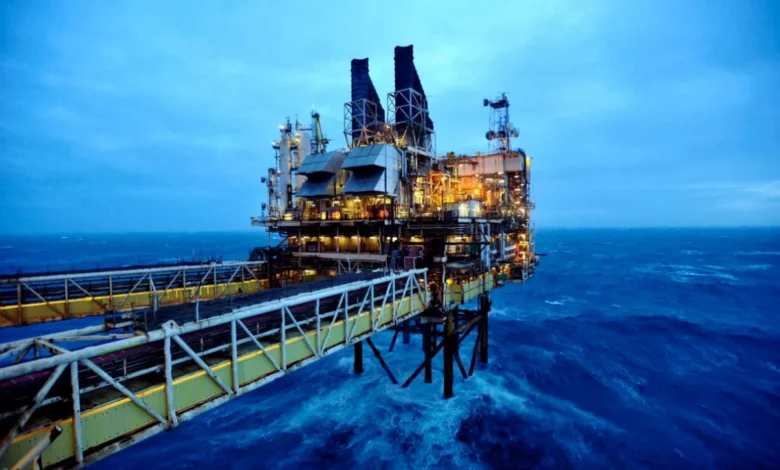
The Conservatives have accused the Government of “destroying” well-paid jobs in Scotland by pursuing energy policies that favour foreign oil over domestic production. Shadow energy secretary Claire Coutinho claimed Deputy Prime Minister David Lammy is more willing to see Britain import oil from Russia or Qatar than extract it from Aberdeen, as voters in the north-east oil capital prepare to go to the polls in a by-election on Thursday.
PMQs clash over North Sea future
Standing in for Sir Keir Starmer, who is attending the G7 summit in France, Mr Lammy faced Ms Coutinho at Prime Minister’s Questions. Opening the exchange, she said she was privileged to be standing with “one of the few survivors of Labour’s original Cabinet” before demanding to know why her opposite number was “happy for Britain to get its oil and gas from Russia or Qatar, but not from Aberdeen”.
Mr Lammy hit back, telling her she was “the energy secretary who left our country exposed to global fossil fuel markets” and insisting the Government was “delivering clean energy security”. Ms Coutinho countered that the previous Conservative administration had brought energy bills down by £500, whereas they had risen by £300 under Labour. She argued that Labour’s ban on new oil and gas licences in the North Sea — a policy, she noted, that the SNP had championed for years — amounted to “pointless virtue signalling” that was “destroying well paid jobs”.
Differing visions for oil, gas and jobs
The exchange laid bare the fundamental divide between the two parties on the future of the North Sea. Labour has legislated to end new exploration licences, arguing the transition to renewables will create more employment than the declining fossil fuel sector. Mr Lammy pointed to the record of the previous Conservative government, saying “over 700 jobs were lost during the last 10 years when they were in power” and that “production fell 75% over the last 25 years”. He claimed the Government had secured “over £900 billion worth of investment to support more jobs by taking control with renewables” and that there are now “over 100,000 jobs in Scotland supported by clean power”.
Ms Coutinho, however, accused Labour of copying a policy the SNP had long pursued and said it was destroying the very well-paid roles that the industry provides in Aberdeen and the wider north-east. The Conservatives have signalled they would continue granting new licences and have presented their own “Cheap Power Plan” as a way to lower bills and protect domestic production. Labour’s alternative — a “Clean Power 2030” plan — centres on a publicly owned Great British Energy company, a National Wealth Fund to attract private investment, and a British Jobs Bonus to incentivise companies to locate manufacturing in the UK. Mr Lammy told MPs that the party had “the biggest boost to defence spending since the Cold War” and had already cut energy bills by “over £100” through measures introduced by Energy Secretary Ed Miliband.
Labour’s defence of its record
Ms Coutinho later claimed that Mr Miliband had “ghosted” the Prime Minister by refusing to meet him to discuss funding defence. Mr Lammy told her to “stop reading the papers” and said a defence investment plan “will set out how every government department is contributing to defence, including the energy department”. When pressed on why “half his defence team quit last week”, he replied that more spending on defence was “our number one priority in this spending review, in the next spending review” and pointed to previous resignations under the Tories.
He listed what he described as Labour’s achievements: an Education Secretary cutting childcare costs, an Energy Secretary cutting bills by over £100, more rights for working people, the biggest upgrade to workers’ rights in a generation, and a pledge to lift more children out of poverty in a single term “than any British Government in history”. Ms Coutinho dismissed the Government as “on life support” and called on Labour to “cut welfare, fund defence, make energy cheap, and back the North Sea”.
The by-elections in Aberdeen South, Arbroath and Broughty Ferry in eastern Scotland, and in Makerfield, Greater Manchester — where Andy Burnham hopes to begin his ascent to the Labour leadership — will test the political mood. In Aberdeen, the debate over the UK’s energy future has dominated local campaigning, with voters judging whether the promise of clean-power jobs can outweigh the loss of traditional oil and gas livelihoods.