Ten years after the referendum that split the nation, the economic cost of Brexit stands at an estimated £30bn a year – a figure that underscores the gulf between the promises of 2016 and the reality of 2026. That annual hit to GDP is just one measure of a transformation that has reshaped the country’s economy, its politics and the lives of millions.
A night of two worlds
For political correspondent Millie Cooke, then an 18‑year‑old celebrating the end of her A‑levels, the night of 23 June 2016 was meant to be one of excitement. She had voted for the first time. Instead, as the results came in, she experienced “crushing disbelief” as it became clear that Leave had won. For her generation, the future suddenly seemed narrower – the freedom to live and work across Europe, a right taken for granted by their elders, evaporated overnight.
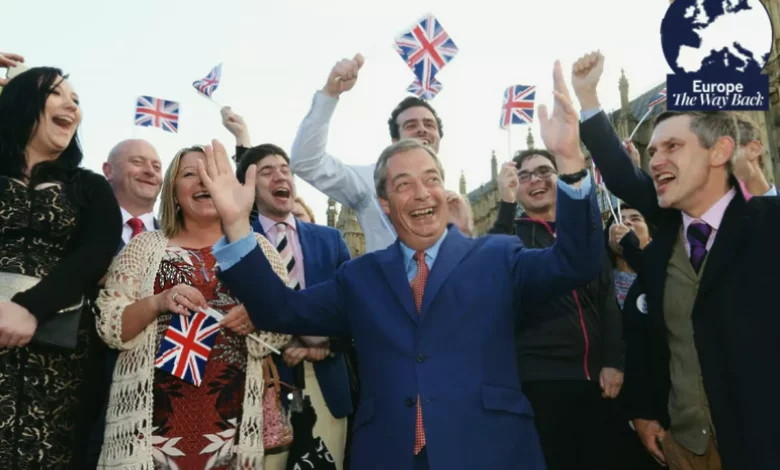
At the other end of the political spectrum that same evening, a veteran parliamentary journalist – hardened by covering the Scottish independence referendum and now working for a pro‑Brexit newspaper – was at Arron Banks’ results watch party in Westminster. There, Nigel Farage, Richard Tice and scores of jubilant supporters supped champagne and toasted the result. Farage delivered what he called a “new dawn” speech. The mood was buoyant, fuelled by promises of lower immigration, lucrative trade deals, more money for the NHS and a wave of new freedoms.
That sense of grievance forged in the early hours has never faded. On the contrary, it has fuelled a political rise that culminated in the emergence of Reform UK, a party that now poses a major challenge to the Conservatives. Nigel Farage, who resumed the leadership of Reform UK in June 2024, was elected as MP for Clacton in the 2024 general election, where the party won five seats. Arron Banks, the co‑founder of the Leave.EU campaign, later stood as a Reform UK candidate in the 2025 West of England mayoral election; investigations into the source of his political donations were eventually dropped.
The promises that failed
Nearly every one of the pledges made during the campaign has collided with reality. Immigration, far from falling, reached record levels. By 2024, there were an estimated 785,000 fewer EU‑born workers in the UK, a reduction of about 2.3% of the labour force. But that decline was more than offset by an increase of 992,000 non‑EU born workers – a rise of about 2.95% – leaving a net increase of 207,000 foreign‑born workers. The end of free movement was replaced by a points‑based system, and net migration peaked at over 900,000 in the year to June 2023, driven predominantly by non‑EU arrivals, before policy tightenings began to slow the flow.
The promised trade bonanza has also fallen short. As of December 2024, the UK had signed 39 active free trade agreements covering 102 countries and territories. Five of these were new – including deals with Australia and New Zealand that came into force in 2023 – but their economic impact has been mixed. Exports to Japan have not seen the promised boost, the UK‑Australia deal has drawn criticism over market access for British farmers, and negotiations with Canada were suspended amid disagreement over tariffs. The UK’s most important trading relationship, with the European Union, is now governed by the Trade and Cooperation Agreement, which came into effect on 1 January 2021 and increased the cost of doing business through customs checks, rules of origin requirements and the loss of mutual recognition. Recent UK‑EU agreements in May 2025 aim to strengthen cooperation in areas such as agri‑food standards and include a defence and security pact, but they do not restore frictionless trade.
The economic reckoning
The cumulative economic damage is stark. By 2025, Brexit had reduced UK GDP by between 6% and 8%, according to multiple estimates. Long‑term productivity is projected to be around 4% lower than if the UK had remained in the EU, largely because of increased non‑tariff barriers on trade with the continent. Business investment – a key driver of future growth – is estimated to be 12% to 18% lower by 2023‑24 than it would otherwise have been, held back by prolonged uncertainty and a reduced expected return for firms using the UK as a base for European markets. Goods exports are thought to be 10% to 15% lower than they would have been, with similar effects on imports. The new trade deals, while welcome, are not expected to compensate fully for the loss of frictionless trade with the EU.
In a further blow to the promise of a European future for young Britons, the withdrawal agreement that protects EU citizens who moved to the UK before 31 December 2020 is now being implemented in ways that remove post‑Brexit residency rights from those no longer “continuously” living in the country. Holders of “pre‑settled status” may have their status withdrawn if they have spent fewer than 30 months in the UK in the most recent 60‑month period.
Public opinion has turned decisively against the decision. Clear majorities – 57% of Britons – now believe the UK was wrong to leave the EU, a sentiment that has held consistently since July 2022. Six in ten feel Brexit has been a failure, with the Conservatives and Boris Johnson seen as most responsible. Yet the picture is nuanced: 59% of people support a closer relationship with the EU without rejoining, and a majority (52%) would prioritise full control over immigration over a closer EU relationship. In principle, 55% would favour rejoining the EU, but that figure drops to 35% if the UK had to rejoin without its prior opt‑outs.
The country, by many measures, feels in a worse place than a decade ago. The evening that began with Farage’s “new dawn” speech has left a legacy of economic damage, political division, and a generation that saw its European birthright vanish overnight. The Independent is inviting readers to share where they were on referendum night and how their views have changed – a reminder that the personal and the political remain intertwined. For the two journalists who lived through that night from opposite sides, the gulf between the champagne‑toasted promises and the £30bn annual price tag summarises a decade of disappointment.