Cammell Laird rebranded to Balaena Birkenhead in £150m buyout as CEO sets out Mersey yard plans

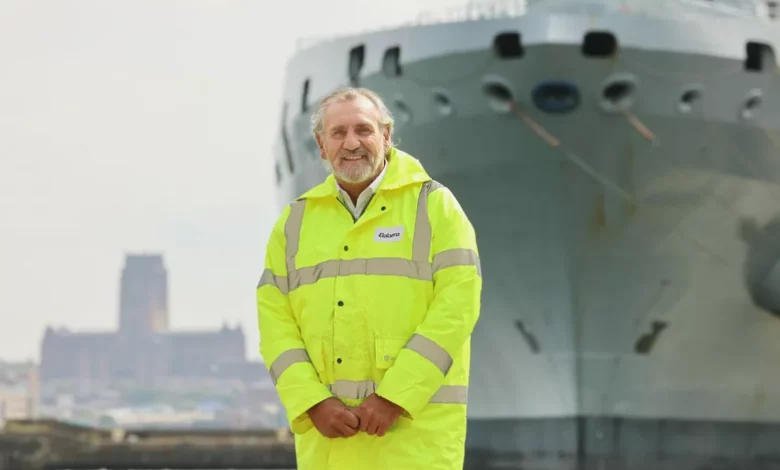
The historic Cammell Laird shipyard on the banks of the River Mersey is now Balaena Birkenhead, following a £150m takeover that has brought the nearly 200-year-old site under common ownership with four other major British and Gibraltar shipyards.
Rebrand to Balaena Birkenhead
Balaena Group chief executive Simon Gillett confirmed the name change takes effect with immediate removal of the Cammell Laird trading name. “It’s not been an easy decision, as you can imagine,” he said. “We’ve flip-flopped all over the place with the name change, yes or no? But we now have five shipyards, and when we talk about the storied history here, remember Gibraltar is 100 years older than here, so we’re balancing 500 years of history across all of our yards, and to land on just one wasn’t right. What we wanted is a bold, clean, fresh approach to say to the world something different is happening here, and it’s starting across all five yards together.”
The rebranding brings the Birkenhead site into line with Balaena’s other facilities in Gibraltar, which the group acquired in 2022 under the name Gibdock, and in Padstow, Cornwall. The combined entity will operate as Balaena Birkenhead, Balaena Falmouth, Balaena Gibraltar, Balaena Padstow and Balaena Tyne.
Acquisition details
Balaena Group last week completed the purchase of APCL Group, the parent company of Cammell Laird, A&P Tyne, A&P Falmouth and Falmouth Docks and Engineering Company. The £150m deal creates a five-yard network that spans Merseyside, west Cornwall, Tyneside and Gibraltar. APCL Group, which reported revenues of £162.8m and a net income of £8.1m in 2025, had itself owned the Birkenhead yard since emerging from an earlier period of financial difficulty – the site went into receivership in 2001 – and had rebuilt its order book around both naval and commercial work.
Cammell Laird’s origins date back to 1824, when William Laird established the Birkenhead Iron Works. The yard later merged with Johnson Cammell & Co. of Sheffield in 1903 and has since built more than 1,100 vessels, including HMS Rodney, HMS Prince of Wales, HMS Ark Royal and the polar research ship RRS Sir David Attenborough. More recently it has fabricated sections for the Royal Navy’s Type 26 frigates and Queen Elizabeth-class aircraft carriers. The yard currently employs around 650 directly, with about 1,500 subcontractors and 171 apprentices. Half of its operational board are former apprentices.
Simon Gillett, a former Royal Naval College electronic engineer who has also led Balaena Offshore Utilities and Gibdock, said the expanded group is designed to provide greater support to UK Defence interests while building one of Britain’s most comprehensive commercial ship repair and refit networks. “I joined the Royal Navy as an apprentice engineer, my father before me, also my mother. We’re a Royal Navy family, so you know this for me is key,” he said. “We’ve got a number of senior former Royal Navy personnel on our board to ensure that we keep that relationship going, and we see it as absolutely core, but not to the detriment of the commercial world. We need to get a good balance between those two, but grey ships and the Royal Navy and the RFAs [Royal Fleet Auxiliary] that we see behind us are absolutely key to success.”

Investment and modernisation plans
Balaena has outlined a series of specific investments for the combined yards, with the most detailed commitments focused on modernising the former APCL facilities. The group intends to expand drydocking, hull fabrication and life-extension capabilities, aiming to cut vessel downtime and bolster Britain’s standing as a competitive centre for global ship repair. Capacity for ship repair and offshore fabrication will be increased, and the group will develop new capabilities in low-emission propulsion systems.
A new national skills and apprenticeship programme will be launched in partnership with local colleges and maritime training bodies. Cammell Laird already runs a longstanding apprenticeship scheme with a high completion rate, and the new programme is intended to develop Britain’s next generation of maritime professionals across all five yards. Mr Gillett stressed that for now the approach is incremental: “First thing is business as usual. There’s no change for change’s sake here, especially with all the good stuff they’re already doing here. What we want to do is build upon that and grow on that. So, yes, investment will come in line with when we find out what’s happening in the investment review, what the Navy and what our commercial customers want. So there’s a period now of kind of ears wide open, mouth wide shut, where we find out exactly what is what, and what we need to do in each of the yards to maximise the success. But growth is what we’re going for, and long-term growth and security for the employees here.”
The plans align with the ambitions of the UK’s Strategic Defence Review and Industrial Strategy, as well as the National Shipbuilding Strategy first published in 2017 and refreshed in 2022. Mr Gillett welcomed the ongoing talks surrounding the government’s defence spending review, saying they present emerging opportunities for the group. The yards will cater to operators across the offshore energy, cargo, cruise and ferry sectors, while also providing improved ship repair and refit services for the Royal Navy and Royal Fleet Auxiliary.
The GMB union has backed the deal. Matt Roberts, the union’s national officer and president of the Confederation of Shipbuilding and Engineering Unions, said: “This deal gives certainty after months of speculation and allows our members and the yards at Cammell Laird, A&P Falmouth and A&P Tyne to move forward together. GMB has been clear our members want a solution that kept the three yards together as a strong and complimentary group, so we welcome this deal. There is great capability and delivery across these yards. We look forward to working with the new owners to ensure we continue to grow UK sovereign capability and increase local jobs and apprenticeships in Merseyside, west Cornwall, and on Tyneside.” Unite, however, issued a cautious welcome, calling for guarantees that shipbuilding and repair contracts remain in the UK, and arguing that it is absurd to send naval work overseas when skilled workers and yards are available domestically.