Storm’s Widespread Danger
A teenager may have drowned in a flooded retention pond near Houston as the first named storm of the Atlantic hurricane season swept across the Gulf coast, bringing intense rain and the threat of life-threatening flash flooding. The Montgomery County Sheriff’s Office said on social media that a 15-year-old boy entered the water while playing with friends near a construction zone on Tuesday evening. Rescue workers later recovered his body during an extensive search using sonar technology. “This incident serves as a solemn reminder of the dangers associated with floodwaters, particularly following periods of heavy rainfall,” the post added.
Tropical Storm Arthur, which the National Hurricane Center in Miami described as a disorganised cluster of storms that had already drenched parts of eastern Mexico and the Gulf, formed on Wednesday near the middle of the Texas coast. Its centre was located about 55 miles (90 km) east-north-east of Port O’Connor, Texas, moving north-east at 9 mph (15 km/h). Maximum sustained winds stood at 45 mph (75 km/h), and forecasters expected little change in strength before the centre moves over land, with weakening anticipated once it moves inland and possible dissipation by Wednesday night or early Thursday.
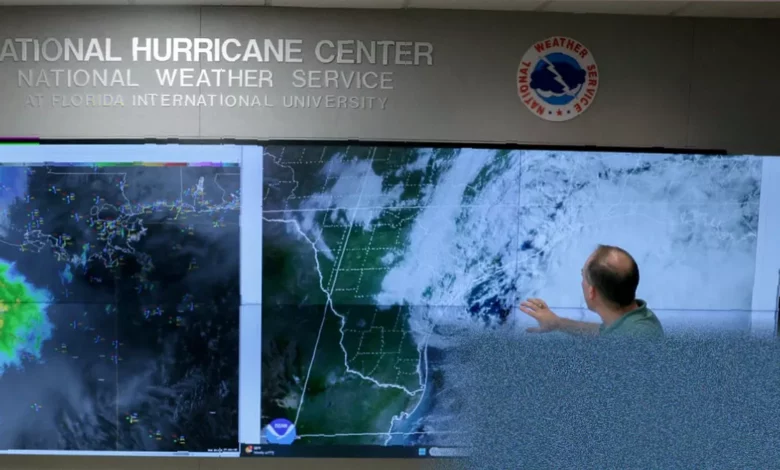
Michael Brennan, the director of the National Hurricane Center, warned during a briefing that flash flood warnings were already being issued in the Houston metro area, with more likely to follow across the region. “The main threat from Arthur is going to be a prolonged, multiday, heavy rainfall event that could produce dangerous to life-threatening flash flooding,” he said.
The most significant danger from Arthur is widespread flooding, driven by torrential rain expected to last for several days. The National Hurricane Center said rainfall totals of 5–10 inches (13–25 cm) are likely across parts of Texas, Louisiana, Mississippi and Alabama, with isolated accumulations as high as 20 inches (50 cm). Such rainfall could affect areas hundreds of miles inland, and the NHC warned that flooding is likely through Friday over portions of Louisiana, Mississippi, Alabama, Georgia and the Florida Panhandle. In the days before Arthur’s formation, heavy rains and flash floods had already struck Texas and Louisiana, with millions of people under flood alerts and some areas already receiving significant rainfall. The National Weather Service had cautioned residents in flood-prone zones to avoid low-lying areas.
Storm surge poses another acute threat along the coast. The combination of surge and tide is expected to inundate normally dry areas, with water levels forecast to reach 2–4 feet (0.6–1.2 m) above ground level from Port Bolivar, Texas, to Morgan City, Louisiana. Swells generated by Arthur are likely to cause life-threatening surf and rip current conditions along the north-western Gulf coast for the next couple of days. Tornadoes are also possible through Thursday across the Upper Texas Coast, southern Louisiana, Mississippi, Alabama and the western Florida Panhandle.
Tropical Storm Warnings have been issued for a significant stretch of the Texas and Louisiana coastline, from Sargent, Texas, to Morgan City, Louisiana, indicating that tropical storm conditions are expected within 12 to 24 hours. The Atlantic hurricane season officially runs from June 1 to November 30, and Arthur formed on June 17, marking the first named storm of 2026. While the season’s peak typically occurs in September, recent years have seen an increase in June activity, though June hurricanes remain relatively uncommon, occurring on average once or twice a decade. Forecasters had predicted a below-average season for 2026, partly because of a developing El Niño, but even quieter years can produce dangerous storms, as Arthur’s early formation and flooding potential demonstrate.
The Gulf Coast, particularly Louisiana and Mississippi, is historically vulnerable to storm surge due to the gradually deepening ocean floor. Hurricanes such as Audrey (1957) and Carla (1961) caused devastating loss of life and damage in the region. In the energy sector, offshore drilling and onshore refineries in the affected area have taken preliminary precautions, such as securing loose items, although major offshore production platforms have not yet experienced impacts.
World Cup Match Proceeds
Houston is hosting a World Cup match between Portugal and the Democratic Republic of the Congo on Wednesday. The stadium is covered, and organisers have announced no plans to move or reschedule the fixture. The match goes ahead as the storm continues to produce life-threatening conditions across a wide stretch of the Gulf coast.