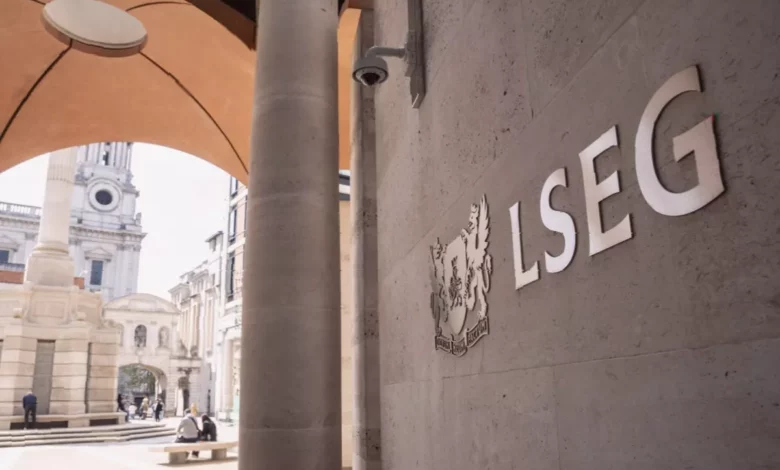
The FTSE 100 slumped 1.7% on Friday, closing at 10,195.37 points, as investors grappled with a triple blow of stalled diplomatic progress in the Middle East, rising political uncertainty at Westminster, and a sharp sell-off in mining and utility stocks. The blue-chip index shed 177.56 points, while the FTSE 250 dropped 1.0% to 22,596.14 and the AIM All-Share fell 1.0% to 808.89. For the week, the FTSE 100 lost 0.4%, the FTSE 250 gave up 1.1%, and the AIM All-Share slipped 0.6%.
Global markets feel the heat
The sell-off was not confined to London. In Europe, Paris’s CAC 40 closed 1.6% lower and Frankfurt’s DAX 40 slid 2.1%. Across the Atlantic, the Dow Jones Industrial Average fell 0.9%, the S&P 500 dropped 1.0%, and the Nasdaq Composite ended 1.2% lower. US Treasury yields climbed sharply, reflecting persistent inflation pressures and rising energy costs. The yield on the 10-year Treasury rose to 4.58% from 4.46%, while the 30-year yield stretched to 5.12% — its highest since 22 May 2025 — and the 2-year yield climbed to 4.06%, the highest since 19 March 2025. Markets were still digesting hotter-than-anticipated US CPI and PPI reports, with consumer inflation rising 3.8% in April, above forecasts and the highest since May 2023, reinforcing concerns that inflation remains stubbornly elevated. Global brokerages have trimmed their 2026 rate cut forecasts, with some now anticipating no cuts at all for the remainder of the year.
Hopes dashed in US-China talks
The immediate trigger for Friday’s decline was disappointment over the outcome of highly anticipated talks between US President Donald Trump and Chinese leader Xi Jinping. Investors had hoped for tangible progress on both trade relations and the conflict in the Middle East, but the meeting failed to deliver. “There’s a downbeat feel around at the end of the week as big problems crowd in, without resolutions in sight,” said Susannah Streeter, chief investment strategist at Wealth Club. “The meeting … was big on warm words and symbolism but not outcomes.”
One key issue on the table was the Strait of Hormuz, where oil tanker traffic has been brought to a near standstill since the outbreak of the war. The White House said the leaders “agreed that the Strait of Hormuz must remain open to support the free flow of energy”, but investors had expected more concrete steps toward reopening the crucial waterway. The International Energy Agency has described the disruption to oil and gas flows through the strait, combined with attacks on regional energy infrastructure, as “the greatest threat to global energy security in history”. Crude and oil product flows through the strait have plunged from around 20 million barrels per day before the war to just over 2 million barrels per day in March. Goldman Sachs has estimated that a one-month closure could add $10 to $15 per barrel to oil prices.
The lack of diplomatic progress pushed oil prices higher once more. Brent crude for July delivery traded at $108.83 a barrel on Friday, up from $104.92 at the time of the London equities close on Thursday, and crude oil (WTI) rose 2.7%, nearing $104. Brent crude gained 7% over the week. President Trump concluded his visit to China without securing major breakthroughs on trade or Iran, though both sides expressed interest in maintaining stable economic ties. Trump mentioned discussions about China purchasing Boeing aircraft and potentially more US oil, but tariffs were not directly discussed.
Westminster wobbles unsettle markets
Sentiment in London was further knocked by a fresh wave of political instability. Mayor of Greater Manchester Andy Burnham has pledged to fight for a return to Westminster, where he is likely to launch a leadership challenge to Prime Minister Sir Keir Starmer. “Burnham’s big hurdle of course is winning the by-election and so this leadership race looks set to be long and cumbersome,” said Ms Streeter. “Another bout of political infighting, with yet another Prime Ministerial shuffle under way is hardly a good look for a country which needs to portray stability to attract investment.”
The double whammy of Middle East uncertainty and Westminster turmoil sent UK government borrowing costs soaring. The yield on 10-year gilts traded at 5.17%, up from 5.00% the previous day. ING warned that the biggest risk is that investors begin to question the UK’s longer-term fiscal discipline. “Gilt markets rely on foreign investors and any signs that fiscal dynamics risk turning unsustainable could quickly turn sentiment,” the bank explained. “Until we get a better understanding around the fiscal path forward, political risk premium is likely to keep rising. A rise towards 5.30% is quite possible in the near term.”
The pound sank against the dollar, falling to $1.3319 on Friday afternoon from $1.3480 on Thursday, heading for its biggest weekly loss since November 2024. Against the euro, sterling ebbed to €1.1462 from €1.1549. Markets fear that a new leader could adopt more expansionary fiscal policies. The euro traded lower against the greenback, at $1.1622 from $1.1677, while the dollar strengthened against the yen, trading at 158.68 yen, up from 158.14 yen.
Company news: takeover talk and tax hurdles
On a quiet day for corporate announcements, bid speculation drove sharp price moves for two stocks. Bermuda-based insurer Hiscox topped the FTSE 100 leaderboard, surging 12% after Insurance Post reported, citing multiple sources, that Canada’s Intact Financial Corp was exploring a potential bid as it seeks to expand its commercial lines business. Hiscox shares hit a record high of £18.90, up as much as 15.3%. Neither company has commented, and no formal offer has been made. Morgan Stanley maintained an “Overweight” rating and raised its price target to £18.00.
Magnum Ice Cream jumped 9.4% after Reuters named Blackstone and Clayton, Dubilier & Rice among several private equity firms in the early stages of exploring bids for the company that was spun out of Unilever less than six months ago. Shares traded as high as 1,392.50 pence during the session. However, analysts at JPMorgan think a deal will not be straightforward, and the most significant obstacle is a set of tax constraints arising from the company’s demerger structure.
In a research note published after the Reuters report, JPMorgan explained that the separation of Magnum from Unilever was structured as a tax-free de-merger. As part of that arrangement, Magnum has agreed to refrain from actions that could create a tax liability. Specifically, for two years after the demerger, the company is restricted from engaging in “certain acquisition, merger, liquidation, sale, and stock redemption transactions”. In addition, Magnum has agreed to indemnify Unilever for any taxes or losses if the de-merger fails to qualify as tax-free. JPMorgan therefore described the likelihood of a takeover as “remote” given these constraints.
Among the blue-chip losers, miners sank as metals prices fell. Fresnillo dropped 10%, Antofagasta fell 11%, and Anglo American lost 5.7%. The sell-off in precious metals was pronounced: gold traded at $4,544.53 an ounce on Friday, down from $4,688.75, while silver plunged more than 8% to around $76 an ounce and copper fell roughly 5.0%. Analysts noted that Fresnillo, as a pure-play precious metals producer, bore the brunt of the gold and silver decline after US-Iran peace talks broke down. Antofagasta shares fell 7.5% to £39.46, and Anglo American fell 6.2% to £38.10, with copper pulling back from recent highs. The International Copper Study Group has announced that the global refined copper market might shift to a surplus in 2026.
Political uncertainty and rising gilt yields also weighed heavily on utilities. Severn Trent fell 8.0%, SSE dropped 7.7%, and United Utilities lost 7.5%. Airtel Africa was among the biggest fallers, down 39.8p at 328.4p after Bharti Airtel confirmed it would raise its stake by buying shares at a discount of around 11.6%.
The biggest risers on the FTSE 100 were Hiscox, up 202p at 1,841p; 3i Group, up 98p at 2,210p; JD Sports Fashion, up 1.76p at 72.02p; Relx, up 58p at 2,423p; and BP, up 11.5p at 552.2p. The biggest fallers were Airtel Africa, Antofagasta, Fresnillo, Severn Trent, and National Grid, which dropped 102.5p to 1,188p.
Monday’s global economic calendar features Chinese industrial production, retail sales and unemployment data, as well as Swiss GDP figures. The local corporate calendar has full-year results from airline Ryanair and self-storage operator Big Yellow.