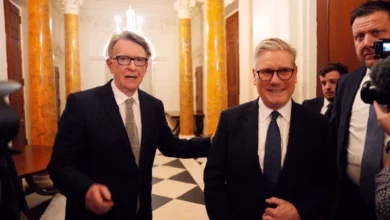
Paul Orders, one of Wales’ most respected local authority chief executives, is stepping down from his role at Cardiff Council after more than 12 years in the post.
Mr Orders, aged 57 and originally from Maesteg, was appointed chief executive in 2013, succeeding Jon House. He has now signalled his intention to leave, saying he wants “more time and flexibility to concentrate on personal priorities” and to allow the council to oversee a management transition well in advance of next year’s local elections. The recruitment process to find his successor is already under way. The role carries a salary of £208,116, and Mr Orders will remain in post until his successor takes up the position. As the largest local authority in Wales, the vacancy is expected to draw strong interest both externally and from within the council’s existing senior team.
Departure and recruitment
Mr Orders described his tenure as a privilege and thanked members across the chamber for the opportunity to serve the council, which he first joined as a policy research officer in 1998. Over the following years he held a series of senior roles, including head of policy and economic development and corporate director (place), before a two-year stint as chief executive of Dunedin City Council in New Zealand. He returned to Cardiff in 2013 to take the top job.
His departure is not a retirement, and his expertise is expected to be in demand in consultancy and non‑executive capacities.
A pro-business and investment legacy
During his time in charge, Mr Orders drove a distinctly pro-business and investment agenda for the capital. Unlike many local authorities, Cardiff Council adopted a partnership approach with the private sector, routinely helping to “oil the wheels” of investment by de‑risking projects when necessary. He worked closely with Russell Goodway, the cabinet member for investment and development, and Neil Hanratty, the director of economic development.
The most visible expression of that agenda is the Atlantic Wharf development in Cardiff Bay, a mixed‑use masterplan that has been a priority for Mr Orders. The centrepiece is a new indoor arena with a capacity of 15,000, which has long been seen as a missing link in the city’s entertainment infrastructure. Planning approval for the masterplan was granted in March 2022, with hybrid permission for the arena, hotel, and wider site following in March 2023. The arena is projected to deliver between 130 and 150 events annually and attract an additional 1.5 million visitors to the Bay each year. It is scheduled to open in 2026 and is expected to create more than 1,000 jobs during construction, supporting Cardiff’s “Music City” strategy. The wider Atlantic Wharf masterplan also includes a new transport hub connecting to the metro line, improved pedestrian and cycle routes, and sustainability targets aligned with the council’s “One Planet Cardiff” goal of becoming carbon neutral by 2030.
Mr Orders also played an important role in the creation of the Cardiff Capital Region, which covers ten local authorities across south-east Wales. Cardiff Council acted as the region’s accountable body until it became a statutory body in spring 2024. The regional partnership was formalised through the Cardiff Capital Region City Deal, signed in March 2016 with the UK Government, Welsh Government, and local authorities. Under Mr Orders’ leadership, the council also used its position as the largest authority in the region to help drive investment and economic coordination.
Alongside these economic priorities, Mr Orders had to confront the socio-economic challenges of a city that is home to some of the most deprived communities in Wales. He was also noted as the first returning officer in the UK to become an Accessible Voting Champion, reflecting a commitment to improving engagement with the democratic process in Cardiff.
Tributes from colleagues
Former council leader Huw Thomas, who stood down earlier this month after being elected to the Senedd, paid tribute to Mr Orders’ “unstinting professionalism and calm approach”. He said the relationship between a leader and chief executive is key to the success of any council agenda, and that his own relationship with Mr Orders was based on “mutual respect and absolute trust”. Thomas added: “He is not just the epitome of professionalism and management, but also delivery – an assessment shared by numerous regulators such as the Wales Audit Office and in reports by Care Inspectorate Wales, as well as various council of the year awards.”
Thomas also highlighted the stability Mr Orders brought to the role. “Twelve years is a terrific stint for a chief executive, and many authorities across the UK look enviously at the stability that we have had. Paul leaves huge shoes to fill. This is not a retirement, but a stepping down, and I am sure he will continue to play an important role in public civic life in Wales.”
Deputy leader of Cardiff Council, Sarah Merry, described Mr Orders as “a constant and calm source of advice and support whenever needed”, particularly for councillors new to the cabinet. Leader of the council’s Liberal Democrat group and a former leader of the council, Rodney Berman, said: “Paul has been a superb officer. I have had an opportunity to work with him over a good many years, and we could always see from the outset that he was somebody with a lot of potential and that he would rise fast.”
Berman, who was council leader from 2004 to 2012, added: “I wasn’t at all surprised when it was announced he was coming back as chief executive, and we have been much better served in this city because of that. He is a very calm figure who just sorts out problems… and we need someone who follows on from that. I don’t think there is anybody who doesn’t think he is an excellent officer whatever side of the chamber they are on, or amongst council staff.”