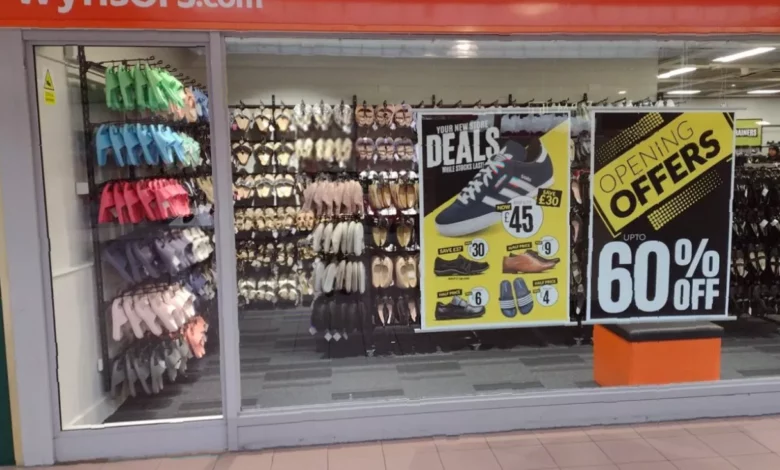
More than 100 jobs are at risk as Wynsors World of Shoes faces a dramatic restructuring, just six months after being acquired by private equity firm Modella Capital. The northern footwear retailer, founded in Chesterfield in 1956 and best known for its school shoe offer, has informed its roughly 400-strong workforce of plans for a Company Voluntary Arrangement (CVA), with approximately a quarter of employees — over 100 people — expected to be affected. Two distribution centres are also reportedly at risk of closure.
Chief executive Adam Foster told staff the decision had been unavoidable. “Regrettably, the severity of the challenges we have faced, ranging from an extremely difficult trading environment to a significant cyber-attack disrupting our core operations, have made this restructuring unavoidable,” he said. “This has been an incredibly difficult decision, and I want to acknowledge the impact they will have on those colleagues who will be affected. This CVA is a necessary step to give Wynsors a viable future.”
What the CVA means for Wynsors
A CVA is a formal agreement between a business and its creditors to repay some or all outstanding debt over an extended period, with the aim of avoiding insolvency. For Wynsors, the proposed CVA is expected to involve rent reductions at 36 of its 47 standalone outlets, while several of these locations are anticipated to close permanently. In retail CVAs, landlords are typically tiered to receive different levels of rent reduction or lease termination, and employees usually continue in their roles unless their specific site is shut — which in this case puts more than 100 jobs directly in the balance.
The company’s financial troubles predate the current restructuring. Accounts filed for the year ending 2024 — when Wynsors traded as Courtesy Shoes Limited — show turnover fell 4.51 per cent to £30.873 million, despite an increase in the volume of shoes sold. The gross profit margin dropped sharply from 14.41 per cent to 10.08 per cent, which the company attributed to higher labour costs. Distribution costs also rose, mainly due to web-related overheads. The result was an operating loss of £1.156 million for 2024, compared with a profit of more than £826,000 the previous year. The loss before tax stood at £1.096 million, down from a profit of almost £846,000.
Alongside the tough trading environment and rising costs, Foster pointed to the “operational impacts” of a cyberattack last year — a threat that has become increasingly severe across UK retail. Industry data shows the sector experienced a 52 per cent rise in cyberattacks in 2025 compared with 2024, with notable incidents including a ransomware attack on Marks & Spencer that disrupted online orders and wiped £300 million from its market value, IT disruptions at the Co-operative Group that led to empty shelves, and a breach at Harrods that compromised over 430,000 customer records. Wynsors’ own cyberattack added to the financial pressure that has now forced the CVA.
Modella Capital’s wider retail strategy
Modella Capital, the London-based private equity firm that took control of Wynsors in late 2024, has built a formidable — and controversial — presence on the British high street. Founded in August 2022 as Tailer Debtco and rebranded the following year, the firm is owned by Hay Wain Group, the family office set up by turnaround specialist Jamie Constable. Its chairman is Steve Curtis, a veteran retail investor with more than 40 years in the sector who has been involved in transactions including Jigsaw, Paperchase and Ted Baker. The managing director is Joseph Price, who previously worked in restructuring and turnaround teams at Kroll and AlixPartners.
Modella’s strategy has been to acquire distressed retailers, often pursuing rapid restructuring and deep cost-cutting. The firm targets UK businesses with turnovers between £10 million and £1 billion, using a “buy-and-build” approach. But the track record is mixed. Shortly after acquiring The Original Factory Shop in February 2025, Modella pushed the chain into administration and it ceased trading. Claire’s Accessories UK and Ireland, bought in September 2025, also went into administration, though some stores were later reopened under new ownership. Modella blamed “weak consumer sentiment and adverse government fiscal policies” for the failure of both businesses.
In June 2025, Modella bought WHSmith’s entire 480-strong high street estate for £40 million and rebranded the stores as TG Jones. The private equity firm has admitted the rebranded outlets are performing worse than under their previous identity and is now preparing to close up to a quarter of those locations in a sweeping restructuring it says is essential to avoid insolvency. Wynsors, meanwhile, was already said to be up for sale as recently as March 2026, only months after Modella’s acquisition.
Modella’s latest purchase, announced in May 2026, is Flying Tiger Copenhagen, a stationery and accessories retailer that operates roughly 1,000 stores worldwide, including 80 across the UK. That deal appears to signal a more growth-led approach: Modella plans to support Flying Tiger’s existing strategy of opening more than 700 new franchise outlets by 2030. Yet given the pattern of restructurings and administrations that has followed many of Modella’s previous acquisitions, the fate of Wynsors — with its 47 northern stores, 40 concessions, and more than 100 jobs now in the balance — will be watched closely by creditors and staff alike.