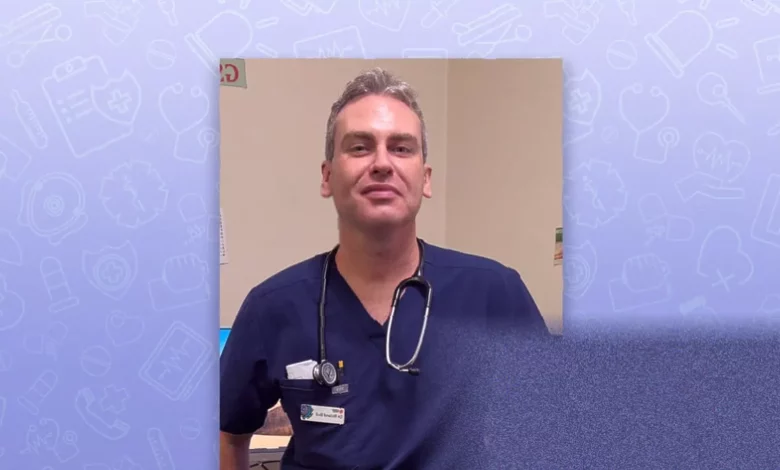
A patient who required a second spinal operation after surgeons operated on the wrong part of his spine the first time has described the experience of watching the same procedure from the other side of the surgical mask – and the unexpected workplace routine that unfolded once the patient was asleep.
The personal account, now being shared in medical circles, comes as new data from NHS Resolution reveals that between 2014 and 2024, 774 claims for compensation were made over surgical “never events” in England, with 574 successful claims resulting in payouts totalling £37.6 million. Wrong-site surgery alone accounted for 61 per cent of those claims. Over the five-year period from 2020 to 2025, English hospitals reported 661 cases of surgery on the wrong patient or body part – a 46 per cent rise – with 7 per cent of those incidents causing serious harm. In the UK overall, wrong-site surgery is estimated to occur in approximately one in every 100,000 operations, though the figure may be as high as 4.5 in 10,000 depending on the procedure.
The patient, who later applied to medical school, said his second spinal operation followed months of recovery from the first error – rest, rehabilitation and extensive engagement with medical and allied health services. “Even under normal circumstances there’s a gravity to surgery for patients,” he wrote. “It can be one of the most serious and important things to happen in your lifetime. It’s also the most vulnerable you can get as a patient, trusting a group of strangers to sedate you and alter or remove parts of your body, hoping you’ll end up better off than you were before.”
That sense of vulnerability stayed with him when he entered medical school and, for the first time, found himself assisting in an operating theatre. His previous experience had left him deeply suspicious of surgeons. He was determined to speak up if he saw anything inappropriate.
From patient to observer: first steps into theatre
He watched the first patient being wheeled in and joined the anaesthetist for a brief conversation. Out of earshot of the patient, the anaesthetist asked why patients are kept fasted. “So they don’t regurgitate mid-procedure and start inhaling their stomach contents?” he replied, adding that he had long held the view that some might prefer to risk asphyxiation if it meant arriving at hospital “happily caffeinated”.
The patient walked to the operating table clutching the back of their hospital gown closed. He smiled warmly behind his mask – but they did not notice. Minutes later they were unconscious, heart rate beeping on a small screen, the ventilator heaving lazily.
The unexpected shift in atmosphere
Primed for tension, he was surprised by what happened next. Once the patient was sedated, a certain levity enveloped the room. “Which isn’t to say people were unfocused or unprofessional, just that more familiar workplace dynamics emerged,” he wrote. Someone put on music. Colleagues chatted about personal news. People came and went for various reasons. There was a coffee run among staff who were not scrubbed in. The Royal College of Surgeons has noted that music in operating theatres – commonly played for staff benefit – can help concentration and mask background noise, but has also raised concerns that it may impair communication and increase operation times. Decisions about music, it advises, should be made by the entire team.
He said the shift was unexpected because he had always assumed the day that changed his life so profoundly had been “epic for everyone else as well” – that the gravity of surgery was a shared experience extending from the patient to the treating team. “But, over the course of that first day in theatre, I realised that a single operation is unlikely to be the most important thing to happen in a surgical team member’s lifetime because of the sheer volume of procedures they undertake.”
A workplace like any other – with high stakes
The more he experienced theatres from the other side, the more he recognised how similar they were to any other workplace. Certainly, the work was high-stakes, and casual collegiality could quickly shift to heart-thumping action to pre-empt or respond to an emergency. There have been instances of inappropriate or negligent behaviour in surgical settings – his previous experience being a case in point – but, he argued, those are the exception rather than the rule. Research from the Royal College of Surgeons emphasises that communication failures are a leading cause of sentinel events, and that non-technical skills such as team reflection are essential. Visible role identification can help reduce hierarchy barriers and encourage junior staff to speak up – a dynamic he had been determined to test for himself.
Burnout remains a significant issue among UK surgeons, particularly trainees, with excessive workloads, lack of control, poor support and dysfunctional workplaces all cited as contributing factors. Burnout can negatively affect patient safety, staff relationships and motivation. Yet he noted that positive workplace dynamics often translate into better performance. Studies suggest that surgical first assistants – registered professionals who enhance communication and assist with positioning, instrument handling and wound closure – can decrease surgical complications by up to 15 per cent in complex cases.
“By the end of that first surgical rotation, I realised people should be able to balance serious work and enjoyable engagement with their colleagues,” he wrote. “In fact, positive workplace dynamics often translate into better performance. I also realised there are some lovely surgeons and theatre nurses out there. It’s always useful to glimpse the human face behind a life-changing experience.”