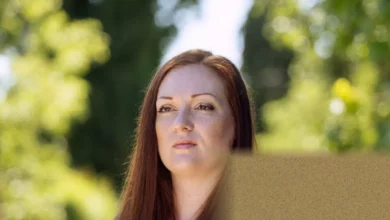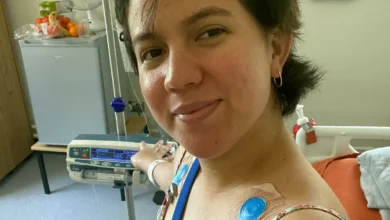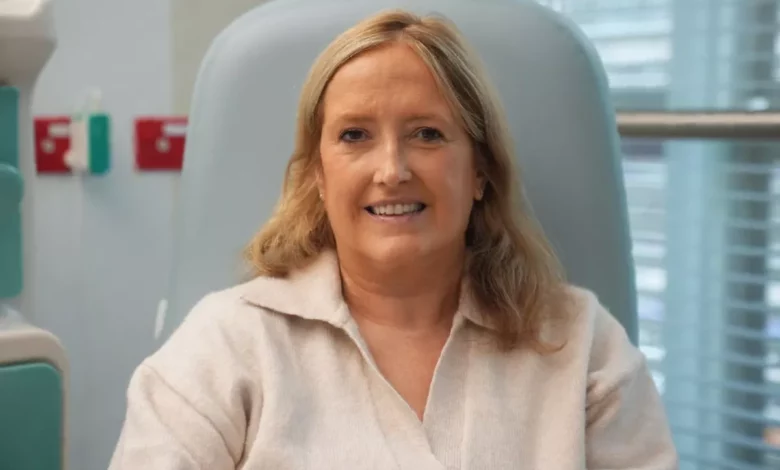
A mother has described how she spent years dropping her children at school in her pyjamas, returning home to stay in bed until the afternoon alarm forced her up to collect them again. “Regularly for years, when the kids were at school, I’d get up in my pyjamas, drop them to school in my pyjamas, come back to bed, stay in bed, put the alarm on for 2.50pm, get up and go back, pick them up, and then survive til my husband came home. That was my life for years,” she said.
The daily routine she outlined is one of crushing repetition and isolation. Each morning began with the same short journey in sleepwear, a numbing ritual that ended only when she could retreat beneath the covers. The hours between school drop-off and the afternoon pickup stretched into a void of stillness and waiting. She set an alarm to mark the only transition in her day: from bed to the school gates. Then came the quiet struggle to function until her husband returned home in the evening — a moment that seemed to offer the only real respite from the relentless cycle.
The emotional toll of such an existence, described in plain terms by the mother, is immense. There is no escape, no variation, no sense of purpose beyond simply enduring until someone else can take over. The bed becomes both a sanctuary and a prison — a place where the weight of fatigue and hopelessness pins you down, yet where the outside world fades into an unbearable distance. For years, this was her reality: a life reduced to a narrow loop of pyjamas, drop-off, bed, alarm, pickup, survival.
That pattern of profound exhaustion and social withdrawal is a hallmark of severe autoimmune disease. According to a groundbreaking NHS trial led by University College London Hospitals NHS Foundation Trust (UCLH) and University College London (UCL), a new treatment known as CAR T-cell therapy has offered hope to patients whose lives were similarly consumed by their condition.
What is CAR T-cell therapy?
CAR T-cell therapy is a highly specialised form of immunotherapy that reprograms the body’s own immune cells to attack specific targets. The process begins with the collection of T-cells — a type of white blood cell — from the patient’s blood. These cells are then sent to a laboratory where they are genetically engineered to produce chimeric antigen receptors (CARs) on their surface. These custom receptors allow the T-cells to recognise and bind to particular antigens on target cells, such as cancer cells or, in the case of autoimmune diseases, the B-cells that produce harmful autoantibodies. Once modified, the cells are multiplied and infused back into the patient in a one-time treatment designed to provide long-lasting activity.
NHS use in cancer
CAR T-cell therapy has been established on the NHS for several years, primarily for treating certain blood cancers. The National Institute for Health and Care Excellence (NICE) has approved the therapy for a range of conditions, including relapsed or refractory B-cell acute lymphoblastic leukaemia (ALL) in patients up to 25 years old, diffuse large B-cell lymphoma after two or more systemic therapies, and mantle cell lymphoma, among others. A network of specialist centres — including Great Ormond Street Hospital, University College London Hospitals, Barts Health NHS Trust, and The Christie NHS Foundation Trust — administer the treatment. The cost is substantial, with estimates ranging from approximately £280,000 to more than £475,000 per patient in the UK, though the NHS has negotiated discounts.
From cancer to autoimmune disease: the lupus breakthrough
Researchers have now turned the technology against autoimmune conditions. In lupus, the immune system mistakenly attacks healthy tissues, leading to inflammation, organ damage, and debilitating fatigue. The new approach uses CAR T-cells to target and deplete the specific B-cells responsible for producing autoantibodies. This depletion, scientists believe, effectively “resets” the immune system, allowing it to repopulate with healthy B-cells and stop the autoimmune attack.
A landmark NHS trial, conducted by UCLH and UCL, involved six patients with severe lupus who had not responded to existing treatments. Five of those patients achieved remission within months of receiving the therapy. Over an average follow-up of 11 months, these patients showed significant improvements, including stabilisation or improvement in kidney function. One of the patients who achieved remission is Katie Tinkler, whose story is part of the trial’s promising results. Experts suggest the therapy may also prove effective for other autoimmune conditions such as multiple sclerosis (MS), rheumatoid arthritis, and systemic sclerosis, with clinical trials already underway or planned for MS.
Risks and side effects
CAR T-cell therapy is complex and carries significant risks. Patients are closely monitored for side effects, the most common being cytokine release syndrome (CRS), a reaction in which the immune system releases a flood of cytokines. Symptoms can range from mild flu-like fever, chills and fatigue to severe complications requiring intensive care. Neurological side effects, known as ICANS or neurotoxicity, can also occur — including confusion, headaches, speech difficulties, seizures and changes in consciousness — typically within days or weeks of treatment. Because the therapy destroys normal B-cells, patients face an increased risk of infection. Other potential problems include tumour lysis syndrome, allergic reactions and prolonged low blood counts. Hospital stays typically last between 10 and 28 days, and patients are prohibited from driving for eight weeks after infusion due to the risk of neurological effects. Long-term follow-up care is provided, with some centres offering support for up to 15 years.
Future directions
Research is expanding to explore the therapy’s potential across a broader range of autoimmune diseases. Scientists are also developing “universal” CAR T-cells derived from healthy donors rather than the patient, which could make the treatment more readily available and faster to produce. Efforts are underway to reduce the cost and complexity of manufacturing, while ongoing studies aim to understand the long-term effectiveness and durability of the therapy for both cancer and autoimmune conditions. Key figures in this work include Professor Karl Peggs, director of UCLH’s biomedical research centre, and Dr Claire Roddie, an investigator on the lupus trial from the UCL Cancer Institute and UCLH.
The mother who described her years of pyjama-clad mornings and bed-bound afternoons may never have imagined that a one-time infusion of her own reprogrammed cells could break the cycle. For her, and for patients like Katie Tinkler, the daily alarm set for 2.50pm — the signal to drag herself upright and face the school run — once defined existence. Now, the arrival of a therapy that can reset the immune system offers the possibility that, for the first time in years, she no longer needs to simply survive until her husband comes home.